You cut the grass, roll the trash cans out, or try to haul a load of firewood into the backyard, only to realize you are walking around the entire perimeter of your lot just to get inside.
It happens all the time across Western New York. Fences get built to enclose a yard, but life changes, trees grow, land use shifts, and suddenly you need a new opening. If you have been searching for professional fence installation near me to adapt your yard’s layout, adding an access point to a standing fence is one of the most practical upgrades a property owner can make.
Over the years, working outdoors in local yards with All Pro Fence Buffalo, we’ve set posts in thick blue clay, pulled out stubborn old tree roots, and modified every fence style you can think of.
If you are planning broader upgrades across your property, be sure to read our Fence & Driveway Gate Installation in Buffalo, NY: Complete Guide to see how entry gates, layout planning, and curb appeal fit together.
Here is what you need to know about modifying your fence line safely, choosing the right opening, and budgeting for the job.
1. When You Can Add a Gate to an Existing Run
You can’t just slap hinges onto any random section of fence and call it a day.
The existing structure must be square, level, and anchored into solid ground.
If the rails are rotting, the wire is sagging, or the posts move when you lean on them, adding a swinging heavy frame will pull the whole section down.
When property owners search online for fence installation near me, they often assume any straight section can take a cut. But frost heaves the ground around here every winter. If your current line has already heaved out of plumb, you must fix or replace adjacent posts first.
If the timber or metal line is straight, sound, and firmly set below the local frost line, you are good to move forward.
2. Matching New Gate to Existing Fence Style
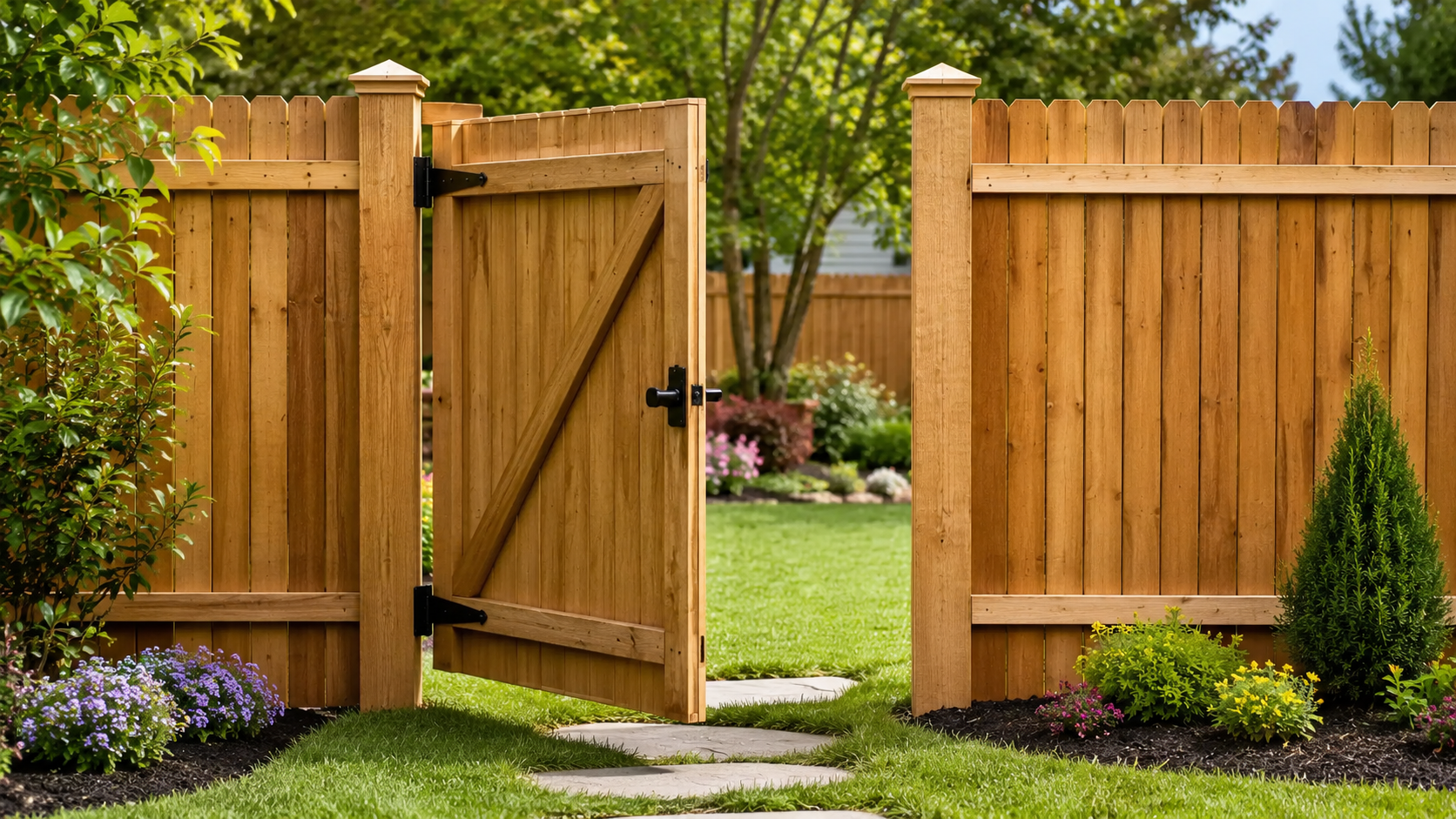
A new opening should look like it was part of the original design, not an afterthought.
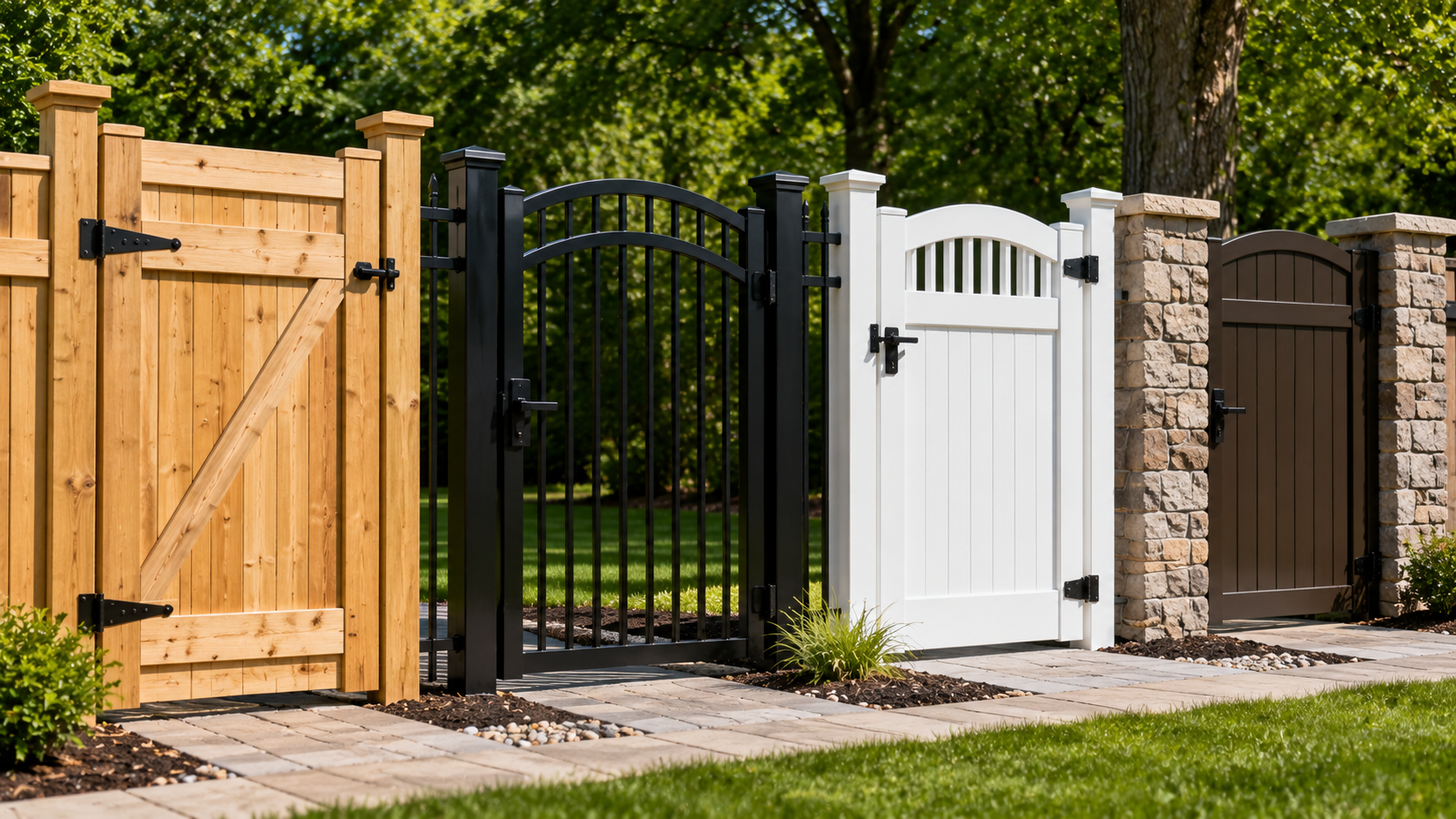
Wood fences are the easiest to match because cedar and pressure-treated pine can be cut and built custom on site. Vinyl and chain link require matching the exact profile, color, pickets, or mesh weave of your current manufacturer.
Matching older wood means taking age into account. Brand new lumber will look brighter than weathered grey pickets for the first season or two until the sun evens things out.
For vinyl, track down the rail dimensions and post caps carefully. Different manufacturers use slightly different panel grooves, so off-the-shelf parts from a home improvement store might not slide in smoothly.
3. Single Walk Gate vs Double Gate
Deciding between a single swinging door and a double opening comes down to what needs to pass through.
Single openings are great for foot traffic, lawnmowers, and trash cans. They require fewer moving parts, use less hardware, and put stress on only one hinge post.
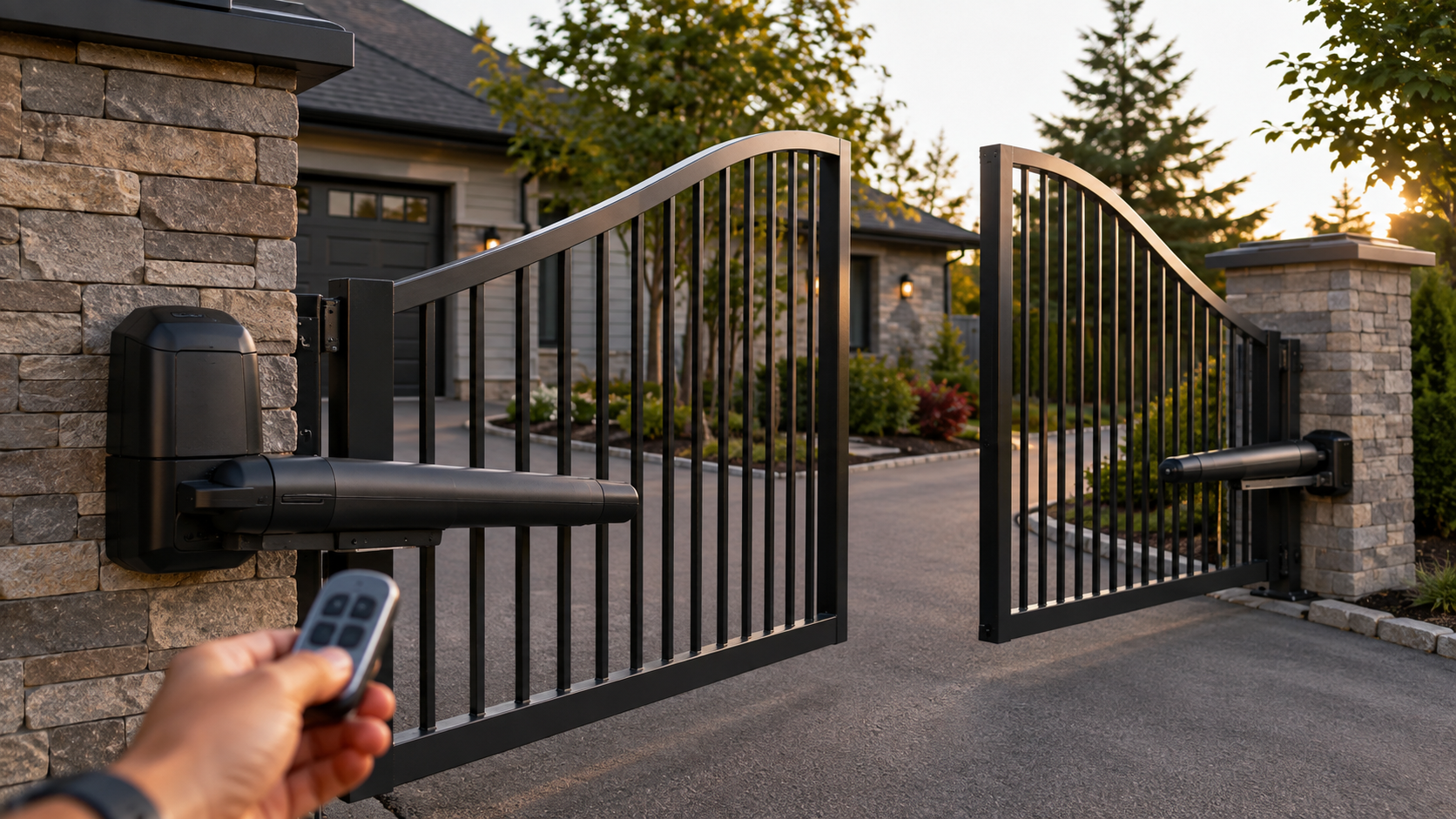
Double doors are built for riding mowers, trailers, equipment, or small tractors. They split the weight across two posts, which prevents heavy sagging over wide openings.
If you ever plan to back a trailer, tree trimmer lift, or woodchipper into your backyard, go with a double swing. Trying to squeeze wide machinery through a standard opening usually ends with broken pickets and bent frames.
4. Standard Gate Widths and Heights
Getting the dimensions right the first time saves major headaches down the road.
Standard walk-through openings usually measure 36, 42, or 48 inches wide. A 36-inch width handles a person holding groceries, but a 48-inch width is far better if you push a wide commercial push-mower or wheelbarrow.
For double openings, standard widths usually run 8, 10, or 12 feet across.
Height should match your existing panels, typically 4, 5, or 6 feet tall. Always remember to leave a 2-inch clearance gap at the bottom so the bottom edge doesn’t scrub against high grass, snow, or uneven grade when it swings open.
5. Hinges, Latches and Hardware Options
Hardware is where cheap builds fail.
A heavy wood or steel door hanging in the open air exerts continuous leverage on its hardware. Heavy-duty strap hinges spread the weight across multiple pickets or rails, while compact butt hinges often pull loose under stress.
For latches, gravity latches and drop rods are simple, rugged, and dependable.
If you are dealing with wet weather, road salt spray, or damp soil, stick with stainless steel or powder-coated heavy steel hardware. Avoid lightweight zinc-plated fasteners that rust out within two seasons.
6. Reinforcing Posts for Gate Weight
Every time a gate opens, it acts like a lever pulling against its support post.
Standard line posts are designed to hold static, balanced weight on both sides. A hinge post carries dynamic, swinging weight on one side only.
When homeowners call us at All Pro Fence Buffalo to re-examine an old line, the most common issue we find is a sagging door caused by an unreinforced 4×4 post.
Hinge posts should always be larger, typically a 4×6 or 6×6 for wood, or heavy-gauge steel inside vinyl. They must be set deeper into concrete to resist leaning over time, especially in wet WNY soil.
7. ADA and Accessibility Widths
If you are designing for wheelchairs, walkers, or long-term accessibility, standard narrow openings will not cut it.
The Americans with Disabilities Act (ADA) standard requires a clear opening width of at least 32 inches when the door is open 90 degrees. To achieve this safely, you will want a frame opening measuring at least 36 inches across.
Keep the ground beneath the opening flat, firm, and smooth. Smooth concrete pads or tightly compacted crushed stone pathways make rolling through effortless, whereas loose gravel or uneven turf creates constant frustration.
8. Self-Closing and Lockable Options
Safety and security are top priorities, especially if you have pets, small children, or a backyard swimming pool.
Self-closing hinges use internal springs or hydraulic tension to ensure the swing returns to the latch every single time. They prevent pets from slipping out when someone forgets to push the door completely shut.
If safety codes around pools or property lines apply to your lot, pair self-closing hinges with a key-lockable latch mounted at an approved height. High-quality double-sided key latches let you lock the yard securely from either side while maintaining quick thumb-latch access for daily chores.
9. Cost to Add a Gate
Understanding the realistic fence gate cost helps you budget properly without surprises.
To add a gate to fence lines using existing posts, costs generally range from $250 to $600 for a single walk-through setup, depending on materials and hardware quality. If new, reinforced posts must be dug and set in concrete, total costs usually fall between $500 and $1,200.
Double swing setups and heavy drive gates take more material, heavy hardware, and dual post footing installations. These range anywhere from $900 to $2,500+.
Investing in thick posts, stainless hardware, and proper deep footings up front keeps you from paying to fix a sagging line two years later.
10. DIY vs Professional Install
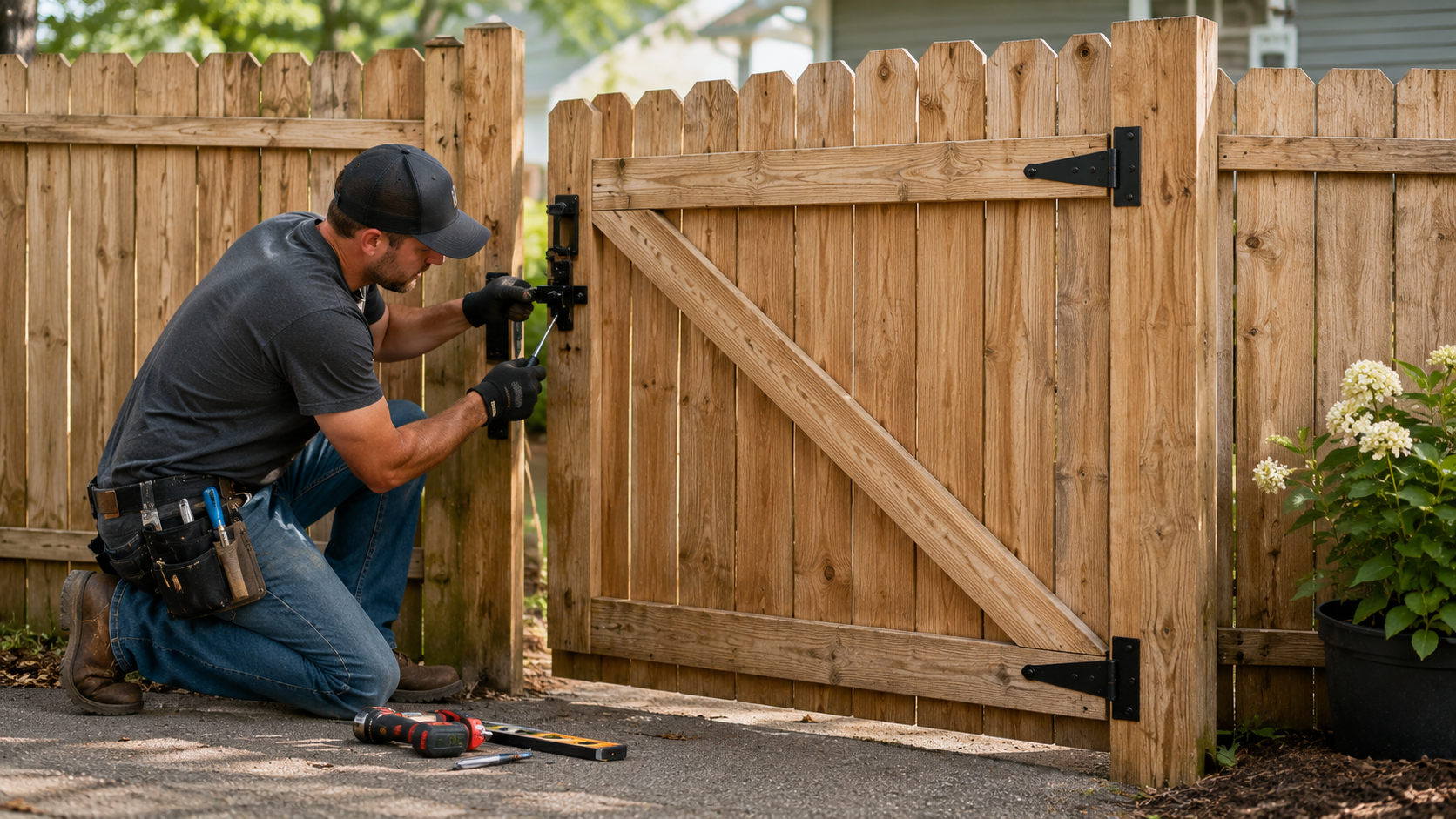
Tackling a walk gate installation yourself is doable if you have carpentry skills, post-hole diggers, level tools, and patience.
However, cutting into an existing fence requires temporary bracing so the surrounding panels don’t collapse when you pull a post out. Digging post holes by hand near tree roots or underground utility lines can quickly turn into a grueling weekend project.
Whether you hire a local crew through a search for fence installation near me or tackle small repairs yourself, proper post depth is non-negotiable.
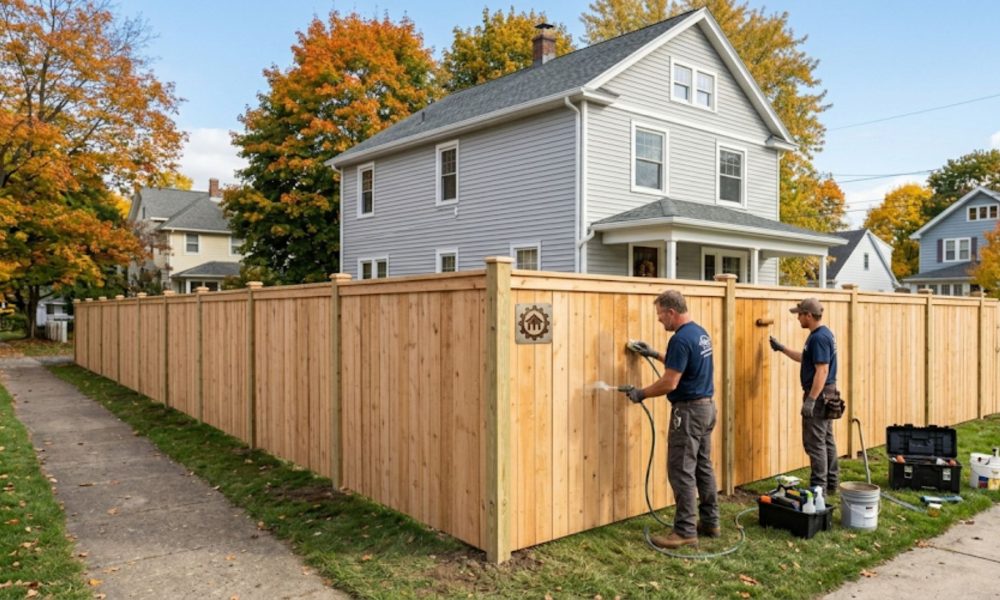
Our crew at All Pro Fence Buffalo always makes sure posts are set below the frost line and braced properly so the line stays plumb through freeze and thaw cycles. If you don’t feel confident handling heavy timber or setting concrete below the frost depth, bringing in an experienced team saves time, tools, and heavy lifting.
If you ever decide to consult a qualified local specialist for fence installation near me, choose a team that understands how local soil conditions and winter ground movement impact your fence over time.
Frequently Asked Questions
Can I add a gate to an existing vinyl fence?
Yes, you can add an opening to an existing vinyl fence. You will need to remove the section panel, install internal aluminum or steel post inserts inside the vinyl posts for support, and mount compatible vinyl hardware.
How wide should a standard backyard walk gate be?
A standard walk-through opening is typically 36 to 48 inches wide. A 36-inch width works well for foot traffic, but a 48-inch opening allows easy passage for wheelbarrows, wide push mowers, and large trash bins.
Why is my fence gate sagging after a year?
Gates usually sag because the hinge post was too small, set shallow, or not anchored in concrete. Weak hardware or lacking diagonal cross-bracing on the swinging frame can also cause the structure to droop over time.
How deep should gate posts be set in Buffalo, NY?
In Western New York, gate posts must be set at least 36 to 42 inches deep to reach below the local frost line. Setting footings below frost depth prevents ground heaving from throwing your latch out of alignment during winter.
What is the average cost to add a gate to a fence?
The average cost ranges from $300 to $1,200 for a single walk-through opening, depending on material, post reinforcement, and hardware. Larger double openings generally cost between $900 and $2,500 including professional installation and deep footings.
Do I need a permit to add a gate to my fence?
In most municipalities, adding a gate to an existing permitted fence line does not require a new permit. However, if you are expanding the overall perimeter or live in a pool-code zone, local municipal rules may apply.
Which way should a gate swing, in or out?
As a general rule, gates should swing inward toward your private property rather than outward onto sidewalks, alleys, or neighboring yards. For swimming pool enclosures, local safety codes often mandate that the door swings outward away from the pool.