Commercial Fencing Solutions in Buffalo, NY
A fence is a long-term decision. Choose poorly, and you’ll notice it every winter. We’ve seen Buffalo property owners pay for the same fence line twice because the first choice was based on looks or price alone.
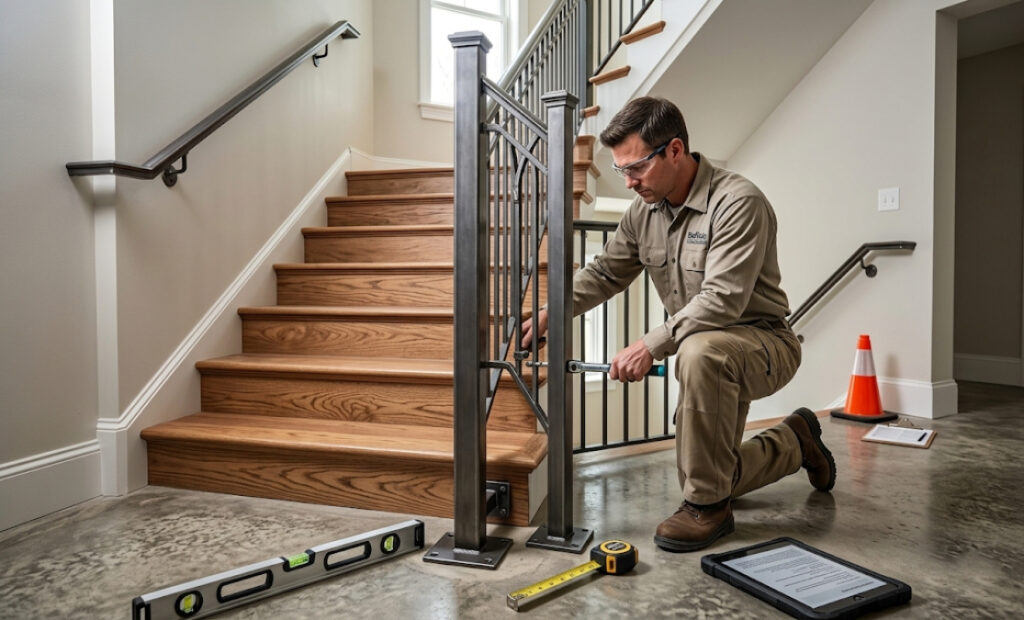
This guide covers what matters when you plan commercial fence installation: how to choose a material, what makes a fence hard to climb or cut, how gates and access control fit in, and how Western New York weather treats metal. It’s written for business owners, property managers, and anyone with a building, lot, or yard that needs real protection.
When Businesses Need High-Security Fencing
Not every property needs a high-security fence. Some just need a clear boundary.
You likely need more if you store equipment, vehicles, inventory, or materials outdoors. The same goes if you’ve had break-ins, dumping, or people cutting through your lot after hours. Properties with a history of trespassing, or ones next to vacant lots, rail lines, or busy foot traffic, tend to need a stronger barrier. Schools, medical offices, and multi-family buildings often want something that looks welcoming but still controls who gets in.
A good starting question is this: what are you protecting, and from whom? Someone cutting across your lot is a different problem than someone planning to steal copper or catalytic converters. A security fence that answers the first problem may do nothing for the second, so we start there before we talk about materials or height.
Ornamental Steel vs. Aluminum
Both look good, and both come in the classic picket style with a clean top rail. They behave differently, though.
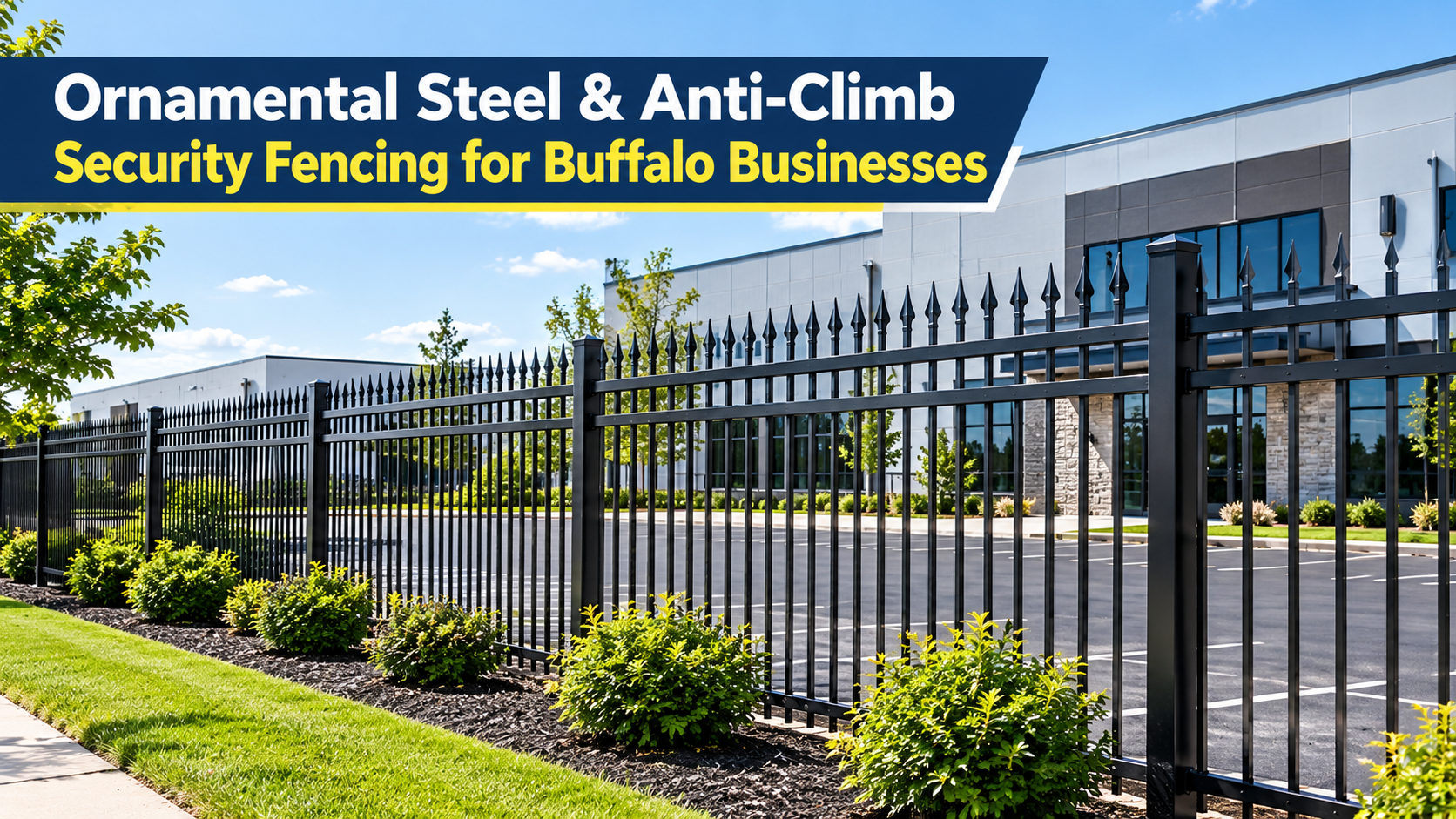
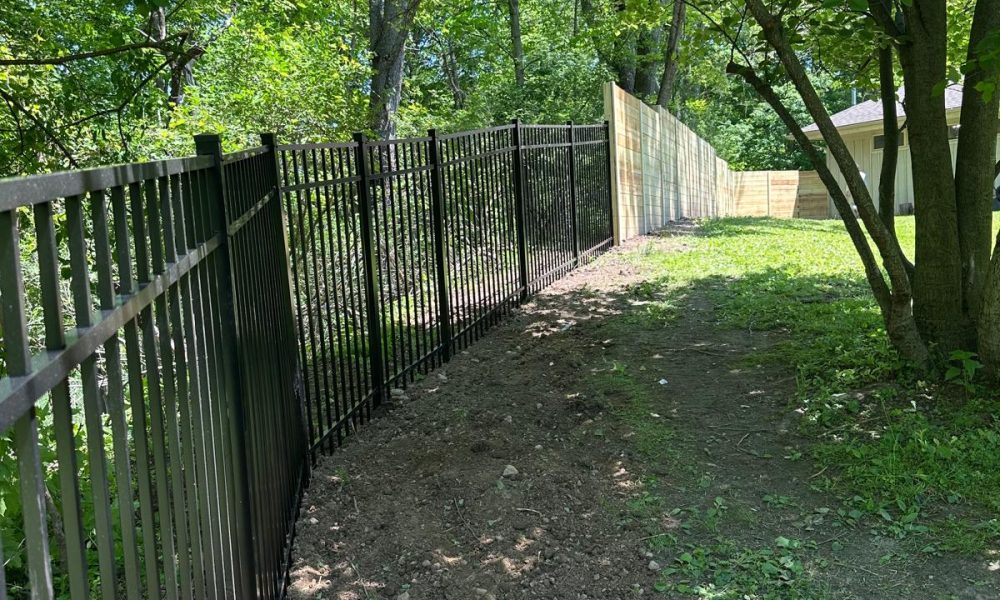
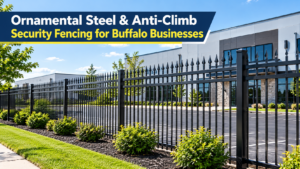
Steel is heavier and stronger. It’s harder to bend, cut, or kick apart, which is why it’s the usual pick for commercial projects where security matters. Aluminum is lighter, and it doesn’t rust because the metal itself doesn’t corrode. That makes it a good fit for low-risk areas like landscaping borders, pool areas, or front entrances where appearance matters most.
Steel needs a good finish. A galvanized and powder-coated steel fence holds up well, but a scratch that goes unrepaired can eventually rust. Aluminum is more forgiving on upkeep but can dent or bend under force. If your main goal is deterrence, we usually lean toward steel. If it’s curb appeal with moderate protection, aluminum is often enough, and it can cost less to maintain.
Anti-Climb and Anti-Cut Designs
An anti-climb fence works by removing handholds and footholds. That’s the whole idea.
Ornamental fences with horizontal rails are easy to climb because they work like a ladder. Vertical pickets with tight spacing are harder, and some designs leave no crossbars on the outside face at all. A 358 mesh panel is another common option. Its openings are small enough that fingers and boots can’t get a grip, and its wire is thick enough to resist standard hand tools. It looks plain, but it does the job.
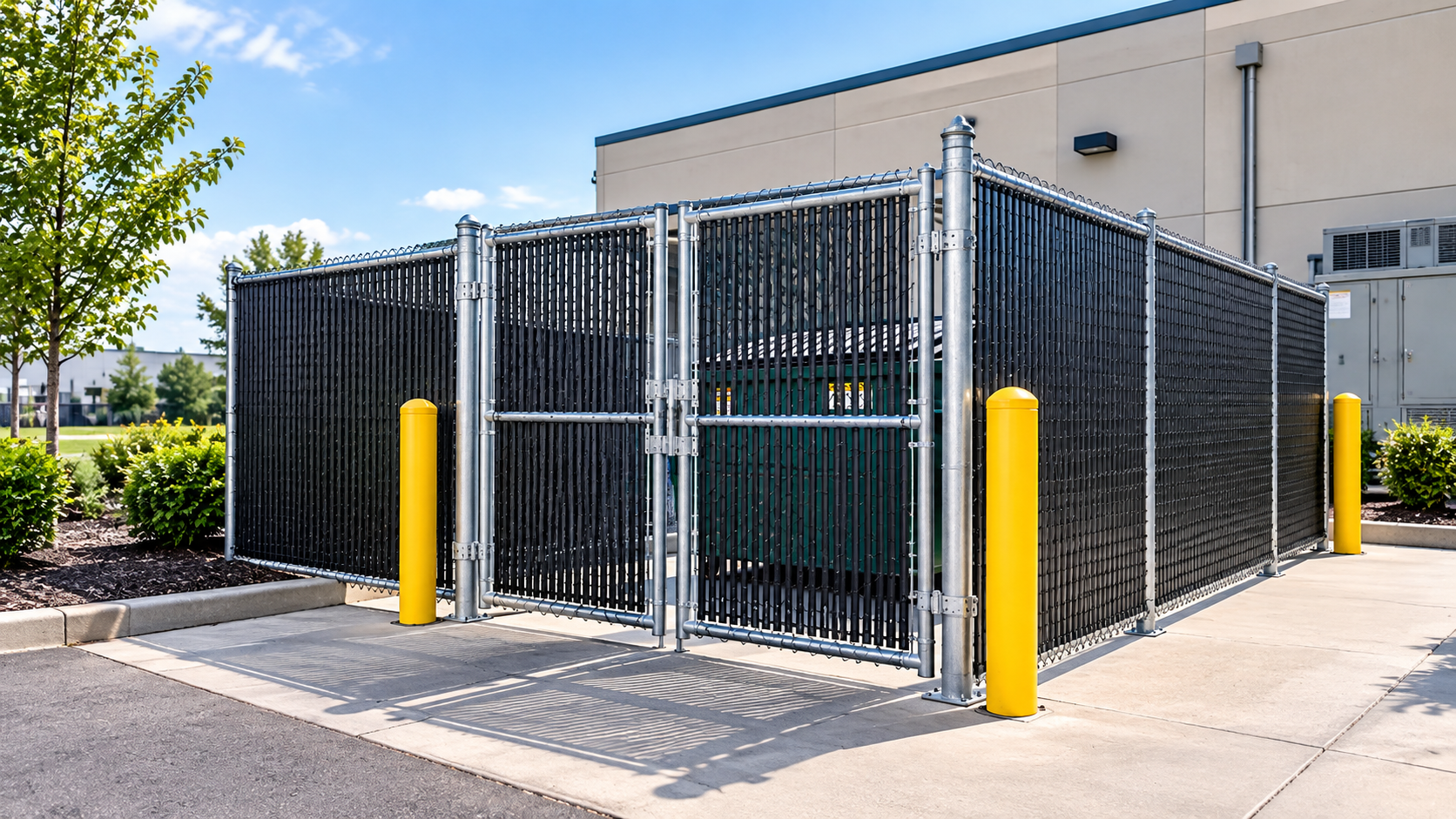
Anti-cut design comes down to material thickness and construction. Thin chain link can be cut with basic bolt cutters. Heavier gauge steel, welded joints, and tight mesh take more time and effort, and time is what a would-be intruder doesn’t want to spend. No fence is impossible to beat. The goal is to make breaking in slow, loud, and obvious.
Height and Topping Options
Height does a lot of the work. Six feet slows people down, and eight feet makes most casual attempts not worth trying.
For toppings, you’ve got a few choices. Pressed spear points or finials are common on ornamental steel, and they add some deterrence while still looking decent. Barbed wire and razor-style toppings are stronger deterrents, but they come with trade-offs. They can look harsh, and some neighborhoods and zoning rules limit or ban them. Liability is another factor, since a topping that injures someone can create legal exposure for the owner.
Before you commit, check with your local municipality about height limits, setbacks, and topping rules. Requirements vary between Buffalo and surrounding towns, and they can depend on whether you’re in a commercial, industrial, or mixed-use zone. It’s far easier to settle this before the design is final than after posts are in the ground.
Access Gates and Controls
A fence is only as secure as its gates. We tell customers this often, because it’s where many plans quietly fall short.
The gate is the one part of the fence designed to open, so it gets the most wear and the most attention from people who shouldn’t be there. A strong gate needs solid hinges, a proper latch, and a frame that won’t sag. Sagging gates are one of the most common problems we see on older properties, and a gate that doesn’t latch cleanly can be pushed open.
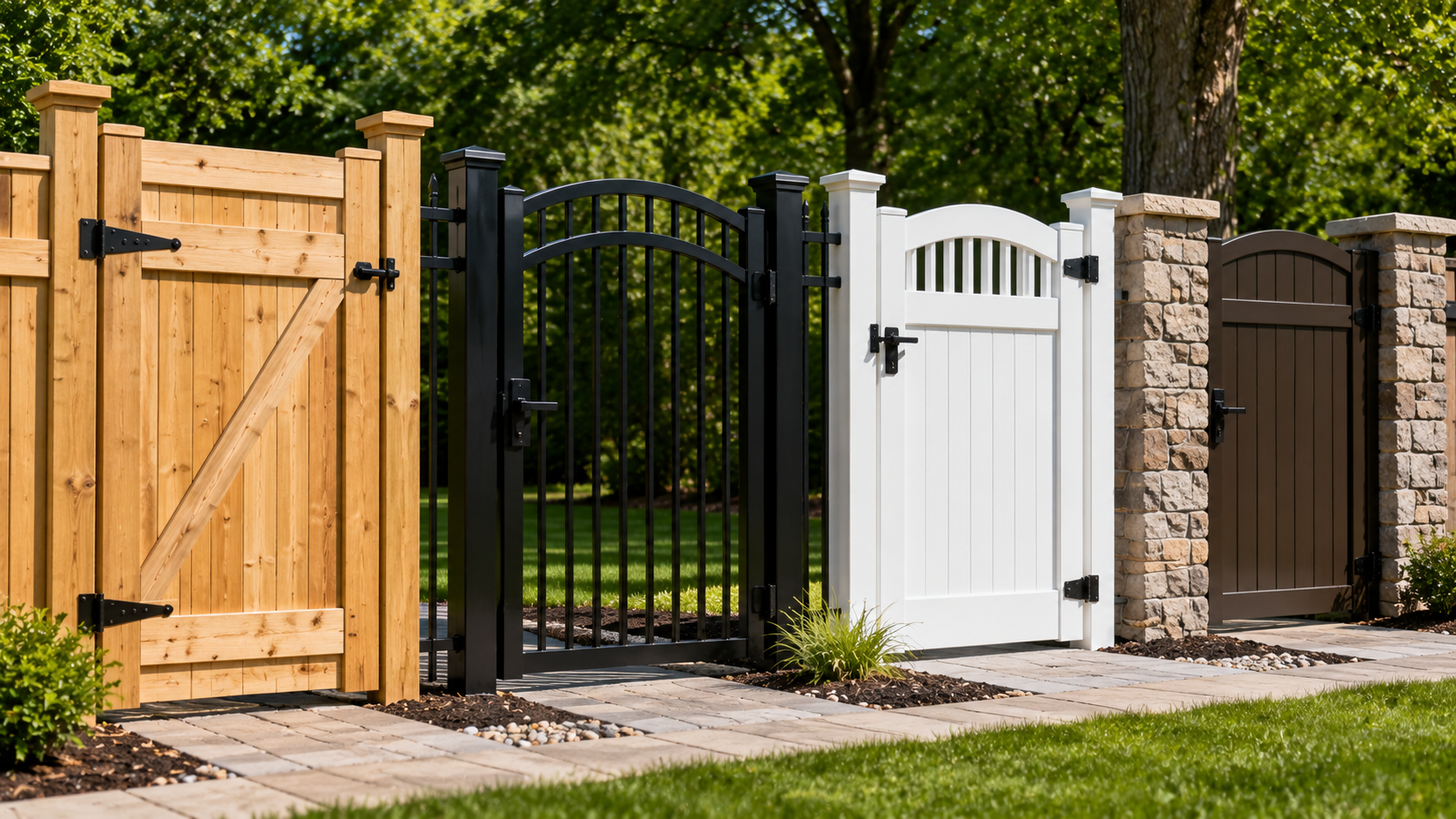
For access control, options range from simple keyed locks to keypads, card readers, and remote or intercom-based openers. Slide gates and swing gates each have their place, and the choice depends on your space, traffic, and snow load. In Buffalo, you also want to think about where plowed snow will pile up so a gate isn’t blocked in January. Safety features, like sensors that stop a gate from closing on a person or vehicle, matter too, and they should be part of the plan from the beginning.
Crime Prevention (CPTED) Principles
CPTED stands for Crime Prevention Through Environmental Design. It’s a well-known planning approach that looks at how a property’s layout affects behavior.
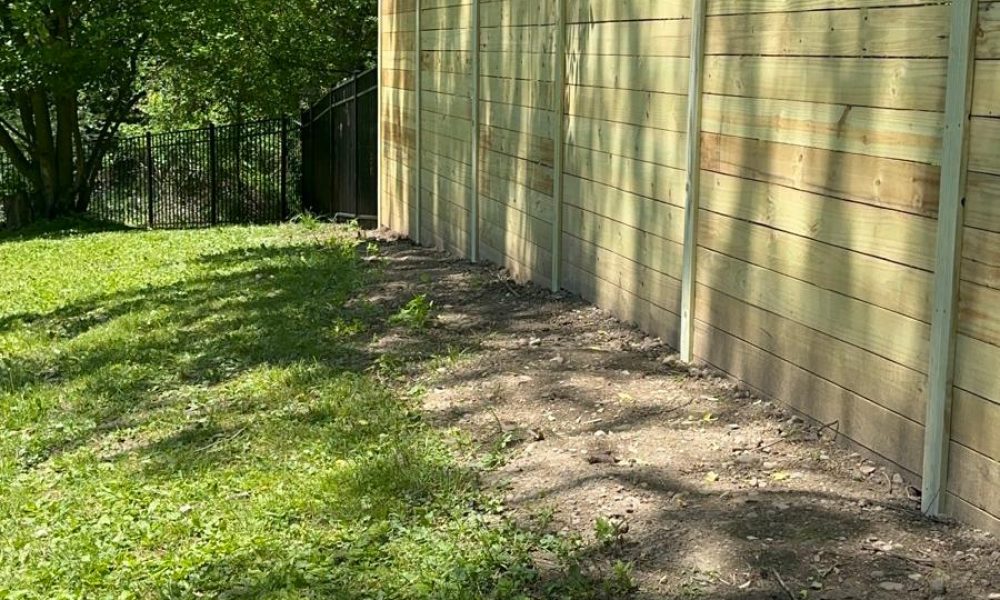
A few ideas from it apply directly to fencing. The first is natural surveillance: people should be able to see the fence line and the area around it. That’s why open-style ornamental fencing often works better than solid panels, since a solid wall can hide someone working on a break-in. The second is access control, which means guiding people toward designated entrances. The third is territorial reinforcement, meaning clear signals that a space is owned and cared for.
Lighting, trimmed landscaping, and good maintenance all support the fence. A well-kept property tells people someone is paying attention, and that alone changes behavior. A fence works best as one layer alongside cameras, lighting, and sensible site design, not as a stand-alone fix.
Common Industries That Require It
Many kinds of businesses choose higher-security fencing. Warehouses, distribution centers, and contractor yards protect equipment and materials. Auto dealers and repair shops secure vehicles and parts. Utility sites, telecom facilities, and water or electrical infrastructure often have strict access requirements.
Schools and childcare centers use fencing to control entry and keep kids inside safe boundaries. Medical and professional offices use it to secure parking and rear entrances. Apartment complexes and condo associations use ornamental fencing to define private areas without making the property feel like a compound. Self-storage facilities, recycling yards, and manufacturers round out the list.
The needs differ. A school may want attractive, climb-resistant steel with controlled gates, while a scrap yard may need height and rugged mesh. Good commercial fence installation starts with how the property is used, not a standard product list.
Compliance and Insurance Benefits
Some properties have fencing requirements from a city, a utility, or a regulator. Pool enclosures, transformer and equipment areas, and certain industrial sites are examples. We recommend confirming rules with your local code office before you buy, since requirements differ by location and use.
Insurance is a softer area. A properly installed security fence may support your case when you talk with your insurance provider, particularly if it’s part of a larger plan with lighting and cameras. We can’t promise a discount or lower premium, because every insurer sets its own rules. What we can say is that it’s worth asking your agent what they look for.
Fencing also helps with liability. Controlling access to hazards like equipment, drop-offs, and water reduces the chance of someone getting hurt on your property.
Durability in Buffalo Weather
Buffalo is hard on fences. Lake-effect snow, heavy wet loads, road salt, and repeated freeze-thaw cycles all take their toll, and a typical winter here brings roughly 90 inches of snow.
Salt and moisture are the main enemies of steel. That’s why finish quality matters more here than in milder climates. Galvanizing followed by powder coating gives steel a layer of protection against rust. Post depth matters as well, because frost can push shallow footings upward over time, so posts need to be set below the frost line. Drainage around the base helps too.
Plowing causes its own damage. Piles of heavy snow can push against a fence, and plow blades can strike the bottom rail. Allow clearance where plows operate, and plan for it in the layout. At All Pro Fence, we treat the weather as a design factor, not an afterthought, because a fence that looks great in July still has to hold up in February.
Cost Considerations
Price depends on length, height, material, finish, terrain, gates, and access controls. A short run of aluminum costs much less than a long run of heavy steel with an automated slide gate.
Here’s what usually drives the total up or down. Steel costs more than aluminum, and 358 mesh costs more than standard chain link. Tall fences need stronger posts and deeper footings. Gates and electronic controls add expense, as do rocky or sloped ground, utility locates, and permit fees. Removing an old fence adds labor too.
We’d encourage you to compare total value over time instead of just the lowest bid. A cheaper fence that rusts out or gets cut open in a few years isn’t cheaper in the end. Ask for a written quote that lists materials, finish, gate hardware, and warranty terms, so you can compare real numbers. If you want an honest look at your property, the team at All Pro Fence is happy to walk the site and talk through options with no pressure.
Frequently Asked Questions
What is the best fence for commercial security?
It depends on the risk. Heavy-gauge ornamental steel works well for most businesses, while 358 mesh suits higher-risk sites. Height, gate strength, and how the fence is installed matter just as much as the material you pick.
Is an anti-climb fence really impossible to climb?
No fence is impossible to climb. An anti-climb fence uses tight spacing, no horizontal rails, and extra height to make climbing slow and difficult. The goal is to deter people and give you time to respond.
Is ornamental steel better than aluminum?
Steel is stronger and better for security, while aluminum resists rust and needs less upkeep. For high-risk areas, most owners choose steel. For decorative or low-risk areas, aluminum is often enough and easier to maintain.
Can I put barbed wire on a fence in Buffalo?
Rules vary by zone and municipality, and some areas restrict or prohibit it. Check with your local code office before you plan. Spear-style tops on ornamental fencing are often a more acceptable alternative.
How long does commercial fence installation take?
Small projects can take a few days, while larger ones with gates and electronics take longer. Permits, utility marking, weather, and material lead times all affect the schedule. A contractor can give a realistic estimate after seeing the site.
Will a security fence lower my insurance costs?
Maybe, but it’s not guaranteed. Each insurer sets its own rules. Ask your agent what security features they value, and bring details about the fence, lighting, and cameras so they can evaluate the whole setup.
How does Buffalo weather affect metal fencing?
Snow, road salt, and freeze-thaw cycles can cause rust and shift posts. Galvanized, powder-coated steel, deep footings below the frost line, and plow clearance help a fence last. Regular checks for scratches and loose parts also matter.