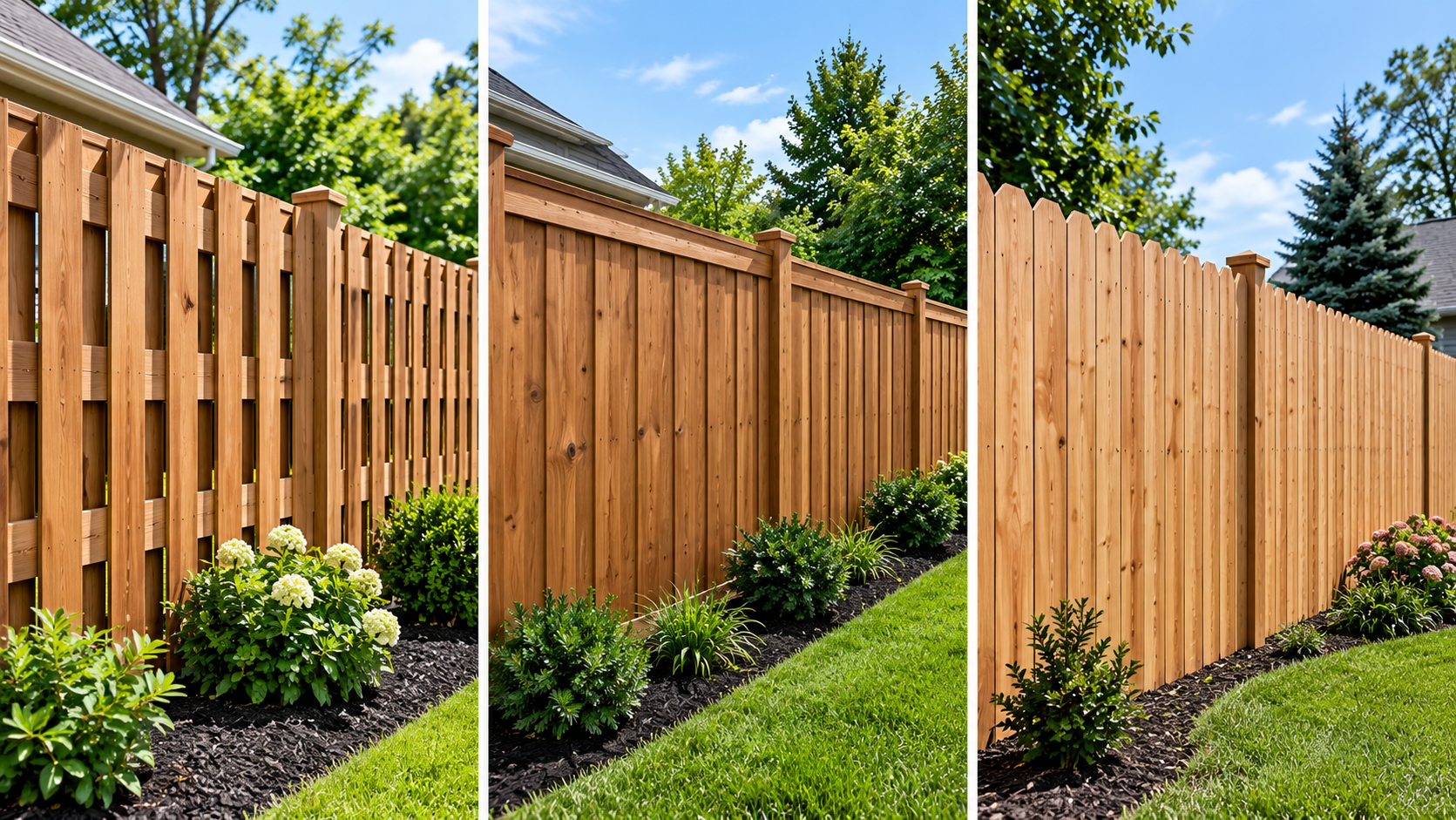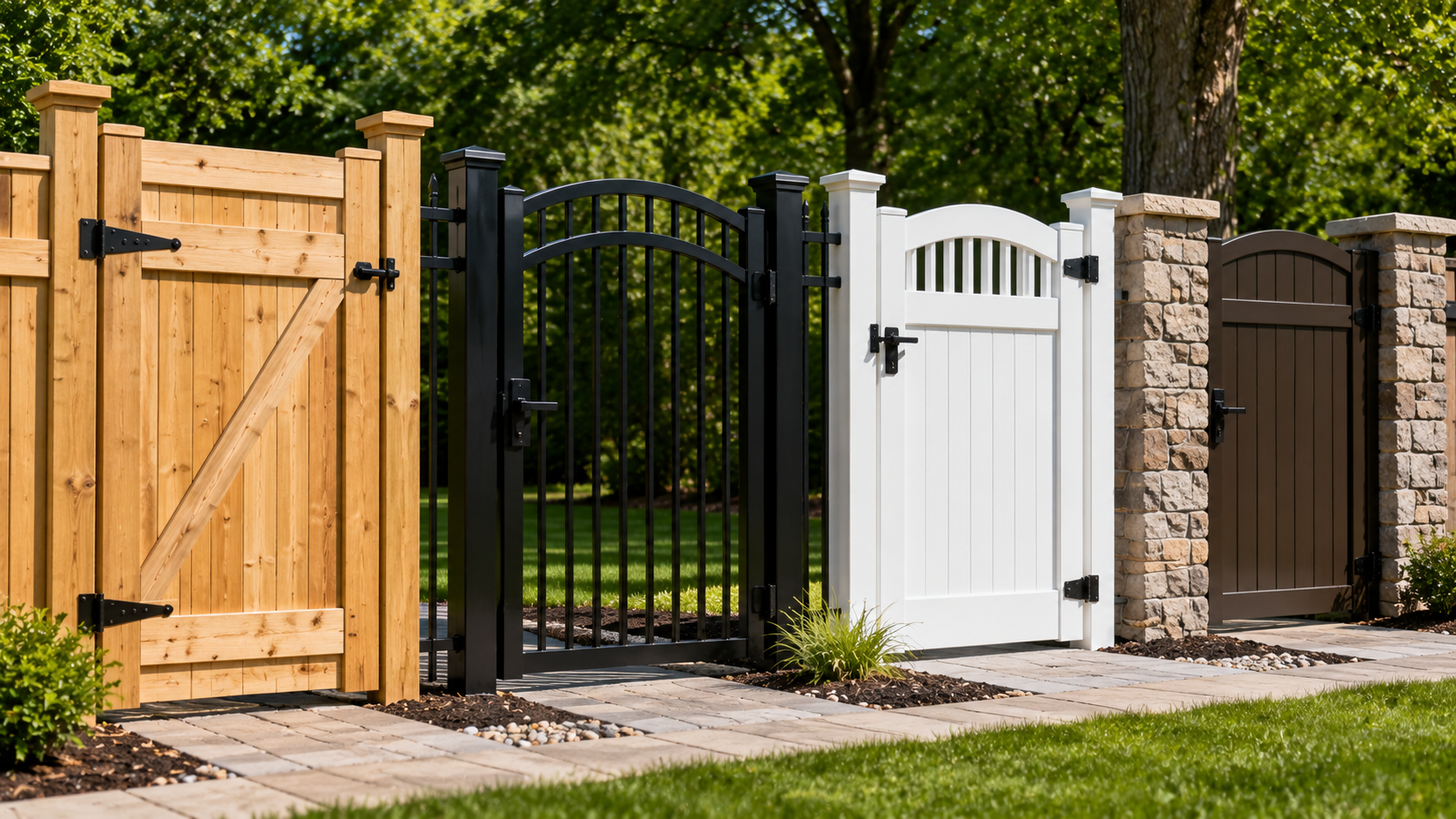
When most Buffalo homeowners decide they want a wood privacy fence, the first question is usually about height. The second question- which style- gets less thought than it deserves. The three most common wood privacy fence designs aren’t interchangeable.
They look different from both sides, handle wind differently, use different amounts of material, and perform differently through Erie County winters. Choosing the wrong style for your property and priorities means living with that choice for the next fifteen to twenty years.
This covers shadowbox, board-on-board, and stockade, the three styles most commonly installed on Buffalo-area residential properties, with enough practical detail to make a confident decision before buying material or calling anyone for a quote.
Shadowbox Design and Airflow
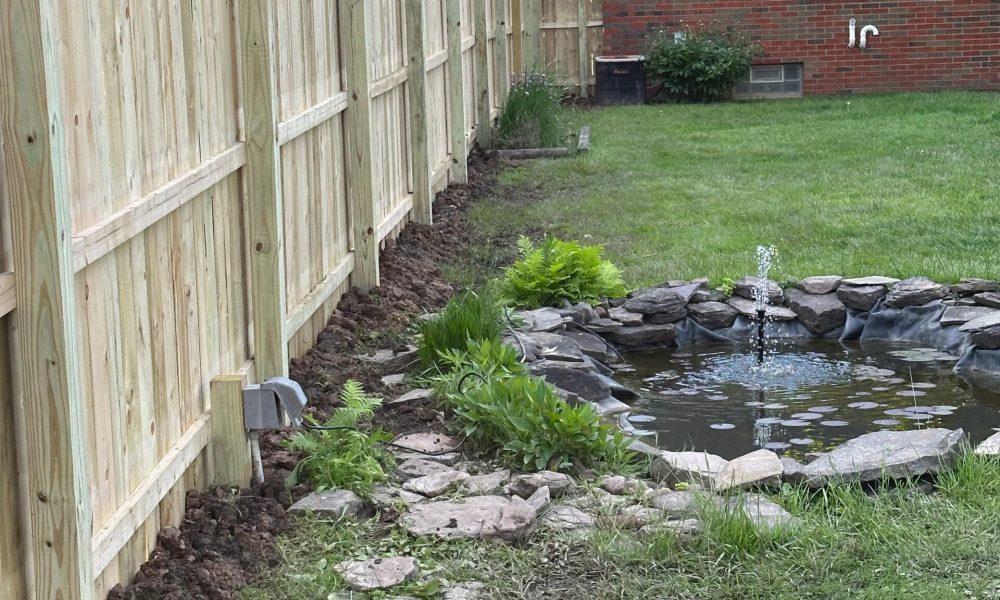
The shadowbox fence alternates boards on opposite sides of the horizontal rails. One board mounts on the front face, the next mounts on the back face, and so on down the fence line. The boards overlap slightly when viewed straight on, creating the appearance of a solid fence from the front. The alternating placement leaves a small gap that allows air to pass through the panel.
That gap is the defining functional feature of shadowbox. In a region where sustained winds off Lake Erie regularly hit twenty-five to forty miles per hour during storm systems, a fence that allows some airflow through the structure transfers less lateral load to the posts than a fully solid fence does.
Wind pressure on a solid panel has nowhere to go except into the post. A shadowbox panel bleeds some of that pressure through the gaps, which reduces the stress transferred to the post and concrete footing below.
This doesn’t mean shadowbox fences don’t require proper post installation. They absolutely do, and in Erie County that means posts set below frost depth with concrete footings and adequate drainage. But the airflow advantage is real, and it’s why many fence contractors in wind-exposed Western New York locations recommend shadowbox as the default wood privacy style.
The visual result from straight on is close to a solid fence. Step to either side and the alternating board pattern becomes visible. The aesthetic is clean, and the design looks deliberate rather than utilitarian.
Board-on-Board Full Privacy
Board-on-board is exactly what it sounds like: boards mounted with an overlap, all on the same face of the rail. Unlike shadowbox, every board goes on the same side. The boards overlap by an inch to an inch and a half, which closes every gap and creates a fully solid visual barrier from the street-facing side.
This is the right choice when complete visual privacy is the primary requirement. There are no sightlines through a properly built board-on-board fence, regardless of the angle. For properties in Buffalo’s denser residential neighborhoods, tighter lots in South Buffalo, Cheektowaga, or the older streets of North Buffalo where houses sit close together, that complete closure matters more than airflow.
The trade-off is wind load. A board-on-board fence presents a completely solid surface to the wind. Every pound of lateral pressure from a wind event transfers directly through the fence boards to the rails and into the posts. This makes post setting even more critical on board-on-board installations than on shadowbox. Posts need to be set at adequate depth, concrete footings need to be solid, and post spacing matters; longer spans between posts mean more load on each individual post during wind events.
Board-on-board also uses more material than shadowbox because of the overlap. A given section of board-on-board fence requires more linear feet of board than the same section in shadowbox, which affects both material cost and weight per panel.
The appearance from the back side, the neighbor’s side, shows the raw rail and post structure rather than the finished face. This is worth considering if the fence borders a neighbor’s property rather than a street or open space.
Stockade Style Overview
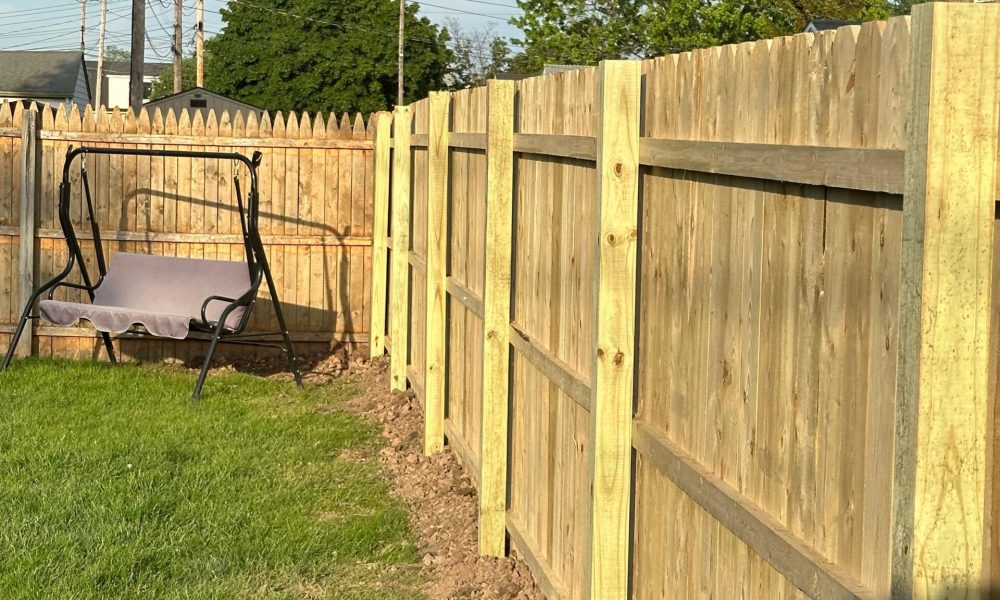
Stockade is the fence style most people picture when they hear “wood privacy fence”: vertical boards with pointed tops, tight together, sold in pre-assembled panels that attach to posts. It’s the most widely available style at home improvement stores and typically the least expensive option per linear foot.
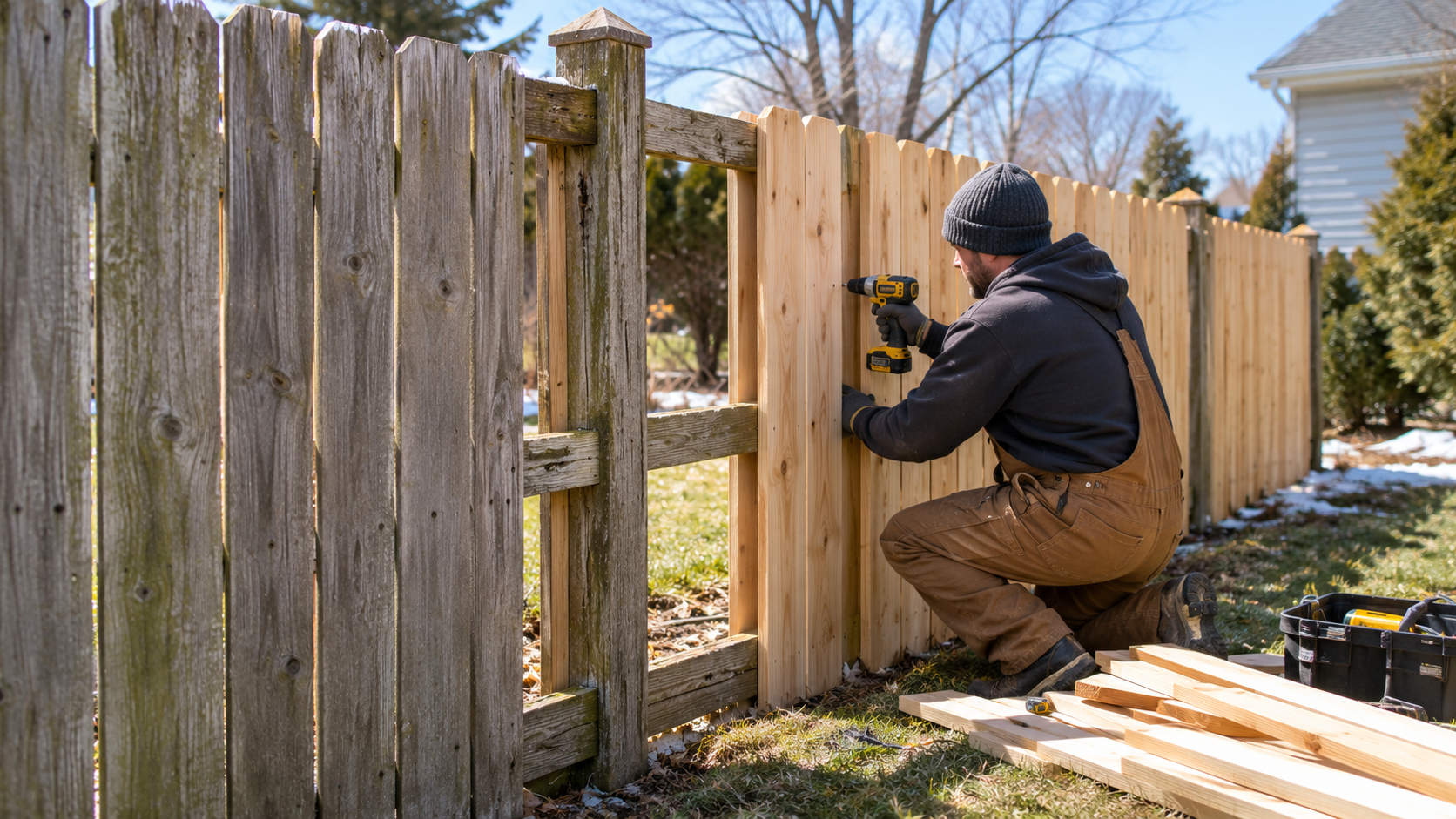
The pre-assembled panel format is both the appeal and the limitation. Panels are fast to install and require less on-site labor than custom board-by-board styles. For a straightforward DIY wood fence project on a level lot with a standard layout, stockade panels are genuinely accessible.
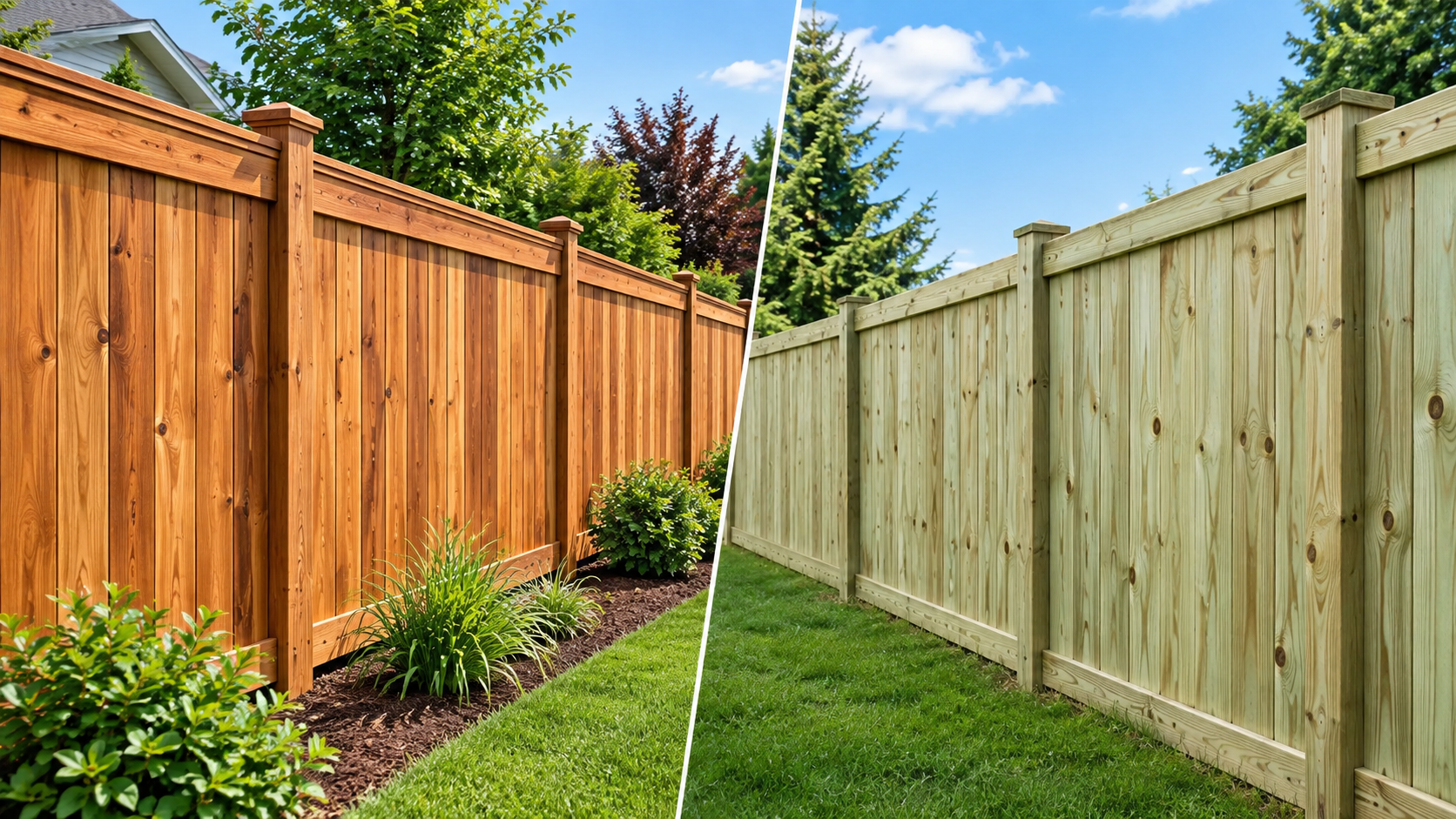
The durability concern in Buffalo’s climate comes from two sources. First, pre-assembled stockade panels are often made from standard pine rather than cedar or pressure-treated lumber, which has minimal natural rot resistance. In Erie County’s wet seasons and freeze-thaw cycles, untreated pine stockade panels tend to deteriorate faster than cedar or pressure-treated alternatives.
Second, the tight board spacing in stockade panels traps moisture between boards with minimal airflow, creating conditions where the wood stays damp longer after rain or snowmelt.
Stockade panels also have less flexibility for slope adjustment than custom-built styles. On a flat lot, panels install cleanly. On a sloped lot, stepping the panels creates gaps at the base, and standard rigid stockade panels don’t accommodate a racked installation the way custom-built fences can.
If budget requires stockade, cedar or pressure-treated stockade is a better choice than standard pine, though the lifespan will generally be shorter than a board-on-board or shadowbox fence built from the same materials.
Which Handles Buffalo Wind Best
Wind performance comes down to how much of the fence surface is solid versus open. More open surface means less wind resistance, which means less load transferred to the posts.
Shadowbox handles wind the best of the three styles because of the airflow gaps between alternating boards. Board-on-board comes next; it’s fully solid, but the overlapping board construction creates some structural redundancy in how boards distribute load across the rails.
Stockade tends to be the least wind-resistant in practice, partly because of the solid panel construction and partly because pre-assembled panels depend on the panel-to-post connection rather than individual board connections to the rail.
For properties in Amherst, Lancaster, or areas with less tree coverage and more open exposure to lake-effect wind patterns, wind performance is worth factoring into the style decision as a practical durability consideration, not just aesthetics.
Appearance from Both Sides
This matters more than most homeowners think when deciding on a wood privacy fence style, because a fence that borders a neighbor’s property is visible to them every day.
Shadowbox presents the same alternating board pattern from both sides. Neither the front nor the back is the raw side. This is the most considerate choice for a shared property line, and one reason some local fence ordinances specify shadowbox or similar double-sided designs for fences visible from neighboring properties.
Board-on-board has a clear finished front and a raw back. The back shows the horizontal rails and the edges of the boards rather than the face. It’s not unattractive, but it’s visibly different from the front.
Stockade panels show the pointed tops on the front and the internal backer rails on the back. The back of a stockade fence is the least finished of the three styles.
If aesthetics from the neighbor’s side matter for your property, shadowbox is the clearest choice. If the fence backs to your own property or a non-residential space, board-on-board or stockade gives you the full visual effect on the side that matters most.
Cost Differences by Style
Material cost per linear foot varies between styles, and the differences are real enough to factor into project budgeting.
Stockade is typically the least expensive, with pre-assembled panels, faster installation, and the lowest material cost per foot. The lower upfront cost comes with the shorter lifespan trade-off in Buffalo conditions.
Board-on-board uses more material because of the overlap and runs higher per linear foot than stockade. Shadowbox falls between the two; it uses less material than board-on-board because the alternating placement doesn’t require the same overlap, but more than stockade because of the two-sided construction.
For a rough comparison on a 100-linear-foot cedar privacy fence at six feet tall: stockade typically runs the lowest material cost, shadowbox comes in moderately higher, and board-on-board sits at the top of the three because of the additional board footage required.
Labor costs are broadly similar across all three styles for professional installation. DIY wood fence material-only projects see the biggest cost variation between styles.
Material Needs Per Style
Understanding how each style uses material helps with project planning, whether you’re doing it yourself or comparing contractor quotes.
Shadowbox requires boards on both sides of the rail, but the alternating placement means you’re covering roughly 125 percent of the linear footage rather than 200 percent. Board-on-board with one inch of overlap on a six-inch-wide board requires approximately 17 percent more boards than the equivalent straight linear footage; every six inches of fence needs slightly more board to cover it with the overlap. Stockade panels are sold by the panel rather than by the board, so quantities are calculated from panel dimensions and total fence length.
Posts are consistent across all three styles. Six to eight feet on center is the standard post spacing for wood privacy fences, regardless of the panel style. Hardware, rails, and post caps are also consistent across styles. The variable is the fence boards or panels themselves.
Best Style for Sloped Yards
Sloped lots add a layer of complexity that the style choice directly affects.
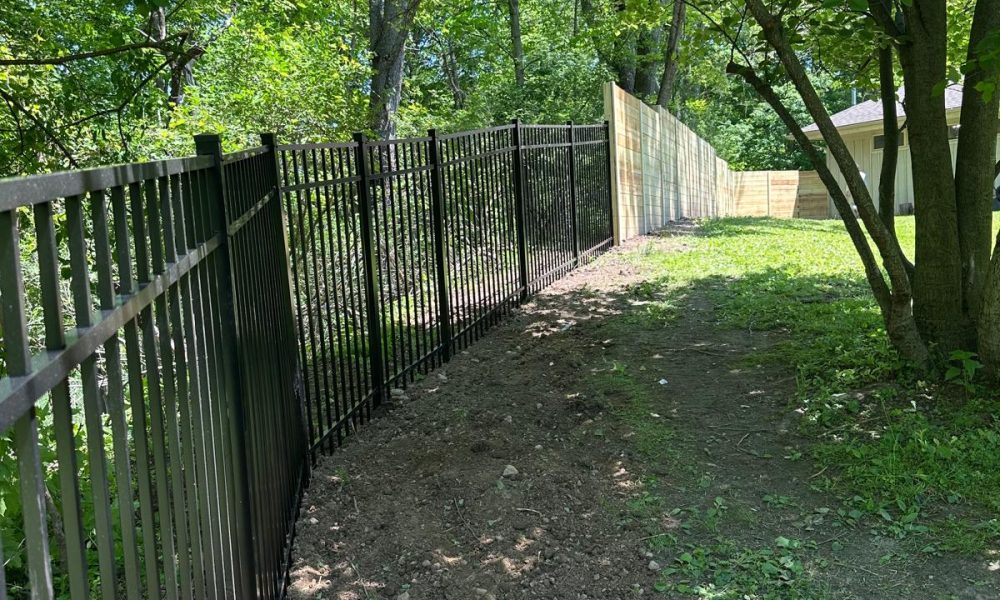
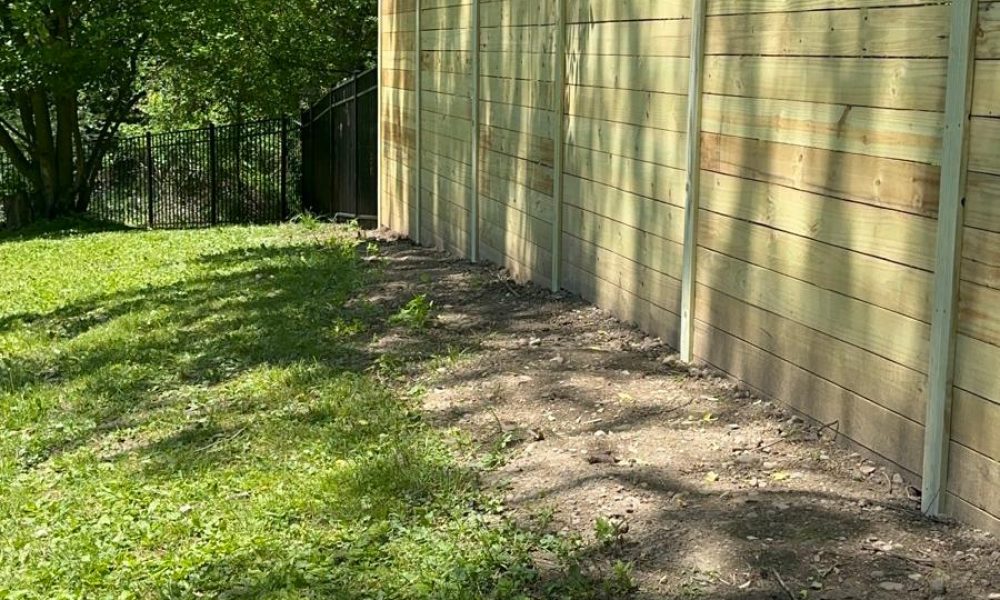
Shadowbox and board-on-board are both built board by board on site, which makes slope accommodation much more flexible. A fence section on a sloped lot can be racked, where the boards follow the slope angle, or stepped, where each panel drops to a new level in distinct horizontal increments. Both methods work cleanly with custom-built styles.
Stockade panels are rigid pre-assembled units. Stepping is the standard approach for stockade on slopes, which creates triangular gaps at the base of each stepped panel. On a gentle slope, this is manageable. On a significant grade, the gaps become large enough to be a functional and visual problem.
For Buffalo properties with sloped rear yards, common in Hamburg, East Aurora, or Orchard Park, custom-built shadowbox or board-on-board handles the grade more cleanly than pre-assembled stockade panels.
Maintenance by Design
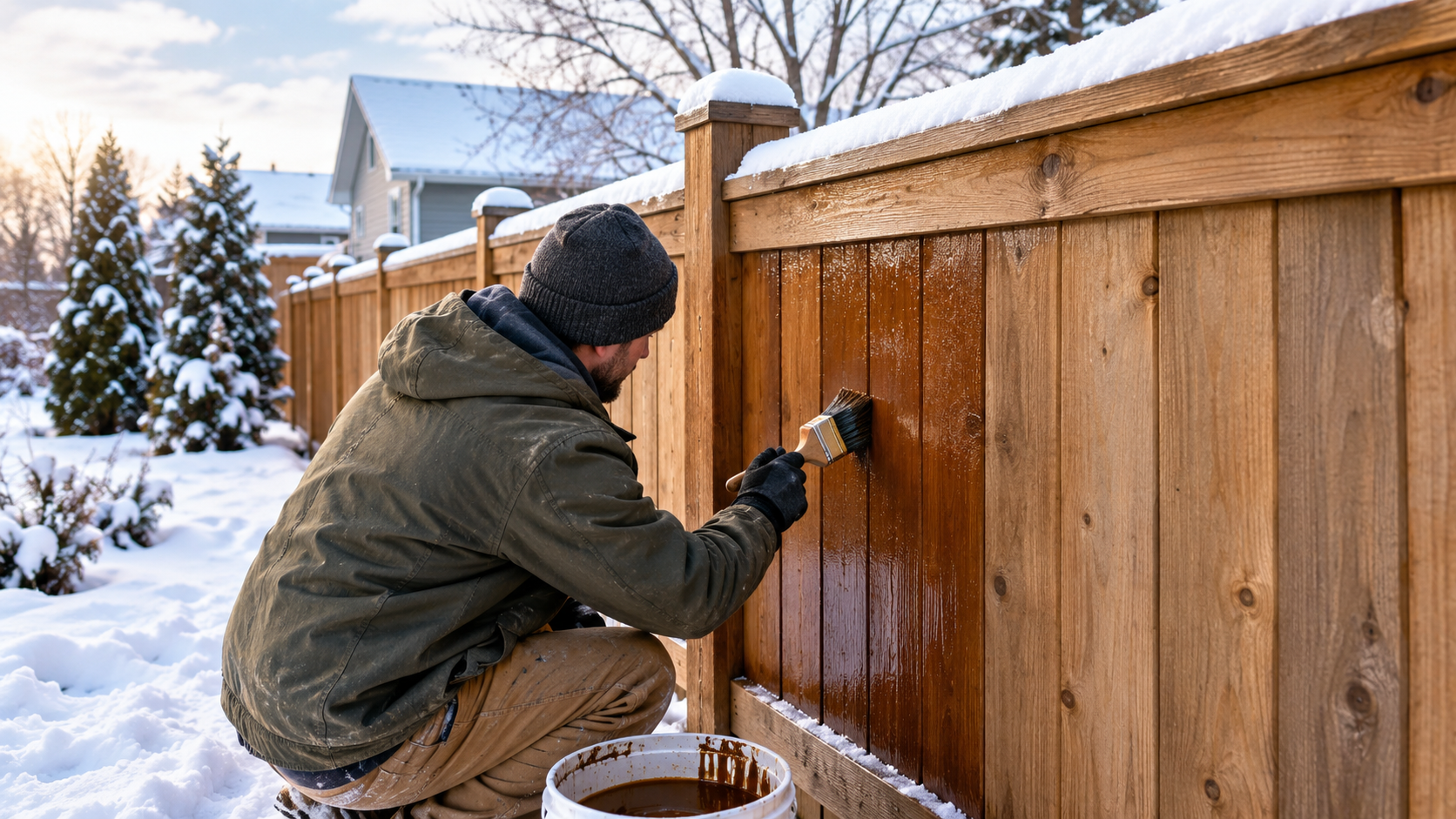
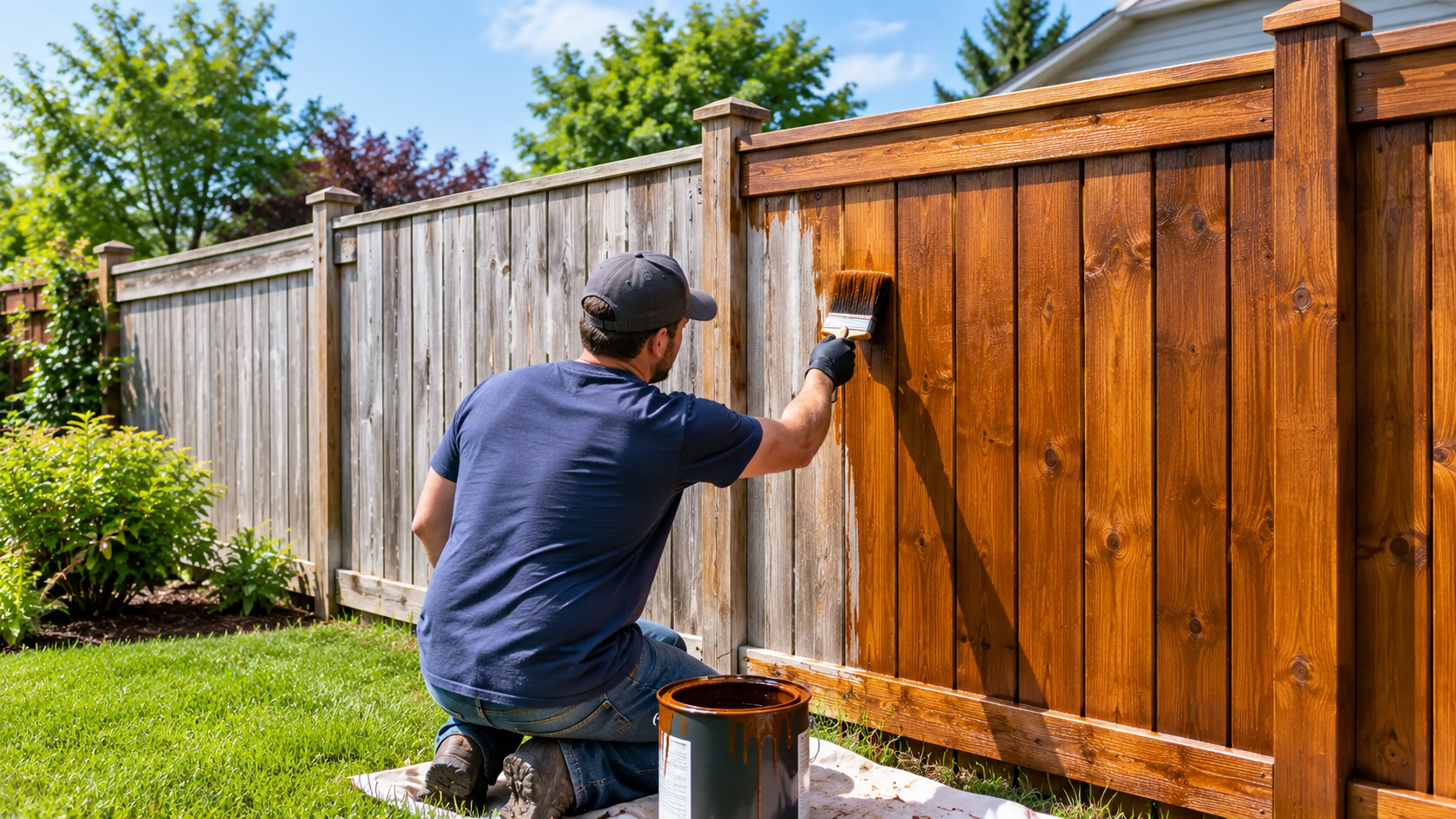
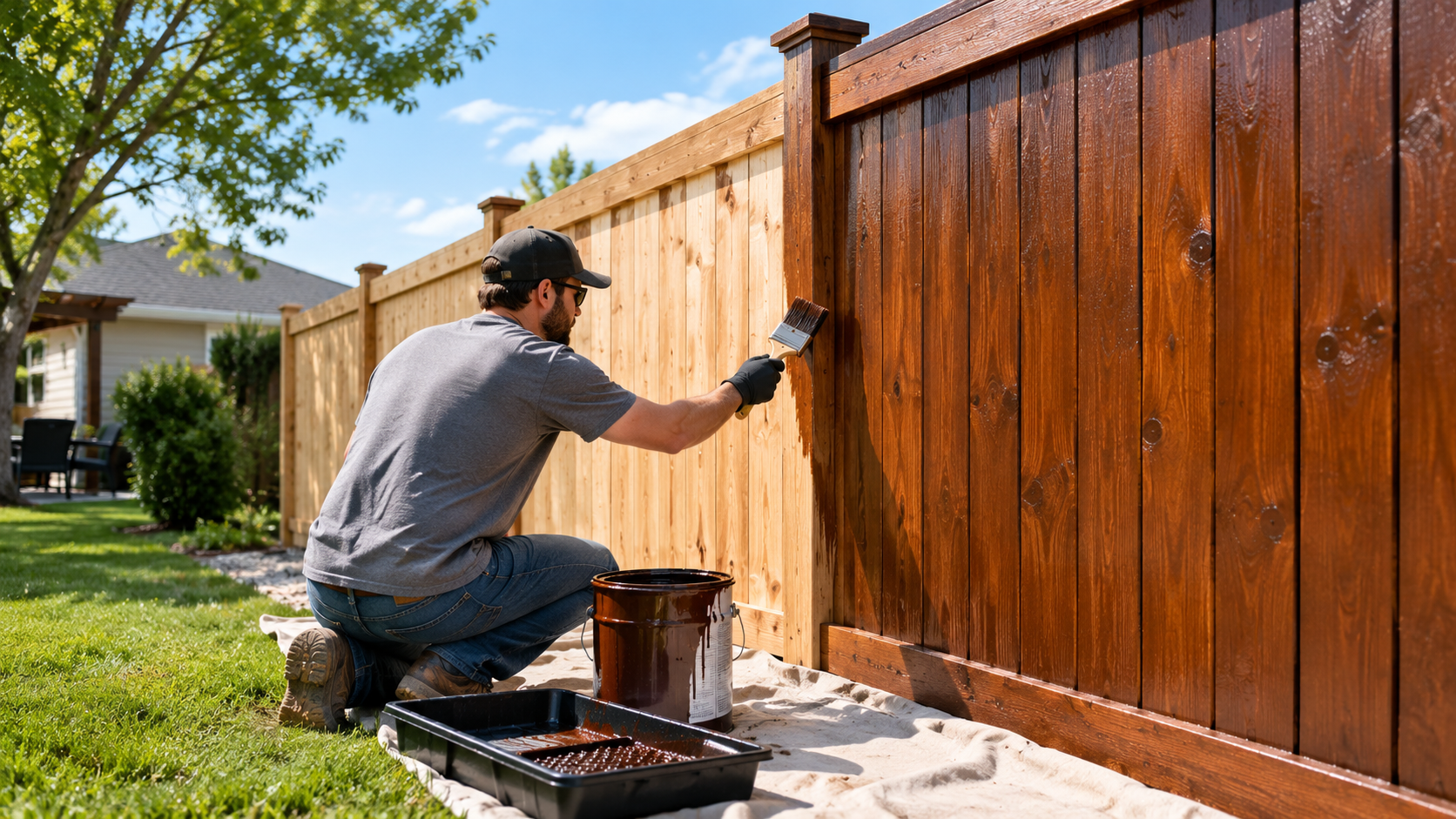
All three styles require the same basic maintenance approach: sealing or staining every two to three years, annual inspection for rot and loose fasteners, and keeping the board bases off the ground with a small clearance gap above grade.
Shadowbox has one maintenance advantage. The alternating board placement allows both faces of every board to dry after rain because there’s airflow on both sides. Board-on-board boards on the outer face dry well, but the boards against the rail see less airflow and can retain moisture longer. Stockade boards, packed tightly together, have the least airflow between individual boards and dry the slowest of the three styles.
This moisture retention difference affects maintenance frequency and longevity over the life of the fence. Shadowbox requires less frequent intervention because the wood dries more completely between wet periods. All styles benefit from keeping two inches of clearance between the bottom board and grade, sealing end grain at installation, and clearing debris from the fence base before winter.
Matching Style to Your Home
The practical considerations- wind, privacy, budget, slope- should drive most of the decision. But the visual match to the home is worth thinking through before committing.
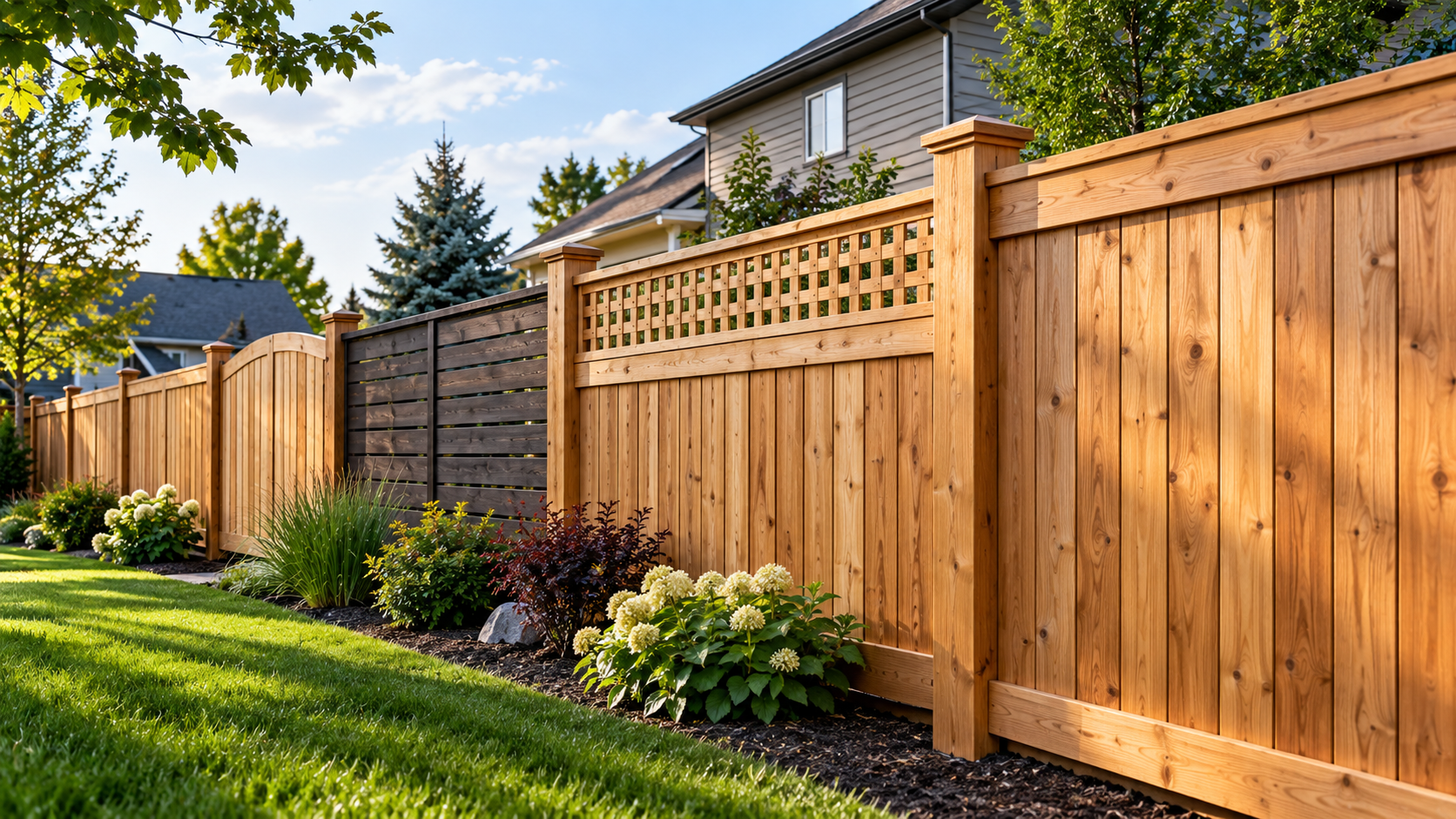
Traditional and craftsman homes in Buffalo’s older neighborhoods read well with the clean symmetry of shadowbox. Contemporary homes with clean lines suit board-on-board’s solid, uniform face. Ranch-style homes and simpler residential architecture aren’t particularly demanding; any of the three styles works without looking out of place.
Height changes the feel more than style in most situations. A six-foot board-on-board fence reads as solid and private. The same height in shadowbox reads slightly lighter. Stockade at six feet is the most utilitarian-looking of the three regardless of home style.
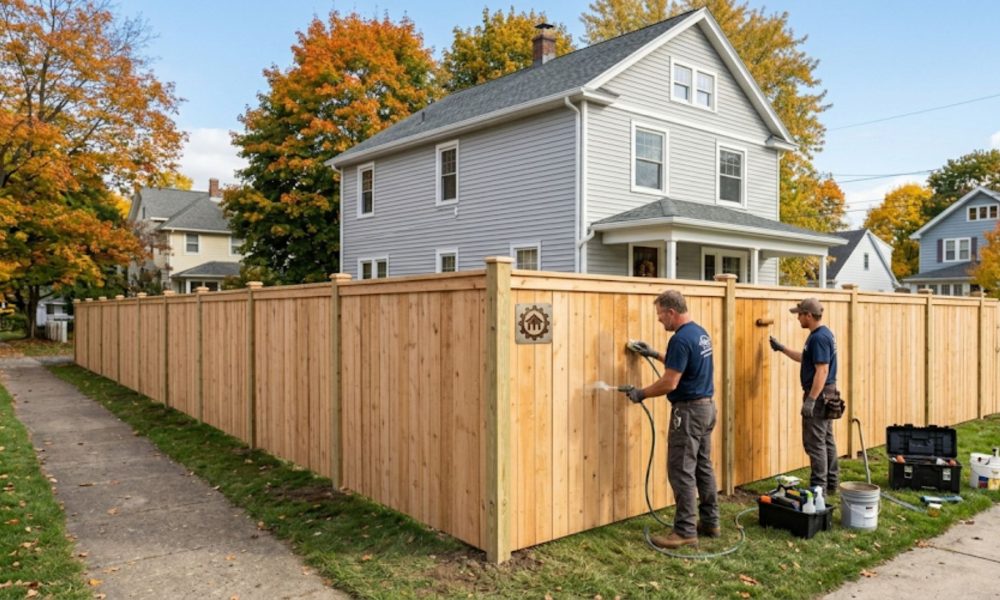
All Pro Fence Buffalo installs all three styles and custom configurations across Erie County. If you’re planning a DIY wood fence and want to compare material quantities or pricing before deciding on a style, working through those numbers first gives you a realistic basis for comparison. If you’re looking at professional installation, a site-specific recommendation based on lot conditions, wind exposure, and budget is more useful than a general style preference.
Frequently Asked Questions
What’s the most durable wood privacy fence style for Buffalo winters?
Shadowbox and board-on-board built from cedar or pressure-treated lumber handle Erie County weather best. Shadowbox offers slightly better wind resistance due to airflow, but a deep, frost-line post setting is what truly ensures durability.
Is a shadowbox fence actually private?
Yes, head-on. Shadowbox appears solid from the front, providing plenty of privacy for backyards. However, gaps become visible at an angle. Choose board-on-board if you need total visual block from every possible perspective.
Which wood fence style uses the most material?
Board-on-board requires the most lumber because overlapping boards use ~17% more material per linear foot. Shadowbox uses less since boards alternate without heavy overlap, while stockade relies on pre-built panel counts rather than loose boards.
Can stockade panels be installed on a sloped yard?
Yes, but only by stepping panels, which leaves triangular gaps underneath. Custom-built shadowbox or board-on-board fences adapt much better to sloped yards because individual pickets can be racked or stepped tightly to follow the ground.
How long does each wood fence style typically last in Buffalo?
Cedar or pressure-treated shadowbox and board-on-board fences last 15–25 years with proper care. Stockade usually fails faster because trapped moisture causes rot between tight boards—especially cheap, untreated pine panels unsuited for local weather.
Which style looks best from the neighbor’s side of the fence?
Shadowbox is the ultimate “good neighbor” fence because alternating boards make both sides look finished. Board-on-board and stockade reveal exposed support rails and framing on the inside, making them look unfinished from the back.
Does fence style affect HOA approval in Buffalo-area neighborhoods?
Yes. HOAs in areas like Amherst, Clarence, and Orchard Park often mandate double-sided designs like shadowbox for visible boundaries. Always check your specific community guidelines and get written approval before purchasing materials or building.