A business fence has a harder job than a backyard fence. It has to keep people out, take a hit from a plow, and still look decent from the street. Chain link does all of that well, but only when the specs match the site.
Most problems we see with a commercial chain link fence trace back to a choice made early to save a little money. Thin wire and shallow posts show up as sagging fabric a few winters later. A gate treated as an afterthought is the one that drags and breaks.
This guide walks through the decisions that matter, in plain language, so you can talk to any contractor with confidence. It comes from the crew at All Pro Fence Buffalo, who work on commercial fencing around Buffalo, NY.
Wire Gauge Explained (9 vs 11)
Gauge is the thickness of the wire, and the number works backwards. A lower number means thicker wire. Nine gauge measures about 0.148 inches across, and 11 gauge measures about 0.120 inches. That sounds tiny, but you can feel the difference when you grab the fabric and shake it.
For most commercial sites, 9 gauge is the sensible pick. It resists bending, cutting, and stretching, and it keeps its shape after a vehicle bumps it or someone leans on it. Eleven gauge works for light-duty jobs, like a small lot with little foot traffic, and it costs less for a reason. If the fence guards equipment, inventory, or a lot where people tend to cut through, go with the heavier wire.
Chain link gauge is only half of the fabric story. Mesh size matters too. The standard opening is 2 inches. A tighter 1-inch mesh makes it harder to get fingers and toes into the openings for climbing, so it shows up where security matters more than price.
Framework and Post Specs
The wire gets the attention, but the frame does the work. Posts, rails, and footings decide whether the fence stands straight for twenty years or leans after five.
A chain link fence has terminal posts at the ends, corners, and gates, with line posts in between. Terminal posts carry the most strain because they hold the fabric tight, so they are larger.
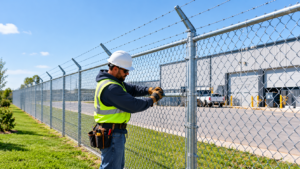
On commercial work, a common setup is 2-7/8 inch outside diameter for terminal posts, 2-3/8 inch for line posts, and a 1-5/8 inch top rail. Line posts are usually spaced no more than 10 feet apart. Heavier-wall pipe costs more than lighter roll-formed sections, and on a commercial property it is usually worth it. Taller fences and gate posts need bigger pipe than a standard run.
Depth is where Buffalo is different. The frost line here is commonly cited at around 42 inches, and frozen ground pushes shallow footings up and sideways. Posts should sit in concrete set below the frost line, with a wide enough hole to leave a solid collar around each one. Confirm the exact depth with your local code office, since it can vary by municipality. A tension wire along the bottom of the fabric also keeps it from lifting or being pulled up.
Standard Commercial Heights
Chain link fabric comes in standard heights of 3, 4, 5, 6, 7, and 8 feet, with taller options by special order. On commercial property, 6 feet is the most common choice. It is tall enough to discourage casual crossing, and it fits within height limits in many zones. Eight feet makes sense where security matters more, such as contractor yards and storage lots.
Height changes the price faster than you might expect. A taller fence needs heavier posts and deeper footings, so the cost climbs more than the extra two feet suggests. A security topper adds another foot or so without changing the fabric, which is a cheaper way to gain height.
Local rules often cap fence height, especially near the street or a neighboring property. Confirm the limit for your zone before you settle on a number.
Vinyl-Coated vs Galvanized
Galvanized chain link is steel wire coated with zinc. The zinc protects the steel from rust, and it gives the fence its silver-gray look. Vinyl-coated fence adds a layer of colored vinyl, usually black or green, over that galvanized wire.
Galvanized costs less and lasts a long time. Buffalo is hard on metal, though. Road salt, wet snow, and lake-effect weather all wear on coatings. Vinyl adds another barrier, and it looks cleaner next to an office or a storefront. The catch is that a cut or scrape in the vinyl can let moisture creep in, so small damage should get touched up.
Coating weight matters on galvanized fabric. A heavier zinc layer lasts longer, so ask what you are getting. As a rule of thumb, galvanized suits back lots and utility areas. Vinyl-coated suits fences people see, or fences near a busy road that throws salt spray.
Barbed Wire and Razor Toppers
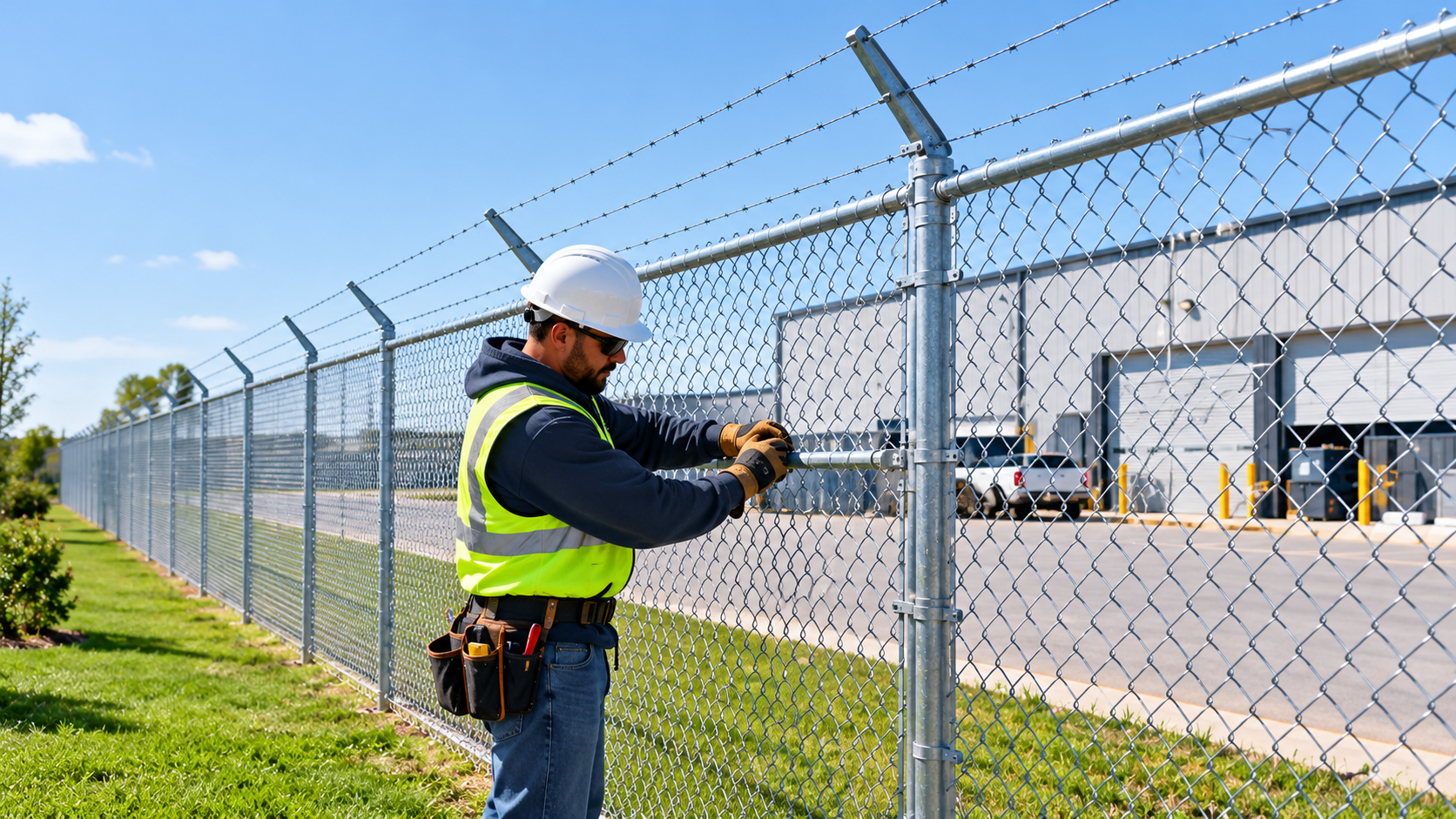
A security topper adds height and a deterrent without changing the fence below it. The usual setup is three strands of barbed wire on angled extension arms, set at about 45 degrees. That adds roughly a foot. Where the risk is higher, some sites use razor wire instead, which is more aggressive and more regulated.
Here is the part people skip. A topper is not just a spec choice. It is a legal and liability question. Many municipalities restrict barbed and razor wire to certain zones, require a minimum height above grade, or ban them along public sidewalks. The City of Buffalo and the surrounding towns each have their own rules, so check before you plan one.
Think about who is on the other side, too. A topper that leans over a sidewalk can injure a passerby, and that becomes your problem. And a security topper barbed wire setup does little if the fence is easy to dig under or climb. Tight mesh and bottom tension wire matter as much as what sits on top.
Privacy Slats and Windscreen
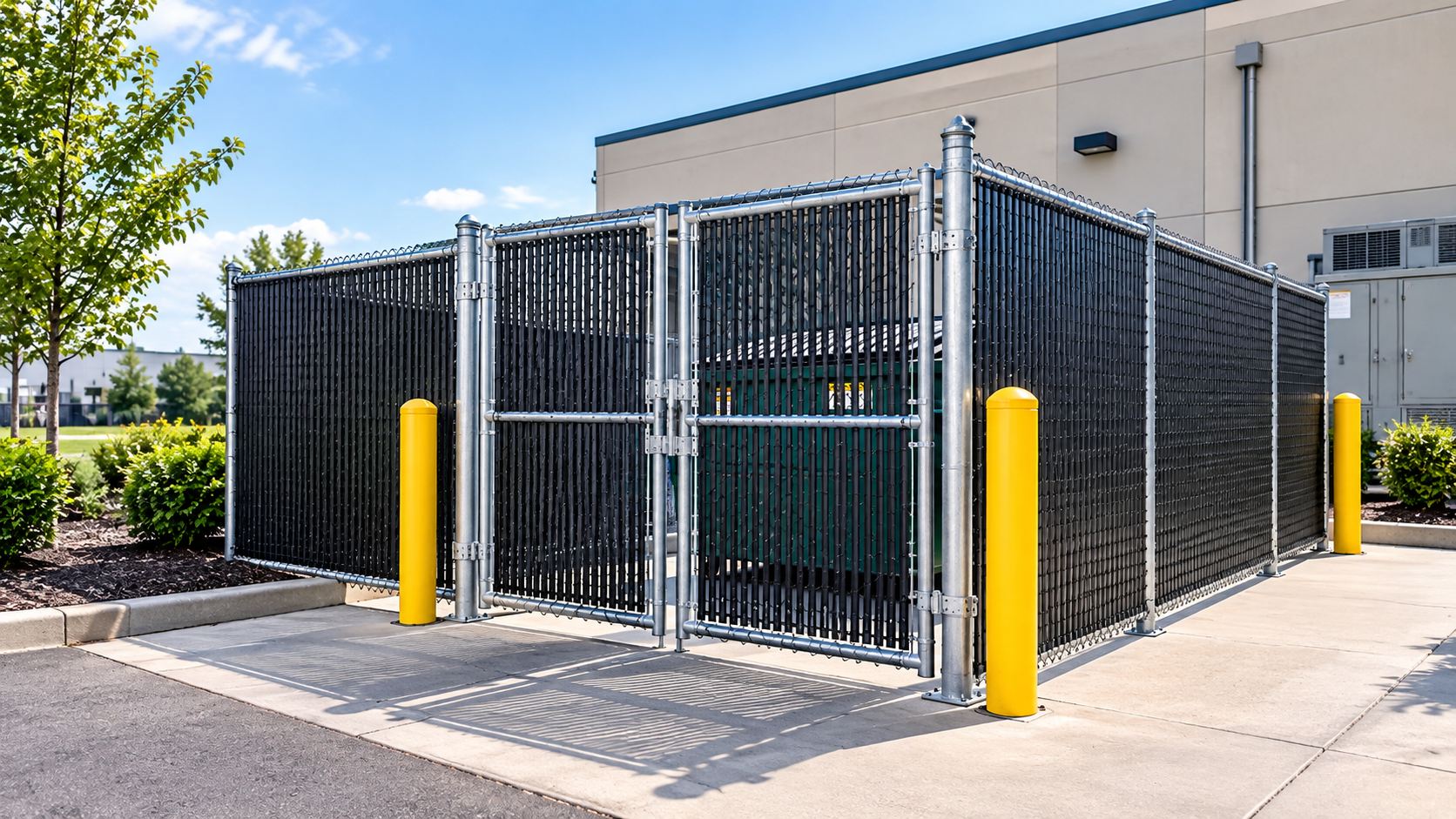
Sometimes the goal is not to stop people but to block the view. Privacy slats are strips of plastic woven into the chain link openings, row by row. They hide a dumpster area or a yard full of equipment, and they come in several colors. Windscreen is a fabric mesh tied to the fence, usually covering a longer stretch.
One warning. Both turn the fence into a sail. Wind pushes on solid coverage far harder than on open wire, and Buffalo winds plus heavy snow add load. If you plan to add slats or windscreen, tell your contractor up front so posts, rails, and footings are sized for it. A fence built for open wire can lean or tear loose in a storm once you dress it up.
Slats can also hide damage. Check behind them now and then, since rust and loose ties are easy to miss.
Gate Options for Commercial Sites
Gates are where commercial fences fail first, because they move every day. Think about traffic before you pick a type.
Swing gates are the simplest. A single swing works for walkways and small openings, and a double swing spans a driveway. They need clear room to open, and winter snow can block the arc.
Slide gates move sideways along the fence line and suit tight spaces. A cantilever slide gate rides on rollers above the ground with no track in the pavement, which helps where ice and packed snow are a regular problem. A gate that runs on a ground track can jam when the track fills up.
Many sites add automatic operators with keypads, card readers, or remote controls. Operators should meet the UL 325 safety standard, and sensors help prevent entrapment. When All Pro Fence Buffalo walks a site, the gate location is one of the first things we ask about, because it decides where trucks turn and where plowed snow ends up.
Don’t forget the walk gate. If it is part of an accessible route, width and hardware requirements may apply. Heavy-duty hinges and a larger gate frame also matter, since gates carry far more stress than the fence around them.
Meeting Local Code and Permits
Before anyone digs, check what the town allows. Rules on height, setbacks, and materials depend on the zoning district, and commercial and industrial zones often differ from residential ones. Many municipalities in Erie County require a permit for fence work, and some commercial properties have site plan conditions that apply on top of that.
Start with a call to your local building or code office. Ask about height limits, how close to the property line you can build, and whether toppers, slats, or gate operators need approval. If your lot lines are unclear, get a survey. A fence on the wrong side of a line is an expensive mistake. Corner lots may also have sight-line rules near intersections.
Call 811 before digging. In New York, that connects you to Dig Safely New York, which arranges for underground utilities to be marked. It is required, and hitting a gas or electric line is dangerous. If you lease your property, get written approval from the owner before work starts.
Lifespan and Maintenance
Chain link is low-maintenance, not no-maintenance. A properly installed galvanized fence commonly lasts 15 to 20 years or longer, depending on coating weight and exposure. Vinyl-coated can last as long or longer when the coating stays intact. Installation quality plays a big part, so a good product set badly will not last.
Salt is the main enemy in Buffalo. In spring, rinse the bottom of the fence where plows throw slush. Walk the line twice a year and look for loose ties, bent rails, leaning posts, rust at cut ends, and gates that drag or sag. If you find a scratch in the galvanizing, touch it up with a zinc-rich paint.
Keep vines and brush off the fabric, since they hold moisture and add wind load. Leave room for plowed snow so it does not pile against the fence and bend it. Oil hinges and latches. Small fixes done early are much cheaper than a section replaced after a bad winter.
Cost Per Foot Installed
Everyone wants a per-foot number, and I understand why. A number without a site visit is a guess, though. Material prices and labor change, and two fences with the same footage can price very differently.
Contractors usually quote a commercial chain link fence by the linear foot, with gates priced separately. What moves the total: wire gauge, height, coating, post size and spacing, the number of corners and gates, toppers, slats, and ground conditions like rock, slopes, or frozen soil. Tearing out an old fence, hauling it away, concrete, and permit fees add to it.
Get written, itemized quotes from a few companies and compare the same specs line by line. A much lower bid often means 11-gauge wire, lighter posts, shallower footings, or fewer gate parts.
Check each contractor’s Google Business Profile for a real local address and reviews that describe commercial jobs, and ask for a certificate of insurance. When you request a quote from All Pro Fence Buffalo or anyone else, ask for the gauge, post size, footing depth, and coating to be listed in writing.
Frequently Asked Questions
What gauge is best for a commercial chain link fence?
Nine gauge is the common choice for commercial sites because the thicker wire holds up to impact and cutting. Eleven gauge suits light-duty uses where traffic is low and the fence is not protecting anything valuable.
How tall should a commercial chain link fence be?
Six feet is the most common height. Eight feet suits higher-security sites. A barbed wire topper adds about a foot. Check local height limits first, since they differ by zone and by how close the fence sits to the street.
Is vinyl-coated better than galvanized?
Vinyl coating adds a second barrier against rust and gives a cleaner look. Galvanized costs less and works well for back areas. In Buffalo’s salt-heavy winters, coated fabric helps in visible, high-exposure spots.
Is barbed wire allowed on commercial fences in Buffalo?
It depends on the zone, height, and location. Many municipalities restrict barbed and razor wire, especially along sidewalks. Check with the local code office before ordering, because rules differ between the city and nearby towns.
Do I need a permit for a commercial fence?
Often yes. Many municipalities in Erie County require a permit for fence work, and commercial sites may have extra conditions. Call your local building or code office first, and call 811 before digging.
How long does a commercial chain link fence last?
Galvanized fence commonly lasts 15 to 20 years or longer. Lifespan depends on coating weight, installation quality, and salt exposure. Twice-a-year checks and quick repairs of scratches or loose parts help it last.
Why is one quote so much lower than the others?
A low quote may use lighter wire, smaller posts, shallower footings, or lighter gate parts. Compare gauge, post size, footing depth, coating, and gate hardware line by line before you decide.