Buffalo winters are hard on everything outside: cars, roofs, driveways, and yes, your wood fence.
Snow load, freeze-thaw cycles, and months of moisture soaking into the grain all take a toll. By the time spring rolls around, a lot of homeowners walk out to find a picket missing, a post leaning at an odd angle, or a rail that’s started to sag in the middle.
None of that means you need a whole new fence. Most winter damage is fixable, and knowing what’s repairable versus what’s not can save you real money.
Quick answer: Most wood fence damage after a Buffalo winter- broken pickets, a leaning post, a sagging rail- can be repaired without replacing the whole fence, usually for a few hundred dollars per section.
Frost heave is the main culprit, and it’s fixable if caught early. If you’re typing “fence repair near me” into your phone right now, the short version is: assess the damage first, then decide between a targeted repair and a full replacement based on how many posts are affected.
Assessing Winter Damage in Spring
Walk the fence line slowly once the ground thaws. Look at each post individually: is it plumb, or leaning? Push on it gently. If it moves at the base, that’s different from a post that’s just cosmetically weathered. Check pickets for cracks, splits, or spots where the wood has gone soft (a screwdriver test works fine; if it sinks in easily, that’s rot).
Look at the rails too, since those are what actually hold the pickets in place, and a sagging rail is often the first visible sign that something underneath has shifted. Take your time here. A five-minute walk can tell you whether you’re looking at a weekend fix or something bigger.
Replacing Broken or Rotted Pickets
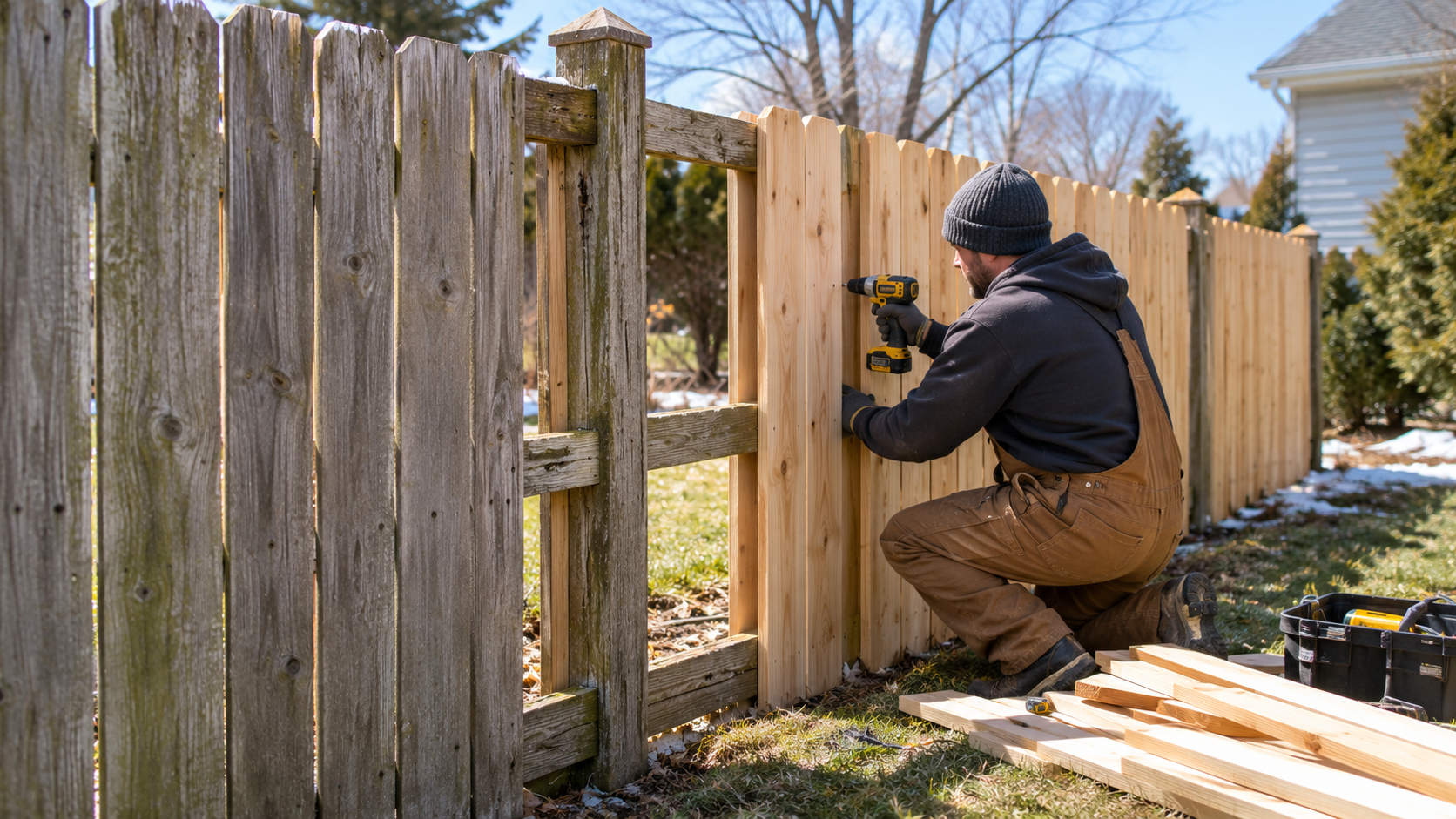
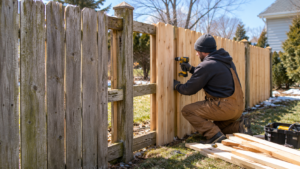
This is the most common spring repair, and honestly the easiest one. Pickets crack from ice expansion, get knocked loose by wind-blown debris, or just rot out at the bottom where they sit closest to the ground and soak up moisture.
Pulling a bad picket and swapping in a new one is straightforward; the harder part is matching the wood so it doesn’t look like a patch job, which we’ll get to below.
If more than a few pickets in a row are damaged, that’s usually a sign the rail behind them took on water too, so it’s worth checking before you just replace the boards and call it done.
Fixing or Resetting Leaning Posts
A leaning post is the number one reason people search for wood fence repair after winter. Sometimes it’s simple; the post has loosened in its concrete footing and just needs to be reset and re-secured. Other times, frost has actually heaved the footing itself out of the ground, which is a bigger job.
We generally try bracing and resetting first, since digging out and repouring a footing costs more time and money. If the post is still structurally sound (no rot at the base, wood’s intact), resetting is usually all it needs.
If it’s replace fence post territory, meaning the wood itself is compromised, there’s no shortcut around pulling it and starting fresh.
Repairing Sagging Rails
Rails carry more stress than people realize. They’re holding the weight of every picket attached to them, plus whatever snow piled up against the fence all winter. A sagging rail usually means one of two things: the rail itself has warped or cracked, or the post it’s anchored to has shifted.
Sistering a new rail alongside a weak one can work as a temporary fix, but if the wood’s split through, it’s better to replace it outright. Left alone, a sagging rail puts more strain on the pickets next to it, and that’s how a small problem turns into a section-wide one.
Dealing With Frost-Heaved Posts
Buffalo’s freeze-thaw cycle is rough on anything set in the ground. Water gets under a post footing, freezes, expands, and pushes the whole post upward, sometimes just a little, sometimes enough that you can see it.
This is different from a post that’s simply loose. A heaved post often needs to come out, have the footing dug below the frost line (locally, that’s typically around 42 inches), and get reset properly so it doesn’t happen again next winter. It’s more labor, but it’s also the fix that actually holds.
Patching a heaved post without addressing the footing depth just means you’re doing the same repair again in a year or two.
Matching New Wood to Weathered Fence
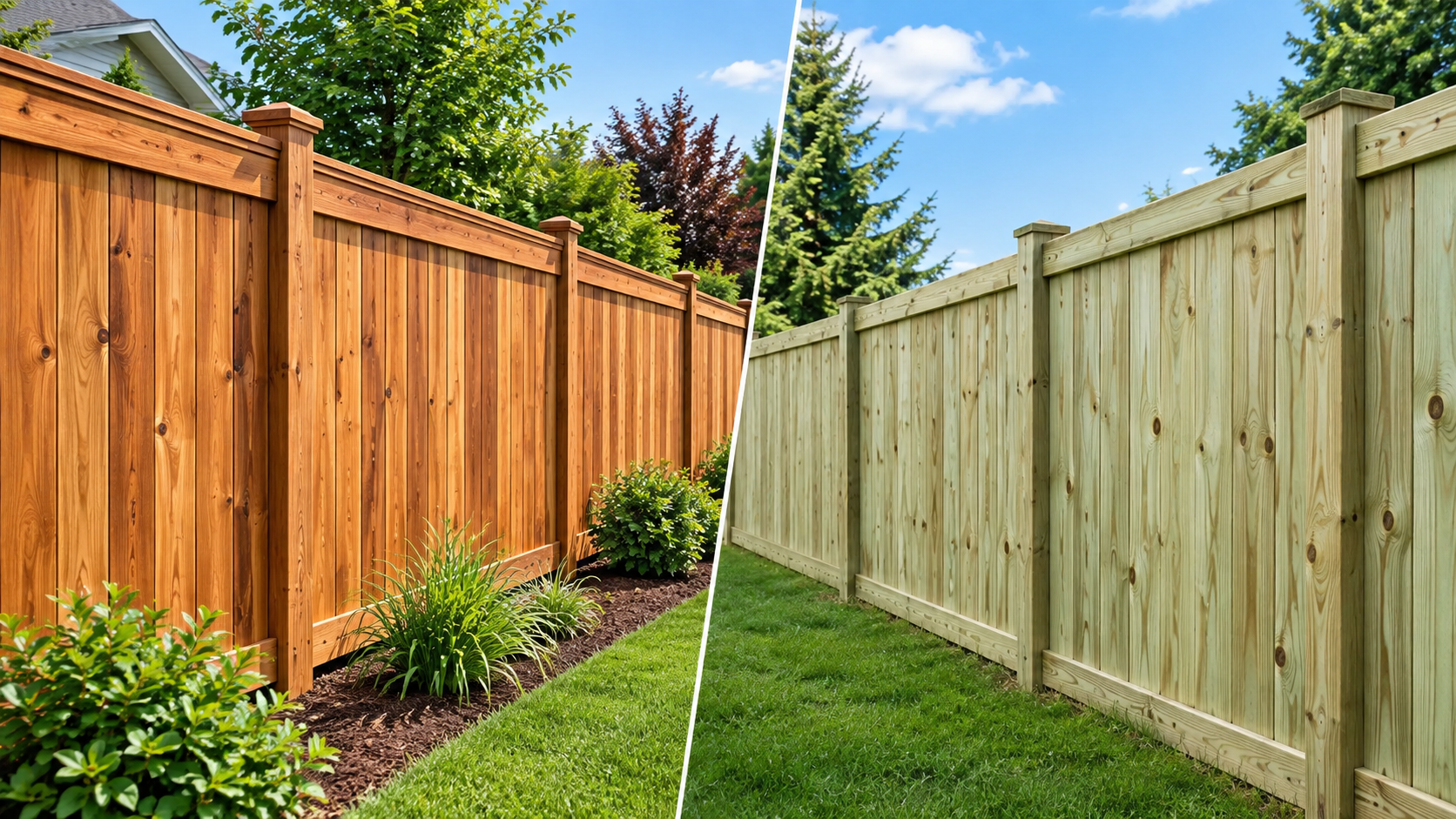
Nobody wants a fence that looks like it’s wearing a bandage. New cedar or pressure-treated lumber is going to look noticeably lighter than boards that have weathered for a few seasons, and that’s just physics: UV exposure and moisture change the wood’s color over time.
A few things help: choosing the same wood species and grade as the original, and letting new boards weather naturally rather than staining them to “match” right away, since stain rarely blends perfectly with aged wood.
If the whole fence is getting up there in age, sometimes the more honest answer is that a couple of new boards just won’t blend in seamlessly, and that’s worth knowing going into the repair.
Tools Needed for Repairs
You don’t need a full workshop for most of these fixes. A post level, a good hammer or drill/driver, galvanized fence screws or nails (never use plain steel; it rusts and stains the wood), a pry bar for removing old boards, a hand saw or circular saw, and quick-set concrete if you’re resetting a footing.
For frost-heaved posts, a post hole digger or auger saves your back. Having the right fasteners matters more than people think; mismatched hardware is one of the more common reasons a “repaired” section fails again within a year.
Reinforcing Weak Sections
Sometimes a section isn’t broken yet, but you can tell it’s heading that way: a little wobble, a rail that flexes more than it should. Adding a mid-post brace, doubling up a rail, or installing metal post anchors can buy a section several more years without a full rebuild.
This is especially worth considering on fence lines that catch a lot of wind or sit lower where snow piles up against them each winter. Reinforcing now is almost always cheaper than replacing later.
Repair vs. Full Replacement
This is the question that actually matters most. As a general rule: if the damage is limited to a handful of pickets, one rail, or a post or two, repair makes sense. If you’re looking at rot spreading through multiple posts, a fence that’s leaning in several spots, or wood that’s simply reached the end of its lifespan (most wood fences last somewhere in the 15–20 year range depending on wood type and maintenance), full replacement often ends up being the better value.
Patching an aging fence section by section can end up costing more over a few years than just replacing it once. There’s no universal answer here; it really depends on the age, the extent of damage, and what you want out of the fence for the next decade.
Repair Cost Guide
Costs vary based on materials and how much labor’s involved, but here’s a general range for Buffalo-area repairs: replacing a single picket typically runs on the lower end, a post reset (no new footing needed) costs more, and a full post replacement with a new footing costs the most per post since it involves digging, concrete, and cure time.
A sagging rail repair falls somewhere in between depending on whether it’s sistered or fully replaced. If you’re comparing quotes from a few companies for fence repair near me, ask specifically whether the quote includes footing work; that’s the detail that changes the price the most.
If you need to fix a leaning wood fence sections and you’re not sure whether it’s a quick reset or something more involved, it’s worth having someone take a look before spring storms add more stress to an already weak post.
All Pro Fence Buffalo has walked a lot of fence lines after a rough winter, and honestly, most of what we find is repairable. It’s rare that a whole fence needs to come down over what started as one bad post.
Frequently Asked Questions
How do I know if my fence needs repair or full replacement?
Check how many posts are affected and whether the wood is rotted or just weathered. One or two damaged sections usually mean repair. Rot spreading through several posts, or a fence over 15–20 years old, often points toward replacement being the better long-term value.
Can a leaning fence post be fixed without digging it up?
Sometimes, yes. If the post itself is sound and it’s just loosened in the footing, bracing and resetting can work. If the footing has heaved from frost or the post base is rotted, it usually needs to come out and be reset properly.
Why does my fence lean more after winter every year?
This is typically frost heave; water under the footing freezes and pushes the post upward slightly each season. Over time, that repeated movement loosens the post. Resetting the footing below the frost line usually stops the cycle.
How much does wood fence repair typically cost?
It depends on what’s damaged. A single picket swap is inexpensive; a post reset costs more; a full post replacement with new footing costs the most due to digging and concrete. Getting a quote that breaks down labor and materials helps you compare fairly.
Will new pickets match my weathered fence?
Not perfectly, at least not right away. New wood is lighter and darkens naturally over months of sun and weather exposure. Matching the same wood species helps it blend better over time, though it likely won’t be an exact match immediately.
How deep should a fence post footing be in Buffalo?
Local frost depth typically runs around 42 inches, so footings should generally go below that to avoid frost heave. Posts set shallower are more likely to shift or lean again after future freeze-thaw cycles.
Is it worth reinforcing a fence section instead of replacing it?
Often, yes. Adding braces, doubling a rail, or installing metal post anchors can extend a weak section’s life by several years for a fraction of replacement cost. It’s a reasonable middle option when a section isn’t fully failed but is showing early signs of stress.