Fencing a few acres is a different job than fencing a backyard. The runs are long, the ground changes every hundred feet, and one weak corner can take down a quarter mile of wire.
We see the same story around Western New York. Someone buys a farm fence setup that looked fine on paper, and a few winters of frost heave and deer pressure show where corners were cut.
This guide covers the main choices for agricultural fencing and a perimeter fence in rural New York, and it explains what to ask any of the commercial fence contractors you talk to. It comes from the crew at All Pro Fence, who build and repair fences around Buffalo.
Fencing Types for Farms and Acreage
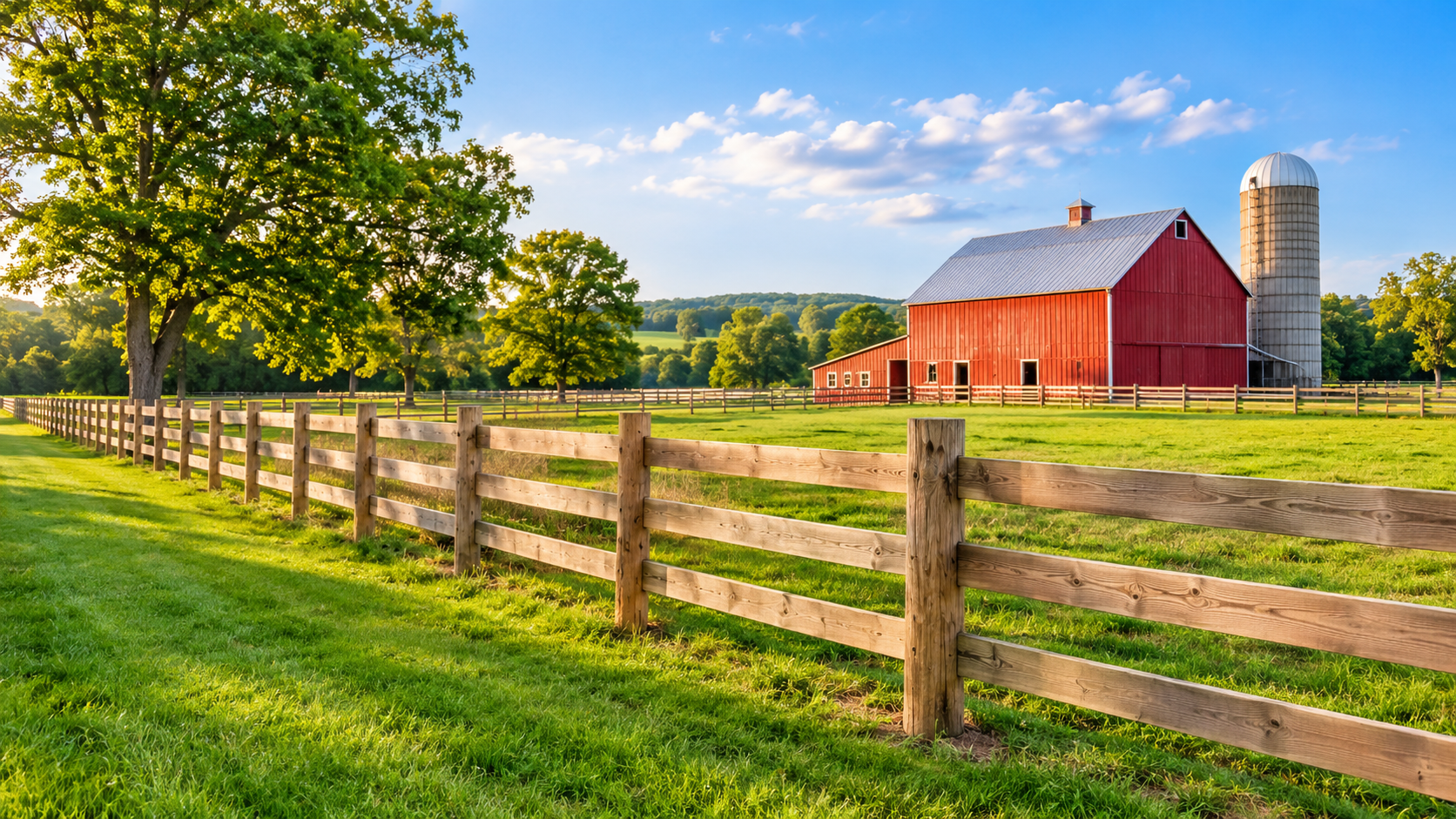
Most rural fences fall into a handful of types. Woven wire, often called field fence, is a mesh of horizontal and vertical wires that holds smaller animals in and keeps predators out. High-tensile fence is a set of tightly strung smooth wires that handles cattle and long runs at a fair price. Board and rail fence looks good along a road and suits horses. Pipe and welded panels take the abuse in working pens.
Barbed wire still exists on plenty of older farms, but many owners now avoid it near horses and roads because of injury risk. Electric fence can be added to any of these as a deterrent, or used on its own for rotational grazing.
The right choice depends on what is inside, what is outside, and what you are willing to maintain. A fence that needs constant attention will get ignored the first busy summer.
Livestock vs Perimeter vs Crop Protection
Start by naming the job. Livestock fence keeps animals in, so it has to handle pushing, rubbing, and panic. Cattle lean on a fence all day. Pigs root under it. Goats climb it. Horses can get hurt on the wrong wire, so the type matters more than the price.
A perimeter fence marks your boundary and keeps out trespassers, loose dogs, and neighboring animals. Visibility and the property line matter more there than raw animal strength.
Crop protection is mostly about deer. Deer fence around gardens, orchards, and vineyards generally runs about 8 feet tall, because a shorter fence gets cleared. One fence rarely does all three jobs well. On many hobby farms, it makes sense to build a solid perimeter fence along the boundary and use lighter cross-fencing inside for pasture rotation.
High-Tensile, Woven Wire, and Field Fence
High-tensile fence uses 12.5-gauge steel wire that is far stronger than ordinary wire and stays tight under tension. It goes up with tensioners and springs that take up slack as the weather swings. Over long runs, it often costs less than other types, because it needs fewer posts. It also takes an electric charge and needs little upkeep. The weak spot is the corners. A poorly built brace assembly lets the whole line go slack.
Woven wire comes in heights of roughly 32 to 48 inches, with openings that get closer together near the bottom. It is a good pick for sheep, goats, and keeping smaller predators out, often with a strand of wire or electric on top for larger animals. For horses, use no-climb horse fence with 2-by-4-inch openings, since a hoof can catch in bigger squares.
For posts, treated wood or black locust works well. Black locust is native to our area and naturally resists rot. Use large wood posts at corners and ends, with steel T-posts along the line. Set the corner and brace posts below the frost line.
Chain Link for Equipment Yards
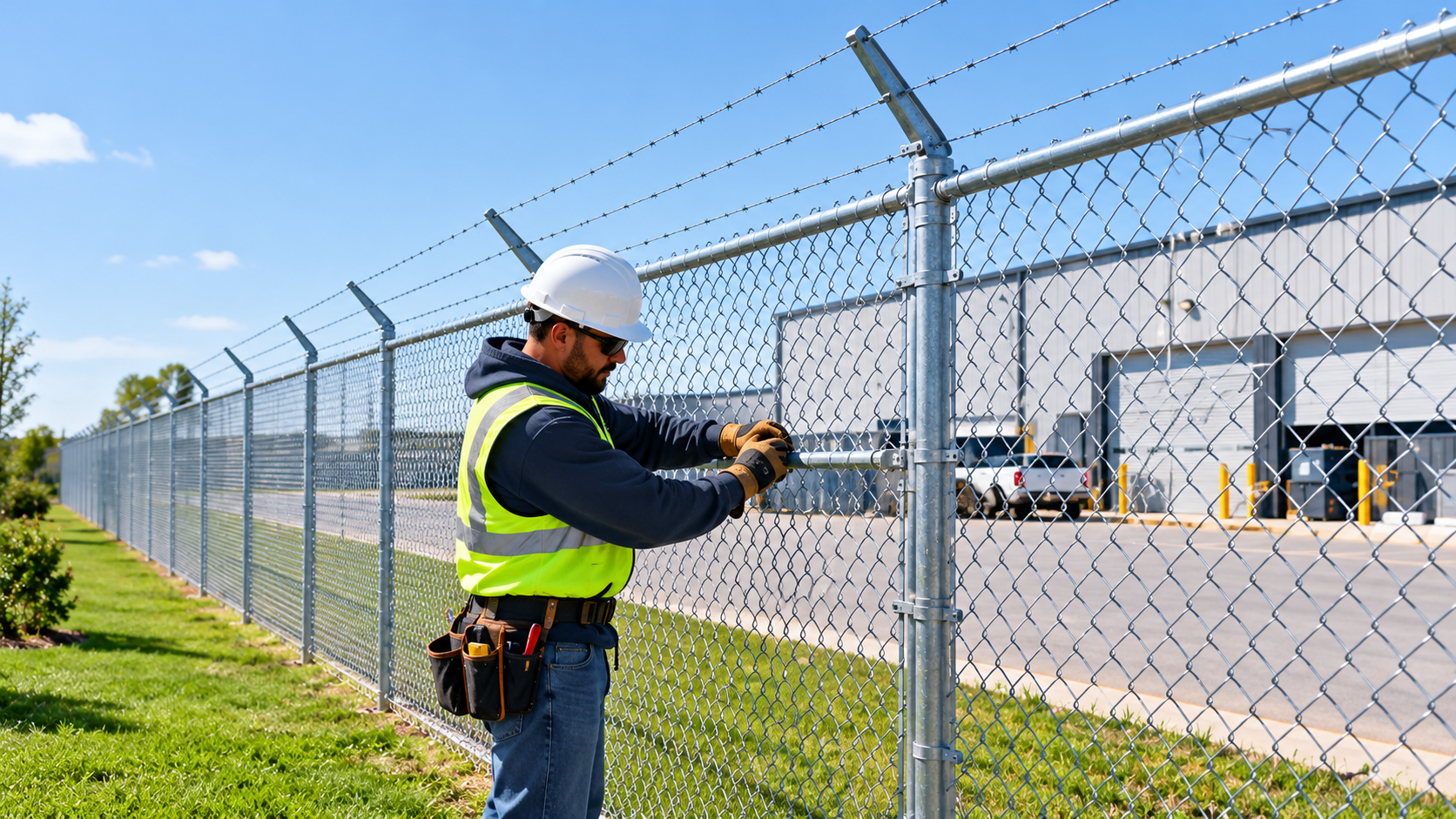
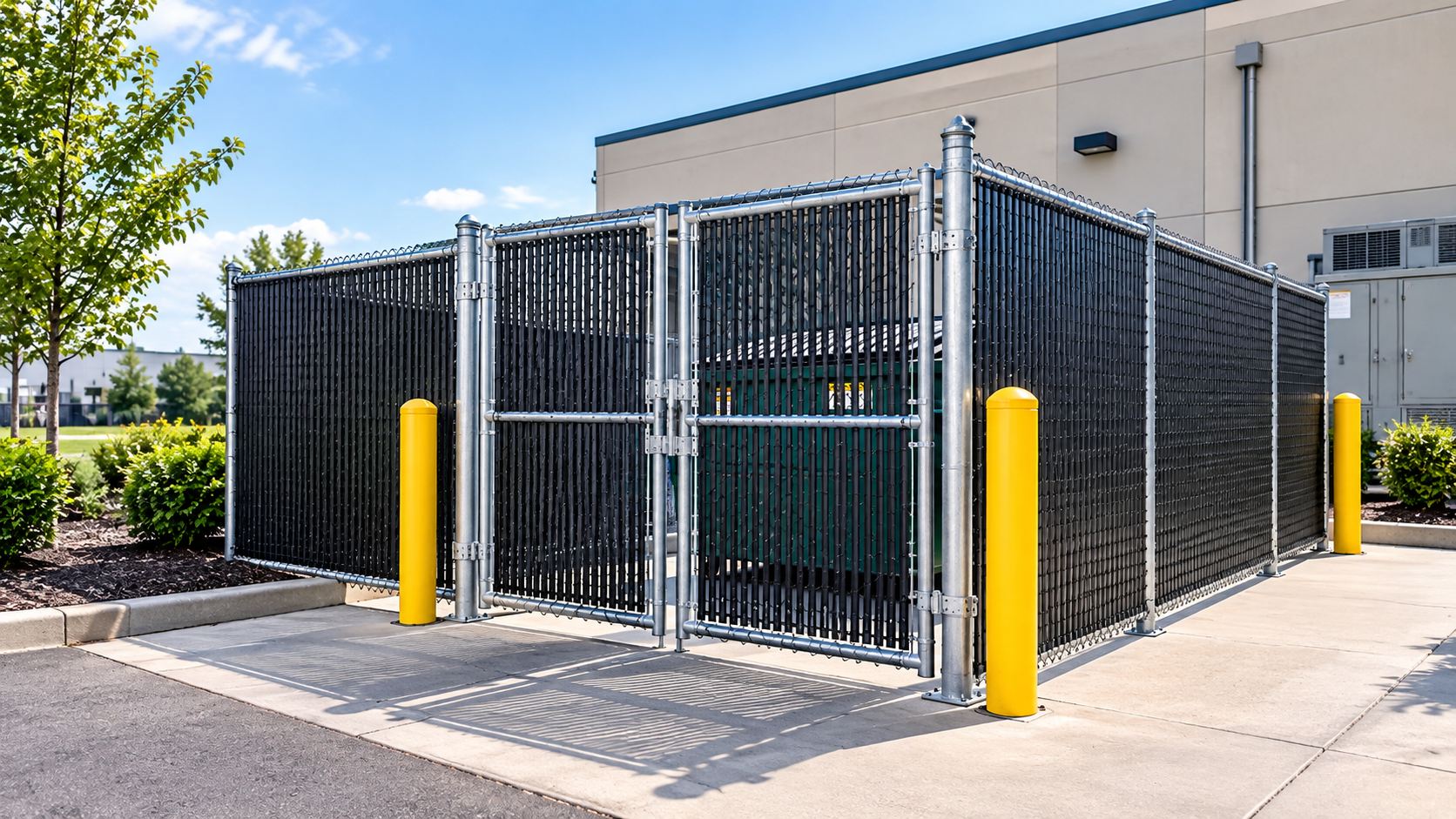
Chain link has a place on a farm, mainly around equipment yards, fuel tanks, grain bins, and the shop. It stands up to being driven near, and it is hard to climb. That makes it the best fit for security close to buildings.
If you are building a commercial chain link fence around a yard, a good baseline is 9-gauge fabric at 6 feet tall, going to 8 feet where the risk is higher, such as fuel storage. Add a topper where local rules allow it. Galvanized is fine for back lots, and vinyl coating helps near roads where salt is thrown. Heavier posts and footings below the frost line keep it standing after a hard winter.
Gate and Access Point Planning
Plan the gates before you plan the fence line. Ask what needs to get through: a tractor with an implement, a hay wagon, a truck and trailer, a combine. Standard farm gates run 12 to 16 feet wide, and large equipment may need more.
Put gates where vehicles can approach straight on, and avoid low spots where mud and standing water collect. Gate posts carry more load than any other post on the line. Use larger posts, set them deep and below the frost line, and brace them, or the gate will sag within a season. Hang gates to swing into the field, and leave room for snow banks, since a gate that cannot open in February is not much of a gate.
Add a walk-through gate where people cross often, and think about where emergency vehicles could get in. When All Pro Fence plans a farm job, we like to walk the site with the owner, because they know how equipment actually moves across the property.
Handling Large Properties and Terrain
Large properties come with slopes, creeks, rock, tree lines, and wet ground. Walk the line first, ideally with whoever will build it. Stake or flag the route and clear brush, since a fence with a tree growing through it fails early.
On hills, set posts at the high and low points and follow the contour instead of stretching wire across a dip. Wire pulled tight over a low spot lifts posts out of the ground. Shallow rock in parts of the region slows post setting and can change which equipment the crew needs.
Creeks flood and carry debris, so crossings often use swinging or breakaway panels. If the line crosses a stream or a regulated wetland, check state and federal rules before you build. A mistake there can cost far more than the fence.
Durability Against Weather and Animals
Western New York is hard on fences. Frost heave pushes posts up out of the ground, which is why depth and bracing matter so much. Heavy wet snow and ice storms drop limbs onto wire and bend panels. Road salt eats coatings along the frontage.
Animals test fence too. Deer jump it or crash through it. Coyotes probe the bottom for weak spots, and groundhogs dig under. Livestock rub, push, and chew.
Choose wire with a heavy galvanized coating. For high-tensile wire, Class 3 is the heaviest standard class and holds up longest. Keep the bottom wire tight to the ground if predators are a worry, and keep trees off the line. A fence built for animals but not for weather will still fail.
Budgeting Per Acre and Per Foot
Fence is priced by the foot, but land is sold by the acre, and the two do not convert neatly. A square 10-acre parcel measures about 660 feet per side, so the perimeter is about 2,640 feet, or half a mile. A square 40-acre parcel has a perimeter of one mile. A long, narrow parcel with the same acreage needs far more fence. Shape matters as much as size.
Price drivers include fence type and height, post size and spacing, wood versus steel, terrain, clearing, rock, the number of gates, and brace assemblies at every corner. Removing old fence adds to it. I won’t quote dollar figures, because material prices shift and a site visit is what produces a real number.
Get itemized quotes from a few commercial fence contractors and compare post size, depth, wire gauge, and brace design, not only the total. Also look into cost-share help. USDA’s Natural Resources Conservation Service may offer financial assistance for fencing tied to grazing plans or keeping livestock out of streams, and your county Soil and Water Conservation District can tell you what is open.
Permits and Property-Line Issues
Know where your line is before you dig. If the survey pins are missing or the deed is vague, hire a surveyor. A fence built over the line is a dispute waiting to happen. Call 811 first so buried utilities get marked.
Check your town’s zoning rules for height limits, setbacks, and anything special in agricultural districts. Some towns require a permit and others exempt farm fences, so ask instead of assuming. Look for easements and rights-of-way for utilities, pipelines, and drainage, which may limit where you can build.
New York law has provisions for partition fences between neighboring farmland, and many towns appoint fence viewers who help settle disputes over who builds or pays. Your town clerk can tell you how it works locally. Talk to your neighbor first. A short conversation beats a long argument later. If you lease the land, get permission in writing.
Maintenance Over Large Runs
A fence nobody walks is a fence nobody fixes. Walk the line in spring after the thaw and again after big storms. Look for leaning posts, loose staples, sagging wire, broken insulators on electric fence, and fallen limbs. Check the braces first, since they hold everything else up.
Wire tightens in the cold and sags in the heat, so check tension after big temperature swings. Keep weeds and brush off the wire, especially under electric fence, where growth drains the charge. A fence tester shows if voltage is dropping before an animal finds out for you.
Fix small problems right away. One broken wire is how animals learn a fence is soft. On a long run, split the line into sections and check one a week. Keep a log of repairs, plus spare wire, clips, and a few posts. Replacing a corner assembly or gate post is not a Saturday patch, so that is when to call one of the local commercial fence contractors.
Frequently Asked Questions
What is the best fence for a farm in Western New York?
It depends on the animals. High-tensile or woven wire works for most livestock. No-climb horse fence suits horses. Crop areas usually need 8-foot deer fence. Match the fence to the animal, then to the terrain and weather.
How tall should deer fence be?
Deer fence for crops, gardens, and orchards generally runs about 8 feet tall. Shorter fences often get jumped. Deer pressure is heavy across much of Western New York, so a tall fence usually pays off.
Is high-tensile or woven wire better?
High-tensile often costs less over long runs and needs fewer posts. Woven wire holds smaller animals and predators better. Many farms use both: high-tensile for the large pastures and woven wire for sheep, goats, or garden areas.
How deep should fence posts be set in Buffalo?
Corner, end, brace, and gate posts should go below the frost line, commonly cited around 42 inches here. Line posts can be shallower. Confirm depth with your local code office, since it can vary by town.
Do I need a permit for farm fencing?
It depends on the town. Some require permits and others exempt farm fences. Check zoning rules on height and setbacks, look for easements, and call 811 before you dig.
How much does farm fencing cost per foot?
It varies by fence type, terrain, materials, and the number of gates. No single number fits every property. Ask for itemized quotes after a site visit, and compare the same specs line by line.
Who pays for a fence between my land and my neighbor’s?
It depends on the situation. New York has partition fence provisions for adjoining farmland, and many towns have fence viewers to settle disputes. Talk to your neighbor, agree in writing, and ask your town clerk about local rules.