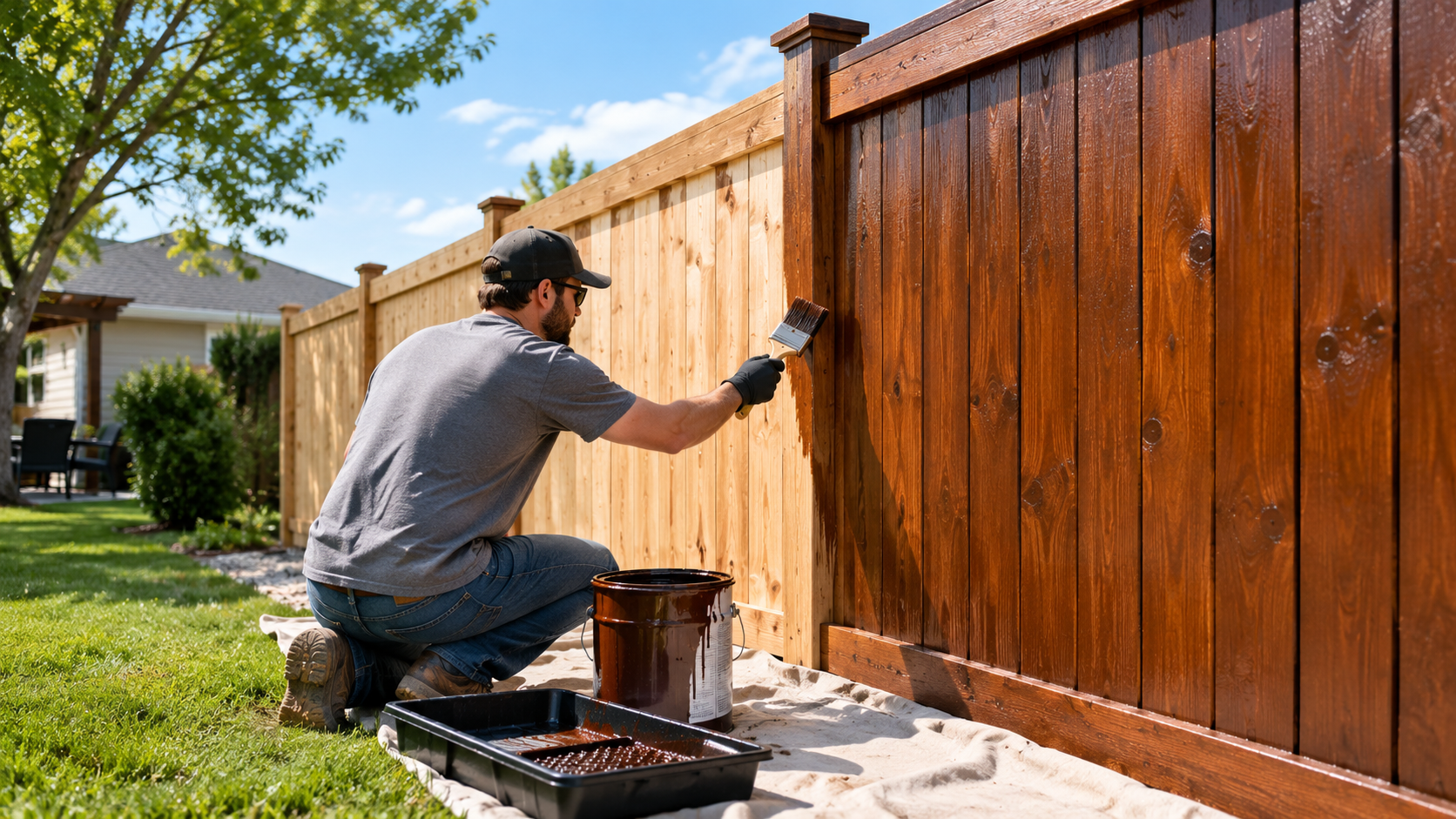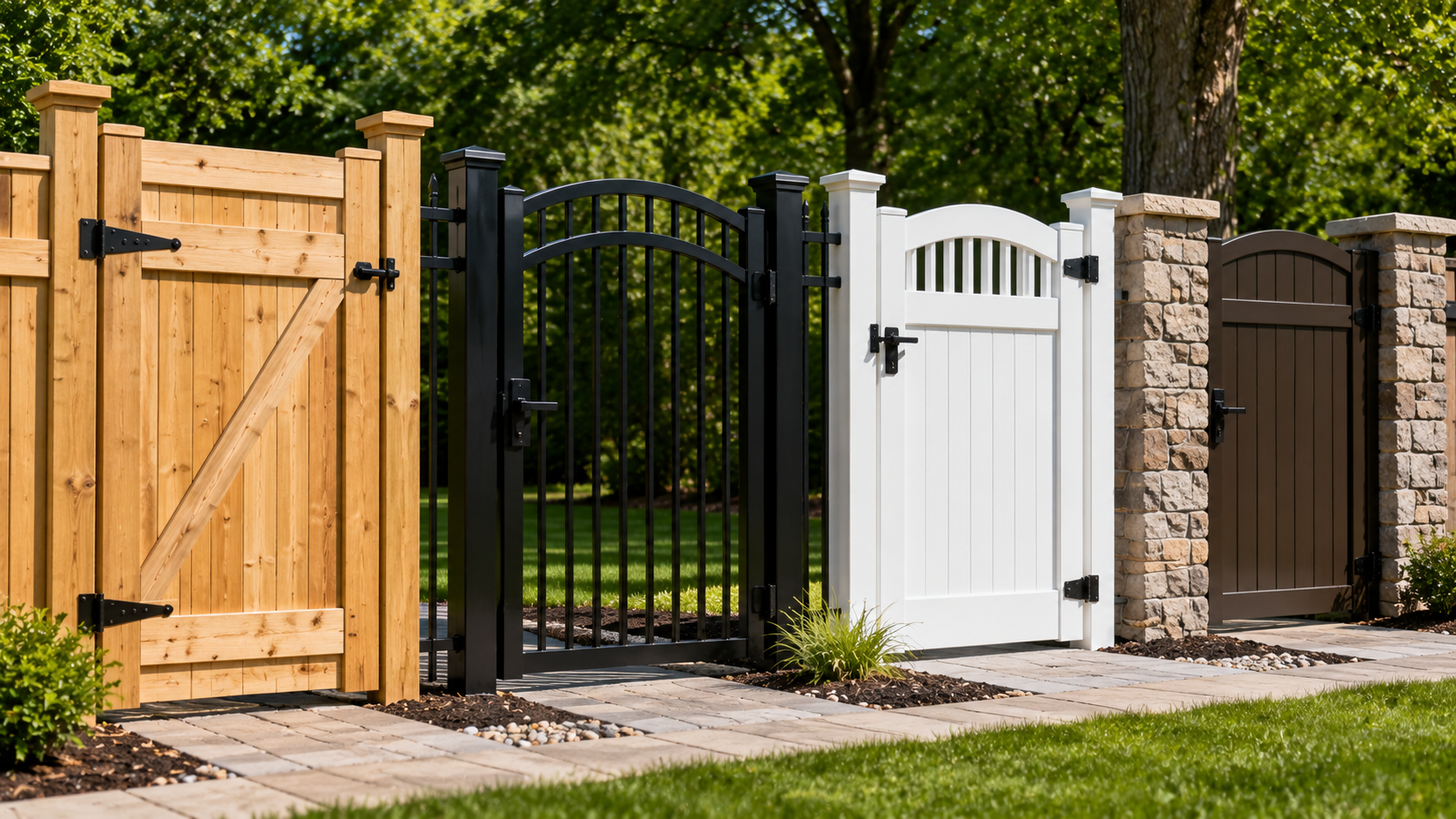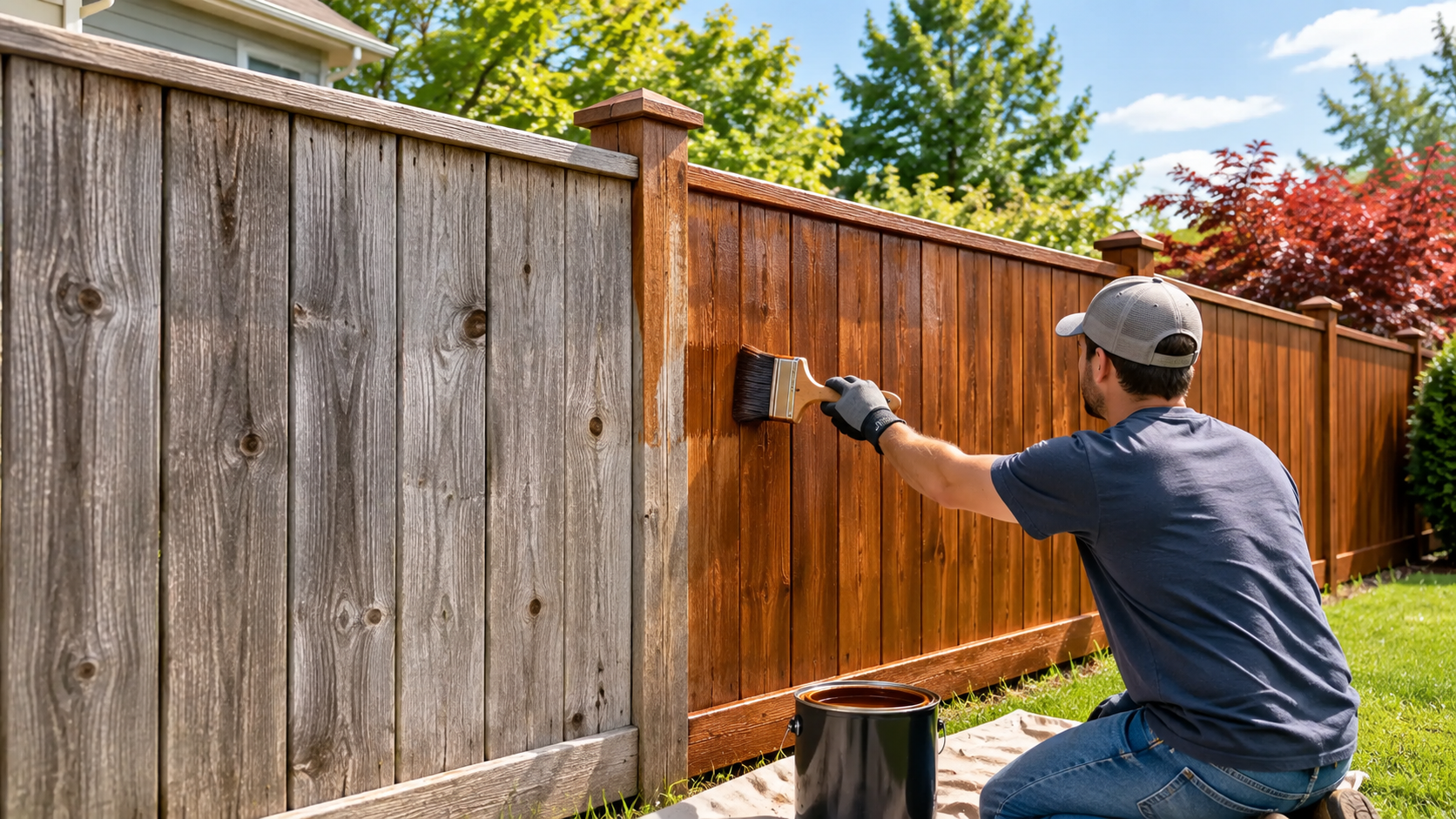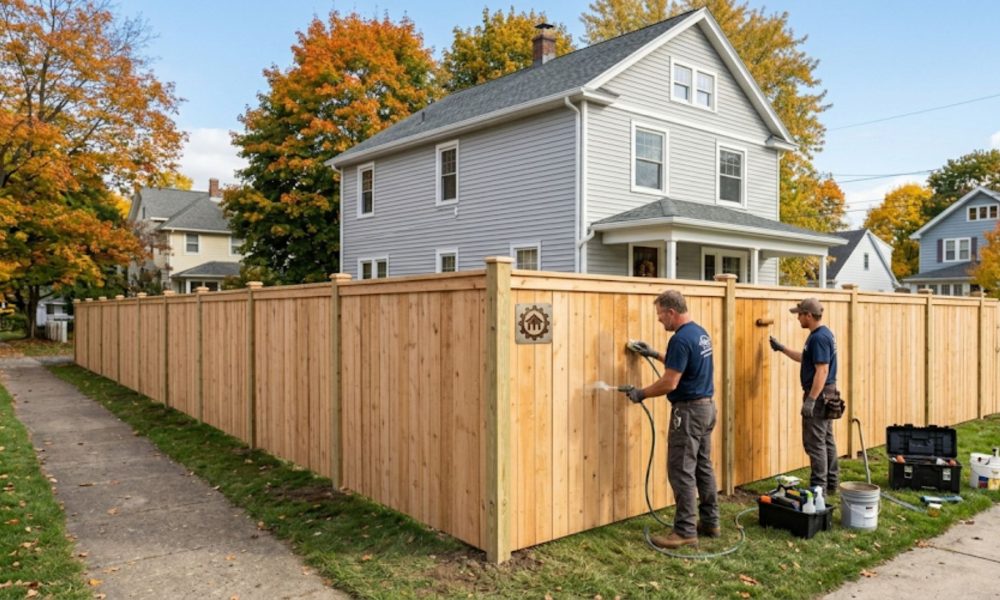
Vinyl holds up better than wood in Western New York winters. That part is true. What’s also true is that “low maintenance” isn’t the same as “no maintenance,” and the homeowners who figure that out after a few seasons of neglect end up with fences that look ten years older than they are.
When people search for vinyl fence companies near me to get these systems installed, they’re often sold on the idea of a worry-free yard. But keeping that investment looking sharp requires a bit of strategy.
Erie County throws a specific combination at outdoor surfaces every year: road salt, lake-effect moisture, freeze-thaw cycles that run sixty-plus times between November and March, and UV exposure through the summer that’s easy to underestimate.
A vinyl fence handles all of it better than most materials. But it handles it even better when the homeowner does a few simple things on a consistent schedule. This guide covers what those things actually are, from cleaning through winter prep, spring inspection, and knowing when a situation needs a professional rather than a Saturday afternoon.
For everything you need to know about choosing, planning, and installing a new system on your property, check out our ultimate resource, [The Complete Guide to Vinyl Fencing in Buffalo, NY].
Seasonal Cleaning Schedule
Two cleanings a year is the right baseline for most WNY vinyl fence installations. Spring and fall, timed around what the seasons deposit on the fence surface.
Fall cleaning happens in October, before the first hard freeze.
The goal is removing the organic material- algae, dirt, pollen residue- that would otherwise sit on the fence surface through the cold months and bond with salt spray and moisture through the winter. Whatever’s on the fence in November is significantly harder to remove by April than it would have been to clean off in October.
Spring cleaning happens after the ground thaws and the last road salt spray of the season has settled. It addresses everything the winter deposited, including salt film that dulls the surface finish and any biological growth that established under snow cover through the cold months.
Properties near heavily plowed roads in Buffalo, Cheektowaga, Kenmore, or Tonawanda deal with higher salt spray volumes than properties set further back from the road. Those fences benefit from a mid-season rinse during mild winter stretches when temperatures are above freezing for a day or two.
It doesn’t need to be a full cleaning; a thorough rinse with a garden hose knocks back the salt accumulation and reduces the bonding that happens when salt sits on the surface through repeated freeze-thaw cycles.
Removing Mold, Mildew, and Green Algae
The green or black discoloration that appears on north-facing fence sections and shaded panels isn’t permanent surface damage. It’s biological growth that establishes on the vinyl surface in conditions with consistent moisture and limited sun exposure.
It also doesn’t come off with plain water.
A diluted white vinegar solution, roughly one part vinegar to three parts water, applied with a soft-bristle brush, handles most mold and mildew growth on vinyl fence surfaces without damaging the material or the finish. Let it sit for a few minutes before scrubbing, then rinse thoroughly.
For heavier biological staining that vinegar doesn’t fully address, a commercial vinyl fence cleaner formulated for biological growth removal works without the material risks of using straight bleach.
Diluted bleach solution, one part bleach to ten parts water, is effective on heavy mildew, but it should be rinsed off completely and not used repeatedly on the same sections. Repeated bleach exposure affects the vinyl surface finish over multiple seasons.
One targeted application on a seriously affected area is different from making it your standard cleaning solution.
Safe Cleaning Solutions: What to Use and What to Skip
The wrong cleaner does more damage than dirt.
Use: dish soap and warm water for general cleaning, diluted white vinegar for biological growth, commercial vinyl fence cleaners for heavier staining, and silicone-based cleaners for restoring surface sheen on older fence sections.
Don’t use: abrasive scrubbing pads or steel wool, which scratch the vinyl surface and create microscopic channels where dirt and biological growth establish more aggressively in future seasons. Don’t use acetone, paint thinner, or any solvent-based cleaner; these soften and permanently damage vinyl surfaces. Don’t use undiluted bleach as a routine cleaning solution.
A soft-bristle brush or a microfiber cloth handles most vinyl fence cleaning tasks without risking surface damage. The cleaning product does the work. The scrubbing tool just moves it around.
Clearing Snow Without Cracking Panels
Vinyl gets brittle in extreme cold.
A fence panel that flexes without issue in September can crack under impact at 10 degrees Fahrenheit in January. This is the property of PVC that creates most of the winter damage calls All Pro Fence Buffalo sees every spring.
Snow blower discharge is the most common source of impact damage. Redirect discharge away from fence sections when possible and reduce blower speed near fence lines.
Don’t try to chip ice off vinyl fence panels with a shovel or ice scraper.
Let it melt. Ice bonded to vinyl at low temperatures is held there partly by the surface adhesion and partly by the cold making the vinyl itself less flexible. Prying or chipping at it stresses the material at a point when it has the least tolerance for stress.
Pushing snow against vinyl fence sections with a shovel creates sustained load on the panels and posts. Snow is heavier than it looks, wet lake-effect snow in particular, and a pile pushed against a fence section applies ongoing pressure through whatever freeze period follows the snowfall.
Clear snow away from the fence base rather than banking it against the panels.
Inspecting Posts After Frost Heave
Frost heave moves posts. A post that was perfectly plumb when the fence was installed may be slightly off after five winters, and that movement accumulates in the panels and hardware attached to it.
Walk the fence line in April after the ground has fully thawed. Sight down the fence from one end; a fence line that’s shifted shows up clearly from this angle. Check each post individually for movement out of plumb. Push on the post to check for stability at grade; a post that rocks has a concrete footing issue that needs attention before it causes panel damage.
A post that’s moved slightly may be correctable without full replacement if the concrete footing is still sound and the post has simply shifted in its bracket connection.
A post that’s moved significantly, or one that’s hollow from moisture infiltration through a missing post cap, typically needs to be pulled and reset.
Fixing Minor Scuffs and Stains
Surface scuffs from contact with mower decks, garden equipment, or general yard work don’t penetrate the vinyl material; they’re on the surface finish. Most of them respond to a vinyl-specific cleaner applied with a soft cloth and light circular scrubbing.
Deeper scuffs that go through the surface finish but haven’t cracked the panel can sometimes be reduced with a plastic polish compound applied carefully.
Surface stains from rust, typically from metal hardware or decorative items that have been in contact with the fence, respond to oxalic acid-based cleaners applied carefully and rinsed thoroughly.
Don’t use steel wool to remove rust staining.
Protecting Gates and Latches Through Ice
Gate hardware is the most maintenance-intensive component of any vinyl fence installation. It moves, it carries load, and it’s exposed to the same conditions as the rest of the fence while also being asked to function precisely through temperature ranges that affect its dimensions.
Lubricate all hinge pins and latch mechanisms in October before the freeze. Silicone-based lubricant is the right product; it maintains effectiveness through WNY temperature ranges, doesn’t attract dirt, and doesn’t degrade plastic and vinyl components the way petroleum-based lubricants do.
If a latch freezes shut, use a lock de-icer or diluted isopropyl alcohol to free it. Don’t apply force to a frozen latch mechanism; the components are under stress from cold contraction, and forcing them creates the stress cracks that show up on inspection in spring.
Check gate alignment in both fall and spring. A gate that’s dropping slightly at the latch end is telling you the hinge-side post has moved or the upper hinge has worked loose.
Catching this in October is a hinge screw tightening job. Ignoring it through the winter turns it into a post realignment job by April.
Pressure Washing: What Works and What Doesn’t
Pressure washing a vinyl fence is fine when it’s done correctly. It’s also where homeowners cause damage they attribute to the fence material rather than the cleaning method.
Keep pressure below 1,500 PSI. Maintain at least twelve inches between the nozzle and the fence surface. Use a wide-angle tip, 25 to 40 degrees, rather than a concentrated stream. Work top to bottom, moving consistently rather than holding the spray on one spot.
What high-pressure concentrated spray does to vinyl fence installations: it forces water into post bracket connections, stresses panel attachment points, and can displace the concrete bond at post bases over repeated applications.
The structural effects of improper technique show up over multiple seasons.
A standard garden hose with a spray nozzle handles most how to clean vinyl fence tasks without any of these risks. Pressure washing makes sense for heavy biological growth or significant staining, not for routine cleaning that a hose and brush handle adequately.
Spring Readiness Checklist
Walk the full fence line every April. Check each item before moving to the next section.
Posts: plumb and stable, no rocking at grade, caps in place. Panels: no cracking at corners or bracket attachment points, surface finish intact. Gates: plumb, swinging freely, latching without adjustment, equal gap from top to bottom on both sides.
Hardware: all screws tight, hinges moving smoothly, latch engagement positive without lifting or pushing the gate. Surface: cleaned of winter residue, biological growth addressed, any scuffs or staining documented.
When to Call a Pro
While cleaning, lubricating, and tightening loose screws are easy weekend DIY tasks, structural failures require professional equipment.
If a post is seriously out of plumb, rocks at the base, or has suffered impact damage from winter plow equipment, it requires professional excavation and concrete resetting. Realigning full fence sections or resetting heavy gate posts ensures the repair actually survives the next WNY winter.
All Pro Fence Buffalo handles these structural repairs and post replacements across Erie County to fix the root cause of the movement before it spreads to adjacent panels.
FAQs
How often should vinyl fences in Buffalo be professionally inspected?
A homeowner walkthrough every spring and fall covers most maintenance needs. Professional inspection makes sense after a significant weather event, if a post shows movement, or if the fence is more than ten years old and hasn’t been assessed since installation. Vinyl fence companies near me that handle repairs can evaluate during a service call.
What causes green staining on vinyl fence panels in WNY?
Algae and mildew thrive on shaded, north-facing panels due to lake-effect moisture. Plain water won’t fix it; use a diluted vinegar solution or commercial cleaner instead.
Can I use bleach for vinyl fence cleaning in Erie County?
Only for stubborn mold, diluted 1:10 with water. Never use it routinely; repeated bleach applications degrade the vinyl surface finish over multiple seasons.
Why did my vinyl fence gate stop latching after winter?
Winter frost heave likely shifted the post or loosened hinge screws. Check if the post is plumb before adjusting the latch, or the hardware repair won’t hold.
How do I remove rust stains from my vinyl fence panels?
Apply an oxalic acid-based cleaner and rinse thoroughly. Never use steel wool; it leaves iron particles behind that create worse rust stains in future seasons.
Is it safe to pressure wash a vinyl fence in WNY?
Yes, with correct technique. Keep pressure below 1,500 PSI, maintain twelve inches of distance from the surface, and use a wide-angle tip. Concentrated high-pressure spray at close range stresses panel connections and can force water into post bracket connections. A garden hose handles routine winter fence care in Buffalo situations adequately.
What’s the best way to protect vinyl fence posts through a WNY winter?
Ensure post caps are secured in October to block water infiltration. Inspect for plumbing issues before the freeze-thaw cycle hits to prevent compound structural damage.