Winter leaves a mark on vinyl fencing. Every spring at All Pro Fence, we get calls from Buffalo homeowners who searched fence repair near me the same week the snow finally melted, because that’s when the damage shows up in full. A panel that looked fine under three feet of snow turns out cracked down the middle.
A post that seemed sturdy in November is leaning six inches by March.
Lake-effect wind, freeze-thaw cycles, and the weight of wet snow piling against a fence line for weeks all take a toll on vinyl, even the good stuff. Some of what we see is cosmetic. Some of it means a section needs to come down before it comes down on its own.
This post covers the most common vinyl fence problems across Western New York, what causes them, and what actually fixes them. If you’re weighing DIY against a vinyl fence repair near me search, this should help.
Common Vinyl Fence Damage in WNY
Buffalo weather is hard on fencing in ways that don’t show up in a sales brochure.
Vinyl handles cold better than people assume, but it isn’t immune to it. When temperatures swing from 20 degrees to 45 in the same week, the material expands and contracts, and any weak point in a panel- a scratch, a manufacturing flaw, an old repair- becomes a crack over a few seasons.
Add wind gusts off the lake that regularly hit 40 miles per hour, and a fence line becomes a sail. A six-foot privacy fence catching heavy, wet lake-effect snow for a week straight puts real pressure on posts and rails that isn’t obvious until something gives.
The damage we see most often: cracked or shattered panels, leaning or sagging posts, popped caps, loose rails, and full sections knocked loose by a fallen branch or a plow. Each one has a different fix, and knowing which is which saves you from paying for a full replacement when a section repair would do.
Repairing Cracked or Shattered Panels
A cracked vinyl fence fix usually starts with figuring out whether the crack is structural or surface-level. A hairline crack near the top of a picket that doesn’t move when you flex it by hand is often cosmetic, and a vinyl repair adhesive made for PVC can seal it.
A crack that runs through a load-bearing rail, or a panel that’s split enough to flex or rattle in wind, needs to be swapped out.
The good news is vinyl fencing is modular. Most systems let you pull a single panel out of its post brackets without disturbing the rest of the run. We keep common panel sizes and profiles on hand for this reason, because ordering a custom piece from a manufacturer can take two to three weeks, and nobody wants a gap in their fence line through a Buffalo winter.
Fixing Leaning or Sagging Posts
A leaning post is almost never a vinyl problem.
It’s a ground problem.
Frost heave is the usual suspect, where water in the soil freezes, expands, and pushes a post up and out of alignment over a winter or two. If your fence was set only a foot or two deep, or without concrete footings below the frost line, this will keep happening no matter how many times you straighten it.
The fix depends on how bad the lean is. A post shifted a couple of degrees can sometimes be reset by digging out the base, packing fresh gravel and concrete, and letting it cure. A post cracked at the base or with a broken bracket usually needs to come out entirely and go back in below the frost line, which in this part of New York means at least 36 inches down.
Replacing a Single Damaged Section
You don’t need to replace an entire fence because one section took a hit.
Vinyl fence systems are built in repeatable units: post, panel, rail, cap, and any one of those parts can be swapped without touching the rest. This is the most cost-effective repair we do, and it’s the right call any time the damage is contained to a run of eight feet or less.
The trick is matching the existing system. Post spacing, panel height, picket spacing, and rail style all have to line up, or the new section will stand out and won’t seat properly into the neighboring brackets.
We measure the existing run before ordering anything, because a quarter-inch mismatch in post spacing is enough to throw off an entire panel.
Re-Securing Loose Caps and Rails
Post caps look decorative, but they do real work. They keep water out of a hollow vinyl post, and a post collecting rainwater and freezing solid every winter is a post that will crack from the inside out. Loose or missing caps are easy to fix and easy to ignore, which is a shame, since a five-dollar cap replacement now beats a full post replacement in two years.
Loose rails are usually a bracket issue. The rail slides into a routed slot or bracket on the post, and over time, especially with repeated wind load, that connection works itself loose. Tightening or replacing the bracket takes twenty minutes and stops a rattling fence from becoming a fallen one.
Wind and Snow Damage Insurance Claims
Storm fence damage in Buffalo is common enough that most homeowners’ policies address it directly, but coverage varies by carrier and by the specific cause of loss. Wind damage is typically covered. A tree limb coming down on a fence during a storm is typically covered. Gradual damage from years of freeze-thaw cycling usually isn’t, because insurers treat that as maintenance, not a sudden loss.
If you’re filing a claim, document the damage before anything gets moved or cleaned up. Photos of the break, the surrounding debris, and the fence line from a few angles help an adjuster confirm the cause.
The All Pro Fence crew has written repair estimates for insurance purposes plenty of times, and a clear, itemized quote showing what’s being replaced versus repaired tends to move a claim along faster than a vague one.
DIY Repair vs Professional Repair
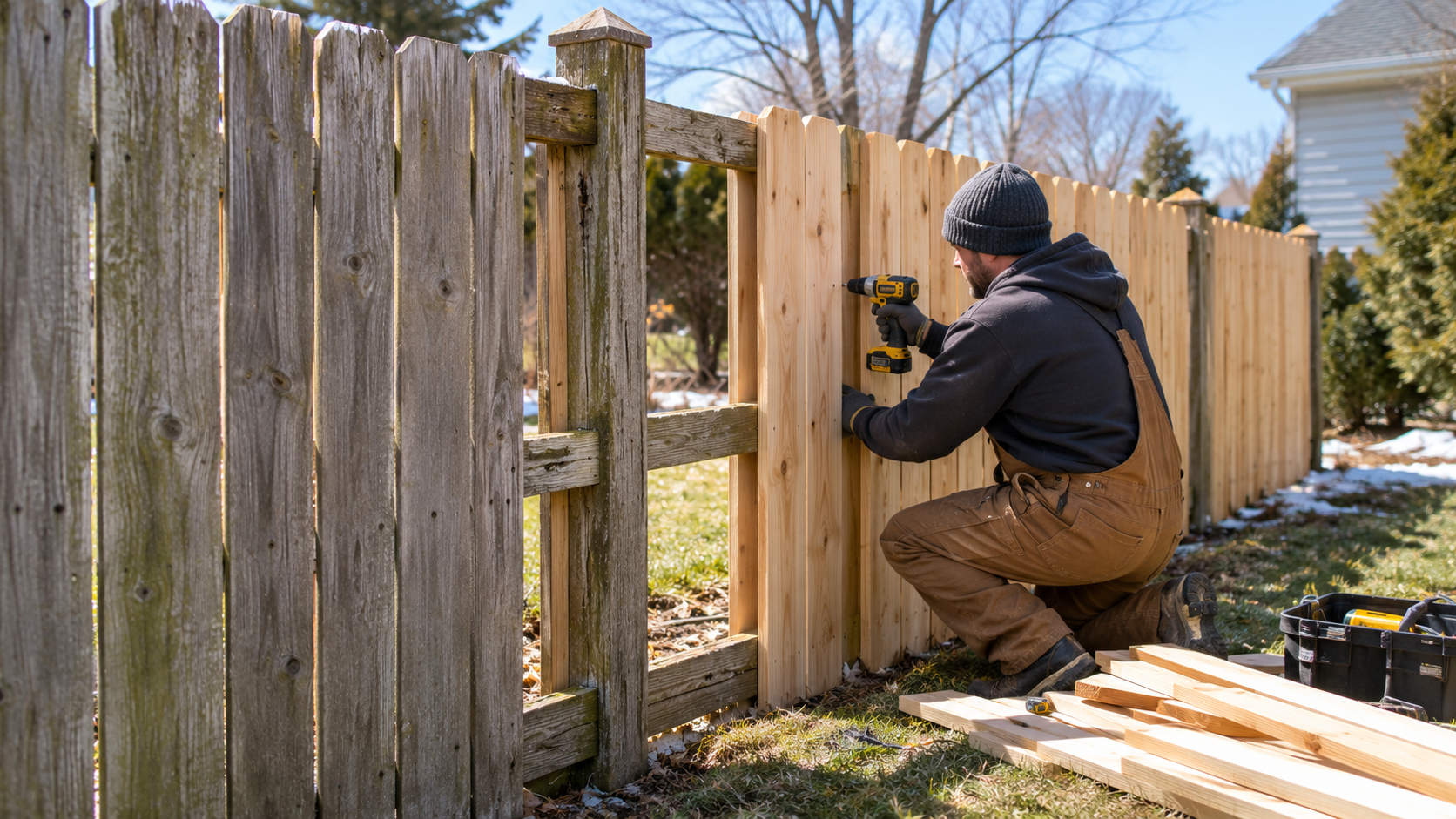
Some of this is honestly DIY-friendly. With a cap, tightening a bracket, or sealing a hairline crack, a homeowner with basic tools can handle all of that in an afternoon. Where it gets harder is anything involving concrete footings, post alignment across a long run, or matching panel profiles from a manufacturer you can’t identify.
We’ve been called out plenty of times to fix a DIY post reset that didn’t account for frost depth, which meant redoing the work anyway, except now with a section that had shifted further out of line. If you’re comfortable with concrete work and have the right post level, a single post reset is a reasonable weekend project.
Anything spanning multiple posts or requiring color-matched panels is where a fence repair near me usually pays for itself.
Color-Matching Replacement Parts
Vinyl fades. Not dramatically, and not right away, but a panel installed five years ago and a brand-new replacement panel from the same manufacturer often won’t match exactly, especially on white and tan colorways that show UV fading more than darker tones. This catches people off guard more than any other part of a repair.
We ask manufacturers for the closest current match to the original product line and set expectations up front about how visible the difference will be. On a single picket or cap, it’s rarely noticeable.
On a full replacement panel next to ten-year-old panels, there’s usually a visible line, at least until everything weathers to the same tone over a season or two.
Preventing Repeat Damage
The fastest way to avoid another repair call next spring is fixing the root cause, not just the symptom.
If frost heave keeps tilting the same post, resetting it below the frost line solves the actual problem instead of buying you one more season. If snow load is cracking panels along a specific stretch, sometimes the answer is clearing snow off that section by hand during heavy storms rather than letting it pile against the fence all winter.
A quick fall inspection catches most of this before it becomes a bigger job. Check caps, check for hairline cracks, and give every post a gentle push to feel for movement. Fifteen minutes in October beats a cracked panel and a leaning post in March.
Repair Cost Ranges
Costs vary based on scope, but rough ranges help with planning. A cap replacement or bracket tightening typically runs on the lower end of any service call, often bundled into a minimum trip charge.
A single panel swap, including matching materials, usually lands in the low-to-mid hundreds depending on height and style. A post reset with new concrete footing costs more due to the labor and cure time involved. Multi-section repairs after a storm scale with the number of posts and panels affected, and that’s usually where insurance coverage matters most.
Getting an accurate number means seeing the damage in person. A phone estimate is a starting point at best. Anyone doing a real fence repair near me quote will want to see post depth, soil condition, and panel matching before putting a final number on paper.
Vinyl fencing holds up well in Buffalo when it’s installed right and maintained a little along the way. Most of what we’ve covered here isn’t complicated once you know what you’re looking at, and a lot of it is preventable with basic seasonal attention. All Pro Fence has spent years repairing vinyl fences across Western New York, and the pattern is almost always the same: small issues left alone through one more winter turn into bigger ones.
If you’re not sure whether your fence needs a patch job or a full section replacement, that’s a normal thing to be unsure about, and it’s worth getting a second set of eyes on it before the next freeze-thaw cycle does more damage.
This post is part of our larger guide, The Complete Guide to Vinyl Fencing in Buffalo, NY, which covers installation, maintenance, and cost planning for vinyl fencing across the region.
FAQs
How do I know if my vinyl fence needs repair or full replacement?
If the damage is limited to one or two sections and the posts are still sound, repair usually makes sense. If multiple posts are leaning, panels are cracked across the whole run, or the fence is over 20 years old, full replacement is often more cost-effective long-term.
Can a cracked vinyl fence panel be fixed without replacing the whole section?
Yes, in many cases. Hairline cracks can be sealed with PVC-specific adhesive. Larger cracks or splits usually require pulling and swapping just that panel, since vinyl fence systems are built in modular sections that separate cleanly from the rest of the run.
Why does my vinyl fence post keep leaning even after I fix it?
This almost always points to frost heave or shallow footings. If the post wasn’t set below the frost line originally, resetting it the same way just delays the next lean. A proper fix means digging deeper and pouring a new footing below 36 inches.
Will homeowners insurance cover storm damage to my vinyl fence?
Often, yes, for sudden events like wind or a falling tree limb. Gradual wear from freeze-thaw cycles typically isn’t covered. Document damage with photos right after a storm and get a written repair estimate to support your claim.
How much does vinyl fence repair typically cost?
It depends on scope. A cap or bracket fix is usually a minimum trip charge. A single panel replacement runs low-to-mid hundreds. Post resets with new concrete cost more due to labor and cure time. Storm damage spanning multiple sections scales from there.
Can I match new vinyl fence parts to my older, faded fence?
Mostly, but not perfectly. Manufacturers offer close current-production matches, but UV fading over years means an exact match isn’t always possible, especially in white or tan. The difference is usually minor and fades further as the new part weathers.
What’s the best time of year to repair a vinyl fence in Buffalo?
Fall and early spring are ideal. Fall repairs prevent winter snow load and freeze-thaw from worsening existing damage. Spring is when most damage becomes visible, making it the busiest season, so scheduling early avoids a longer wait.