Fencing usually becomes a priority when a boundary is crossed, a leaning old wood fence finally drops after a rough winter, or security concerns hit close to home. When searching for “chain link fence installers near me” the challenge isn’t finding a supplier; it’s finding an installer who won’t cut corners on post depth and run off with your deposit.
Here’s what twenty years in this trade actually looks like: the fence itself is rarely the hard part. It’s finding someone who installs it correctly, uses the right materials, and doesn’t cut corners on post depth. That’s where most homeowners get burned, not by the product, but by the person putting it in.
This guide walks you through what to look for, what to ask, and what it actually costs to do the job right.
Choose the Right Chain Link Fence for Strength and Affordability
Not all chain link fencing is the same, and the differences aren’t obvious until a few winters have passed.
For most residential properties, 11-gauge galvanized wire is the standard. It handles pets, kids, and general boundary marking without issue. If you’re fencing a larger yard, building a pet fence for active dogs, or just want something that holds up against regular contact, 9-gauge is worth the upgrade. The difference in material cost is smaller than most people expect. The difference in durability over ten years is not.
The coating matters just as much as the gauge. Plain galvanized steel handles regular rain fine, but out here in Erie County, winter road salt will eat right through it. Upgrading to a fused PVC or polymer coating is what keeps the wire from rusting out.
Then there’s the framework. This is where a lot of installations quietly fail. Schedule 40 steel pipe for terminal and corner posts is the commercial standard for a reason.
Thin-walled residential tubing looks identical at installation. It doesn’t hold up under heavy snow loads, it bends when something hits it, and it starts leaning before you’ve even gotten a full season out of it. Low-bid contractors substitute it regularly. It’s one of the most common ways a cheap installation becomes an expensive problem.
Key Factors That Affect Chain Link Fence Installation Cost
There’s no honest single number for cheap fence installation, and any contractor quoting you one without visiting the property is guessing. What actually drives the final cost:
Linear footage sets the baseline, but the layout matters as much as the length. A 200-foot run on a flat open lot is a completely different job than 200 feet with two grade changes, a gate on each end, and overgrown plantings along the property line.
Post depth is the variable most homeowners never think to ask about. Erie County clay holds moisture and heaves hard during freeze cycles. Posts set above the frost line, 36 to 42 inches minimum around Buffalo, get pushed out of the ground within a couple of seasons. That’s not a material failure. That’s an installation failure, and it’s not covered by anything the contractor promises.
Gate configuration adds hardware, structural posts, and alignment complexity. A single walk gate is straightforward. Double drive gates on uneven ground take real planning to hang and operate long-term correctly.
Site conditions– buried utilities, concrete pads, existing fence removal, and significant slope, all affect labor time. A reputable installer accounts for these upfront. The ones who don’t tend to surface them as change orders once the job has started.
That last pattern is worth knowing before you sign anything. The gap between a firm quote and a lowball estimate that grows mid-job is almost always explained by what the contractor chose not to mention at the start.
Durable Materials That Make Chain Link Fencing Last Longer
A proper Western New York chain link installation should last 20 to 30 years. That longevity relies entirely on hot-dip galvanization to fight rust, and on using Schedule 40 steel pipe for terminal and corner posts. Low-bid contractors regularly substitute thin-walled residential tubing that buckles under heavy snow loads. If your structural anchors aren’t right, the fence is built to fail.
What Tools and Equipment Installers Use for Fast, Reliable Installation
Does your contractor own their equipment? It matters. Installers relying on rentals often rush the job to beat return deadlines, skipping critical steps like mechanical tensioning. A reputable crew shows up with their own hydraulic post-drivers, concrete core drills, and industrial winches. Proper tensioning prevents the fabric from sagging within a season.
Best Ways to Secure Large and Small Properties with Chain Link Fencing
Security fencing works differently depending on what you’re actually trying to accomplish.
For a residential pet fence, the two things that matter most are height, typically 4 to 5 feet for most breeds, and bottom tension. Loose mesh at the grade level is where most containment failures happen. A concrete footer along the base is worth considering for dogs that dig consistently.
On larger residential lots, long straight runs need intermediate terminal posts every 100 feet or so to prevent sag. Corner post bracing keeps the whole perimeter aligned as the ground moves through seasonal cycles. These aren’t optional steps on a big yard; they’re what separates a fence that holds its shape from one that gradually drifts out of alignment.
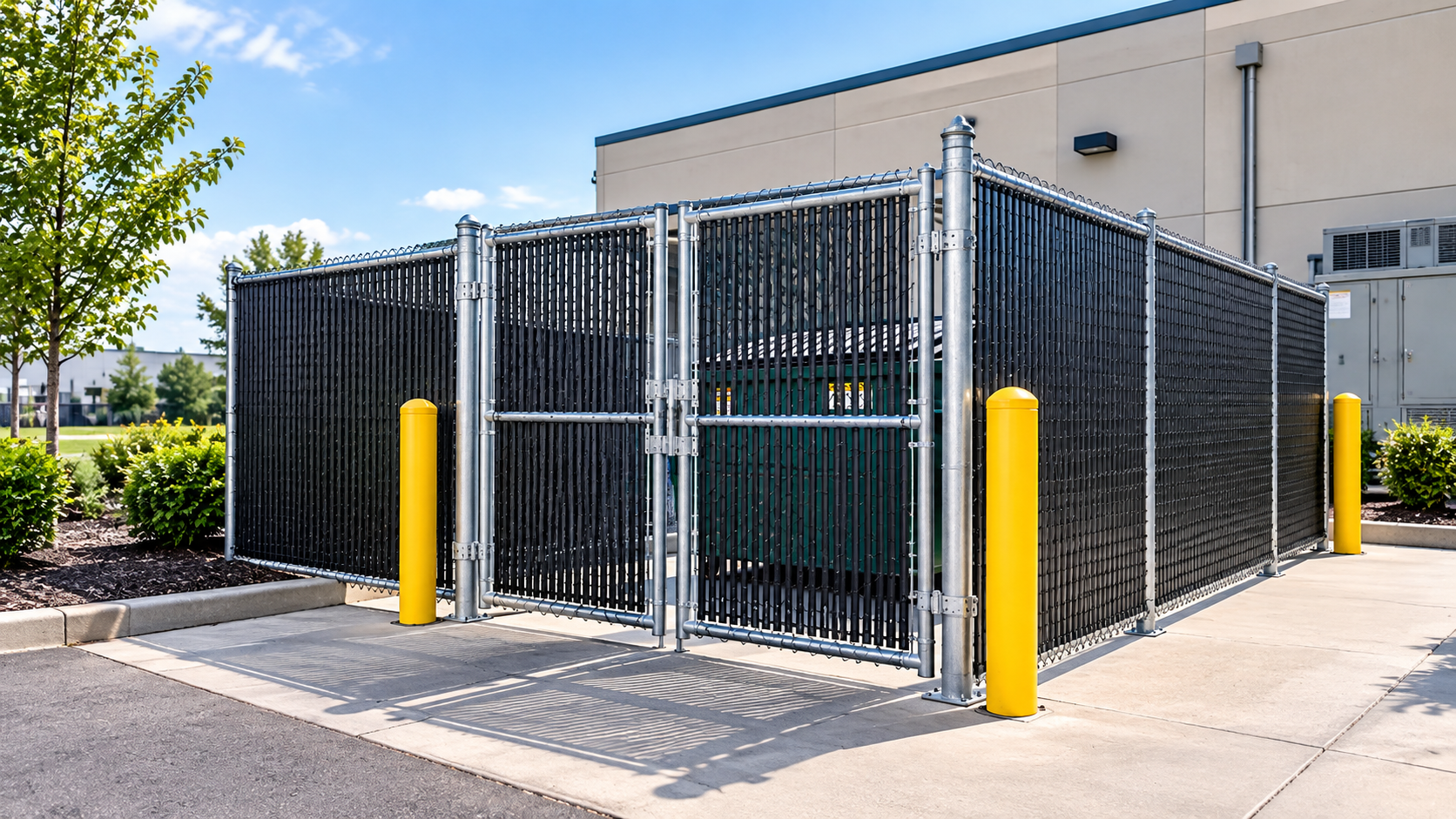
For commercial and industrial properties, security fencing typically starts at 8 feet with three-strand barbed wire outriggers. Gate hardware steps up accordingly, commercial hinges, drop rods on double gates, and chain-and-lock or electronic access depending on the application.
Residential-grade material on a commercial job is a visible failure waiting to happen. The difference shows up the first time a forklift clips a post or a January ice storm loads the top rail.
How Long Does a Chain Link Fence Installation Take from Start to Finish
A residential installation on a standard suburban lot with a single gate typically runs one to two days, post setting, concrete pour, cure time, and fabric installation included.
Larger commercial jobs scale proportionally. A full perimeter covering several hundred linear feet with multiple gate openings and a concrete pad section can run three to five days, depending on crew size and site conditions.
What extends timelines most often isn’t the physical work. It’s waiting on utility locates, working around concrete curing windows, and dealing with conditions that weren’t visible during the estimate, old footings from a previous fence, buried debris, and grade changes that only become obvious once digging starts. Any contractor giving you a hard finish date before they’ve walked the site in detail is making it up.
Why Chain Link Is a Smart Choice for Budget-Friendly Property Security
Wood rots. Vinyl cracks under impact. Ornamental iron corrodes and needs repainting on a cycle. Chain link fencing does none of those things at the same rate, and it costs less per linear foot than any comparable option.
On a large property, that math gets significant fast. The cost difference between chain link and wood privacy fencing on a commercial yard can run into tens of thousands of dollars. For anyone who needs a functional perimeter and not a decorative feature, that’s a real number.
The open diamond weave also maintains sightlines, something solid fencing can’t offer. That matters for exterior cameras, yard supervision, and any property where visibility is part of how security actually works.
When you’re searching for chain link fence installers near me, the material is only as good as the installation behind it. All Pro Fence Buffalo has been putting in durable fences across Erie County for years. Call before you commit to anything. We’ll come out, look at the property, and give you a number that doesn’t change.
FAQs
How do I find reliable chain link fence installers near me?
Verify their structural ironwork experience, licensing, and insurance. Demand an on-site property evaluation before accepting a quote. Phone estimates are just guesses that inevitably turn into mid-job change orders.
What separates residential and commercial chain link fencing?
Residential installs use 11-gauge wire with standard posts. Commercial security fencing runs 9 or 6-gauge wire, Schedule 40 steel posts, and heavier gate hardware, often with barbed wire outriggers. The mesh looks similar. The structural difference is significant.
Can a chain link work as a pet fence for larger dogs?
Yes, with the right setup. Most dogs are contained by a 5-foot fence. Diggers need a concrete footer or ground anchor along the base. Bottom mesh tension matters most; that’s where gaps form, and containment fails.
How much does cheap fence installation actually cost in Buffalo?
Expect $15 to $40 per linear foot installed, varying by gauge, height, and grading. If a quote falls below this range without a site visit, ask yourself what materials or structural post depths they are leaving out.
How long will a chain link fence last if installed correctly?
A galvanized chain link fence with proper post depth and Schedule 40 framework will realistically last 20 to 30 years in Western New York. What cuts that lifespan short is almost always the same list: shallow posts, under-tensioned fabric, and residential tubing used where commercial pipe belongs.
Do I need a permit for a chain link fence in Buffalo?
Yes. Every town in Erie County has its own rules on height and setbacks. Knowing those requirements before ordering materials saves time and avoids costly adjustments mid-project.
How do you handle installation on sloped or uneven yards?
Sloped lots are handled with either a raked method, where the fence follows the grade continuously, or a stepped method, where sections drop in levels. Which approach works better depends on the degree of slope and what’s at the bottom of it.