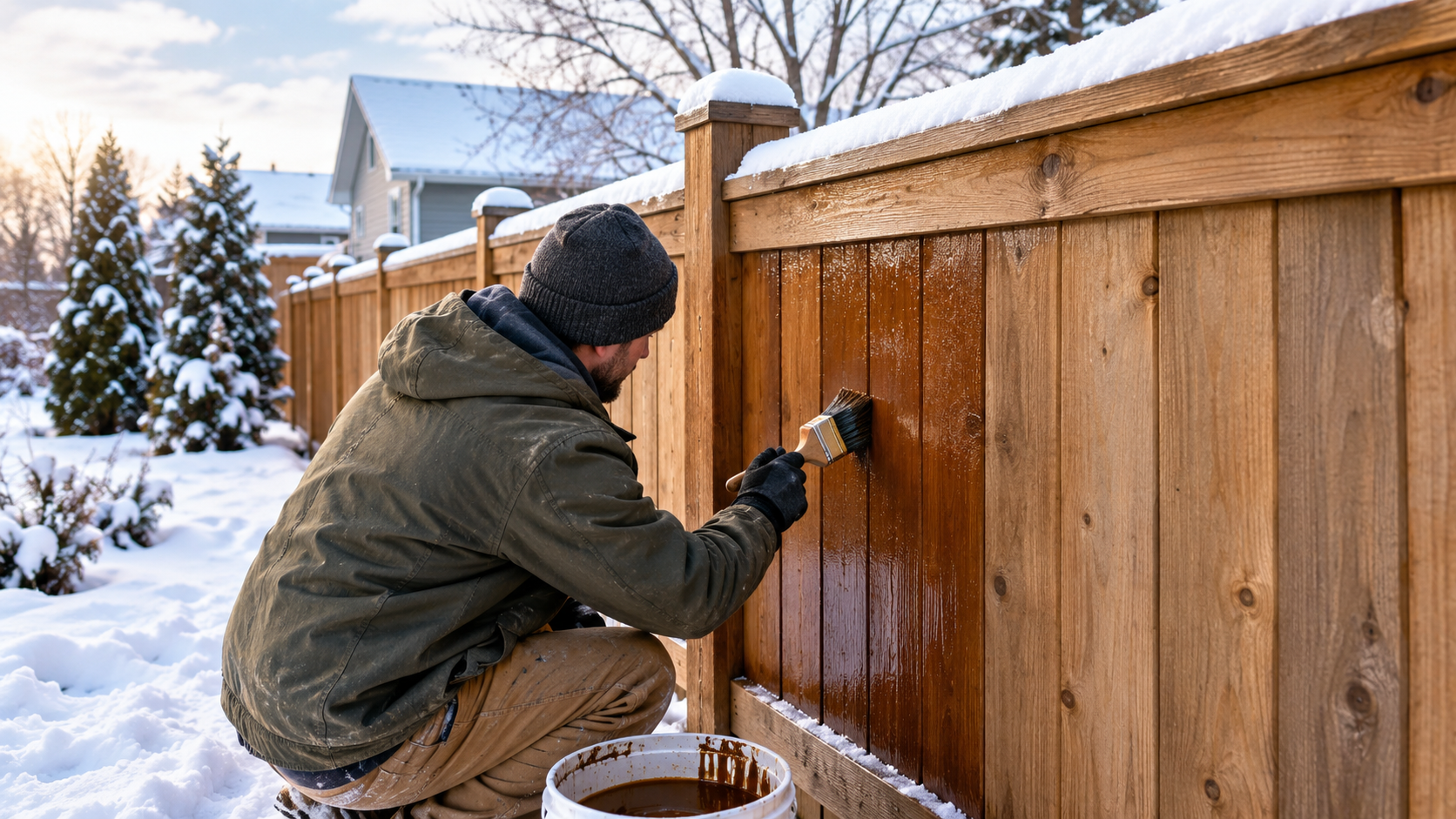
Buffalo winters and spring storms don’t mess around. Between heavy lake-effect snow piling up against your property line and high winds sweeping off Lake Erie, our local fences take a beating.
If a recent storm left your yard exposed, you are likely searching for reliable fence repair near me to get things secured fast. As local contractors who handle tree service and property boundaries every day, we know exactly what a Western New York winter can do to a perimeter.
Here is a comprehensive guide from All Pro Fence Buffalo to evaluating your property, understanding common structural issues, applying temporary fixes, and knowing when to call in a professional crew for an emergency fence fix.
Temporary vs. Permanent Fence Repairs: When Each Is Best
Temporary Fixes: Emergency Stabilization (Do This Now)
If you have dogs that need to go outside, young children, or a swimming pool that requires a legal enclosure, you need an emergency fence fix to secure the boundary line immediately.
Temporary measures are designed to keep the perimeter standing through the remainder of the rough weather season without worrying about aesthetics.
- Heavy-Duty Zip Ties & Bungee Cords: For fallen chain link or popped vinyl panels, heavy-duty UV-rated zip ties can secure the pieces back to their supporting rails or posts to eliminate an open gap.
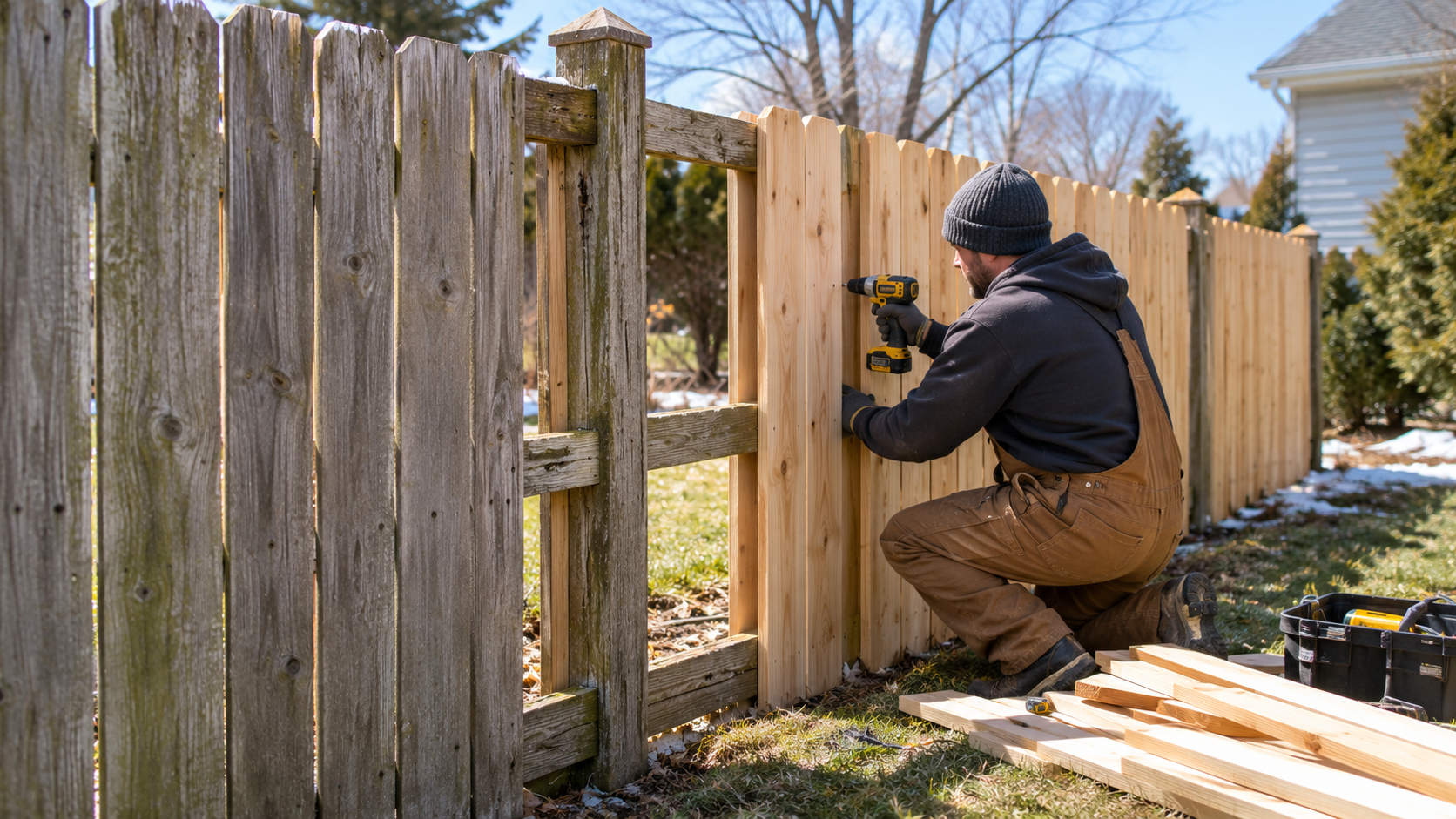
- 2×4 Bracing: If a wood post has snapped but is still hanging on by a few splinters, you can drive a temporary 2×4 wooden stake into the ground (or even firmly pack it into dense snowbank bases) and screw it diagonally into the leaning post to prevent the wind from taking down the adjacent sections.
- Safety Snow Fencing: If an entire section of your fence has blown away completely, rolling out a stretch of bright orange or green plastic construction snow fencing and securing it to metal T-posts is a fast, inexpensive way to establish a temporary perimeter.
Permanent Repairs: Structural Restoration (Do This Right)
A permanent fence repair involves restoring the fence to its original structural integrity and aesthetic look.
- Deep Excavation: This means digging out old, broken concrete footings entirely and clearing the hole.
- Frost-Line Setting: Resetting new structural posts in freshly poured concrete down below the regional frost line.
- Component Replacement: Swapping out broken, cracked, or rotted components with exact material matches and securing them with galvanized or stainless steel hardware that won’t rust.
- When it’s best: Permanent repairs are best executed when the ground is fully thawed (late spring through autumn) or during mild winter breaks when the topsoil isn’t frozen solid.
Common Winter Damage Issues on Wood, Vinyl, and Chain Link Fences
Wood Fences: Moisture, Rot, and Rotational Strain
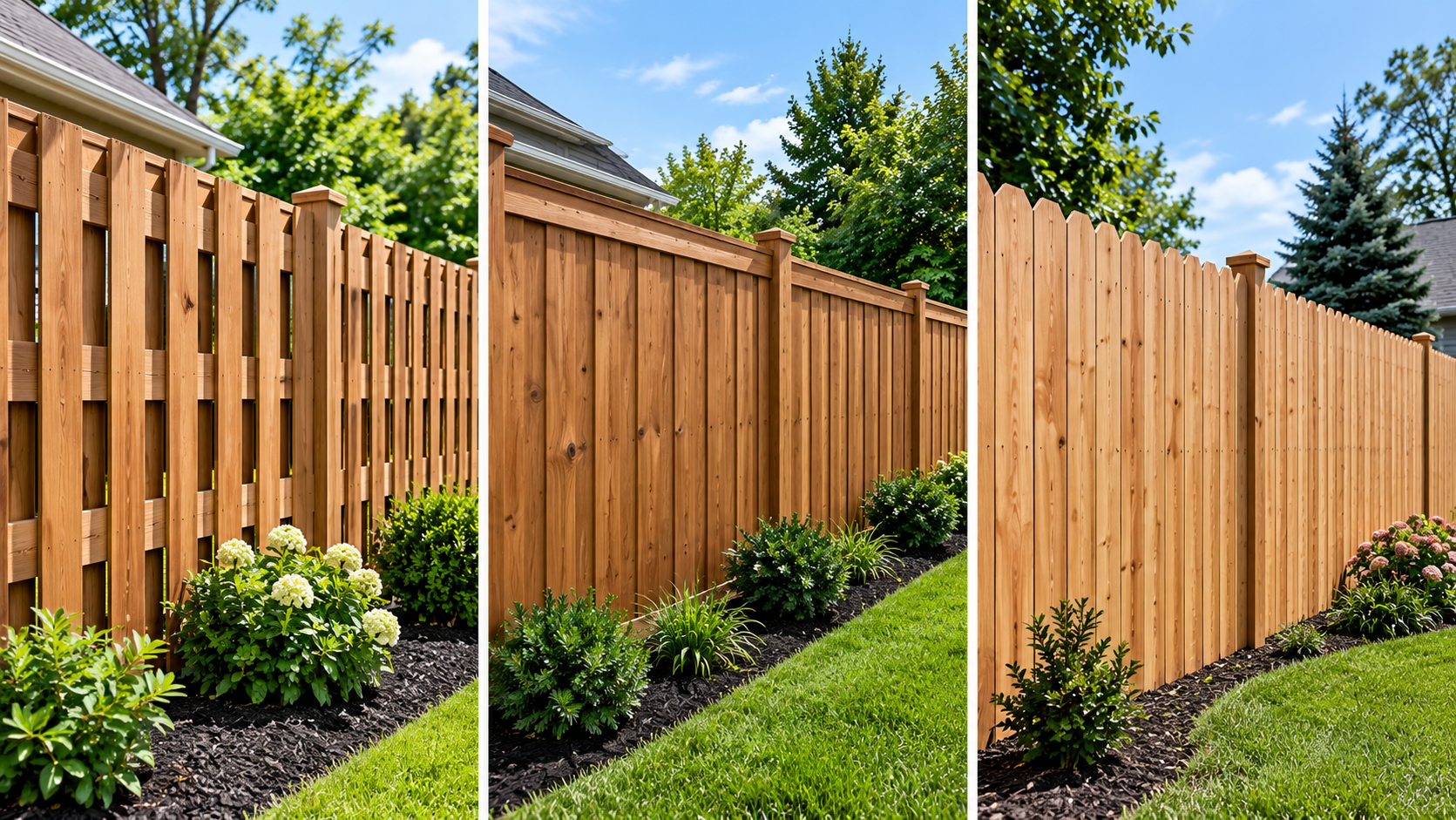
Wood is a traditional, beautiful choice for privacy, but it bears the brunt of regional moisture. The main culprit during a local winter is the absolute weight of heavy, wet snow piled against the lower half of the panels.
- The Snowbank Effect: As plows or snowblowers stack feet of dense snow against a wood fence, it exerts continuous, lateral pressure. This causes the individual pickets or horizontal rails to warp, cup, or pull entirely away from the fasteners.
- Ground-Line Post Snapping: Saturated soil from late autumn rain, combined with freezing winter temperatures, causes the ground to shift. If a wood post has any structural rot at or just below the soil line, high winds will snap the post clean off, leaving a whole section of your fence leaning into your neighbor’s yard.
Vinyl Fences: Thermal Brittleness and High-Wind Impact
Vinyl (PVC) fencing is highly praised for being low-maintenance, but it behaves very differently when the temperature drops well below freezing.
- Brittleness in Extreme Cold: When temperatures hit single digits, PVC plastic becomes rigid and brittle. If a heavy tree limb falls from an overhanging maple, or if a rogue snowblower throws chunked ice against the vinyl, the panels are prone to cracking, shattering, or splintering upon impact.
- Pop-Out Panels: Vinyl systems are often designed to lock together using routed slots. During severe windstorms, the intense pressure pushing against a solid privacy fence can force the vinyl panels to bend drastically.
This extreme flexing often causes the horizontal rails to strip out or pop completely out of the post channels. As a result, the entire structural integrity of the fence is compromised, even though the actual vinyl material remains unbroken.
Chain Link Fences: Weight-Bearing Sag and Top Rail Failure
While chain link is generally considered the most wind-resistant option because air passes directly through the open mesh, it is highly susceptible to weight-bearing damage.
- The Weighted Blanket Effect: Wet, slushy snow or freezing rain clings directly to the diamond mesh. When it builds up, it transforms the lightweight fence into an incredibly heavy wall of ice.
- Bent Top Rails: Under this immense downward weight, the top horizontal rails can buckle or bend downward into a permanent V-shape. Furthermore, the tension wire at the bottom can stretch out of shape, creating gaps where small dogs or pests can easily escape or enter your yard.
Tools and Equipment Used for Fast Fence Repair Jobs
When a professional crew arrives at your home to handle a storm damage fence Buffalo project, they bring specialized commercial gear designed to work quickly, cleanly, and safely without destroying your landscaping.
- Commercial Power Augers: Digging through thick clay or rocky Western New York soil by hand with a manual shovel takes hours. A gas-powered or hydraulic post-hole auger bores a perfect, clean 12-inch wide hole down to the required 42-inch depth in a matter of minutes.
- Reciprocating Saws (Sawzalls): Essential for cleanly cutting out rusted bolts, slicing through twisted chain-link top rails, or trimming damaged wood sections without splintering the surrounding healthy panels
- Pneumatic or Cordless Framing Nailers: Hand-driving nails into tough, pressure-treated lumber takes time and can loosen adjacent panels from the vibration. High-speed nailers use specialized ring-shank, hot-dipped galvanized nails to bind wood together permanently in seconds.
- Come-Alongs and Tension Bars: To fix a sagging, distorted chain-link perimeter, crews use heavy-duty mechanical winches (come-alongs) hooked to temporary pull bars. This stretches the steel wire mesh back to factory-level tightness before clamping it securely into place.
Cost Factors That Influence Fence Repair in the Buffalo Area
Every property line is unique, and calculating the exact cost of your fence project involves balancing several practical local variables.
Soil and Ground Conditions
Digging a hole in gentle, sandy loam in mid-July is incredibly easy. Digging that exact same hole in frozen, rock-hard January clay requires heavy breaker bars, specialized heated blankets, or jackhammers. If the ground is deeply frozen, the additional labor time will naturally reflect on your final invoice.
Debris Removal and Tree Clearance
As a contractor specializing in tree services, we often see fences that haven’t just failed on their own, they’ve been crushed by massive, ice-laden tree branches. If your repair crew has to spend the first half of the day using chainsaws to cut up, chip, and haul away a fallen maple limb before they can even touch the broken fence line, that specialized labor and equipment cost will be factored into the project scope.
Structural Material Selection
The material you choose directly dictates your long-term repair costs. While basic pressure-treated pine or standard chain link components are highly economical and readily available, high-grade white cedar or premium UV-stabilized vinyl panels can fluctuate significantly in price based on regional supply chain availability.
How Long Fence Repairs Typically Take After Storm Damage
When a major weather system blows through our area, hundreds of homeowners find themselves looking for help at the exact same time. Understanding the timeline helps you plan ahead and keep your expectations realistic.
A standard, localized storm repair job, for example, removing and replacing three snapped wooden posts, straight-lining the framework, and hanging new matching pickets—typically requires a one-to-two-day turnaround for a skilled professional crew.
The first day is dedicated entirely to the hard, heavy structural work. We clear out the broken debris, excavate the old footings, drop in the new posts, align them perfectly with a level line, and pour fresh concrete.
We then let that concrete cure overnight to build a rock-solid foundation. On the second day, the crew returns to attach the horizontal rails, mount the decorative vinyl or wood pickets, hook up the heavy-duty hardware, and clean up the workspace.
Reinforcement Options to Prevent Future Wind and Snow Damage
Upgrade to Metal Post Spikes or Structural Brackets
For wood fences, the vulnerable point is always where the wood meets the damp earth or the top of the concrete pier. Over time, moisture pools there and creates rot. During a repair, have your contractor use galvanized steel post repair brackets or structural splints. These heavy metal sleeves drive deep into the ground alongside the post and bolt directly into the healthy wood above, adding massive resistance against high winds.
Install Strategic Wind Slots or Internal Stiffeners
Solid vinyl privacy fences act exactly like a massive sail on a boat. When 60 mph gusts sweep across WNY, that sail catches all the energy, putting immense torque on the posts.
- Wind Slots: Consider installing vinyl styles that feature small, decorative gaps or lattices at the top to let air pass through safely.
- Aluminum Post Inserts: Ensure that critical corner and gate posts are reinforced internally with heavy-duty structural aluminum I-beam inserts. This prevents the vinyl from bending to the snapping point.
Clear the Frost Line with Deep-Set Concrete
The Western New York freeze-thaw cycle is incredibly powerful. When water in the soil freezes, it expands, pushing upward with enough force to lift concrete footings right out of the ground, a process called frost heaving.
The Golden Rule: Always ensure your fence posts are set a full 42 inches deep. This clears the local frost line completely, anchoring the base in stable, unfrozen soil so your fence line stays perfectly straight year after year.
Repair vs. Replace Your Damaged Fence
One of the most frequent questions we get from homeowners dealing with storm damage fence Buffalo issues is: “Can I save this, or do I need to start from scratch?”
To give you an honest appraisal, we always apply the Rule of Thirds.
| Factor | Repair the Fence | Replace the Fence |
| Extent of Damage | Less than 30% of the entire line is broken. | Over a third of the entire fence structure has lost its structural integrity. |
| Structural Integrity | Posts are straight and solid; only pickets or rails are damaged. | Multiple consecutive posts are rotte, leaning, or snapped. |
| Age of Material | The material is relatively new, resilient, and structurally sound. | The wood is severely weathered, gray, splintered, or soft to the touch. |
| Cost Efficiency | Cheap, isolated fixes that take a few hours or a single afternoon. | Patching old material costs more in labor than a fresh install. |
FAQs
How deep should fence posts be set in Buffalo to prevent shifting?
Posts must be set at least 42 inches deep to clear the Western New York frost line. This stops frost heaving from pushing your concrete footings upward during winter freeze-thaw cycles.
Can permanent fence repairs be completed during a freezing Buffalo winter?
It’s tough. Temporary fixes are best for winter. Permanent repairs requiring deep excavation and fresh concrete should wait until the ground fully thaws in late spring or during rare, mild winter breaks.
How to find a fencing repair service in Buffalo easily?
The easiest method is to search in Google Maps for “fence repair near me” or look up regional wood providers and specialty contractors.
Why do vinyl fence panels pop out of the posts during high winds?
Heavy wind pressure forces solid vinyl privacy panels to flex drastically. This severe bending causes the horizontal rails to strip out or pop completely out of the routed post channels, even if the material doesn’t break.
What is the quickest way to temporarily secure a fence line for pets?
Use heavy-duty, UV-rated zip ties to quickly strap loose panels back to rails. For larger gaps, roll out plastic construction snow fencing and secure it tightly to metal T-posts.
How long does a standard professional storm damage repair take?
A typical project, like replacing a few snapped posts, takes one to two days. The first day is for excavation and pouring concrete; the second day is for mounting hardware once the base cures.
Can heavy snow damage a chain-link fence if the wind passes right through?
Yes. Wet, heavy snow and freezing rain cling to the diamond mesh, transforming it into a heavy wall of ice. This immense downward weight can permanently buckle the top rails and stretch tension wires.
Need a Hand Getting Your Yard Secured?
Dealing with property damage is always a stressful headache, but you don’t have to tackle the cleanup and reconstruction alone. If your perimeter took a hit during the last storm and you need a reliable, professional fence repair near me crew to evaluate the damage, give All Pro Fence Buffalo a call.