Most property managers don’t think twice about their fence until something goes wrong. A gate fails during a shift change. A section of chain link buckles after a delivery truck clips it. A municipality shows up with a violation notice because the installation didn’t meet code.
That’s when the calls come in. And that’s when we hear the same thing: “We went with whoever was cheapest.”
Commercial fencing is a different animal from residential work. The loads are heavier, the compliance requirements are stricter, and the consequences of cutting corners show up fast.
If you manage a warehouse, a school, a parking facility, or any property with real daily traffic, you need commercial fence contractors who understand that, not someone who dabbles in it between deck jobs.
Heavy-Duty Fence Options Designed for High-Traffic Areas
The fence that works fine around a backyard won’t hold up around a loading dock. It’s that simple.
High-traffic commercial sites put constant mechanical stress on fencing systems, vehicle contact, foot traffic, equipment vibration, and gate cycling, all of which compound over time.
The hardware that fails first is almost always hardware spec’d for residential use: posts not set deep enough, rails that flex under load, hinges not rated for the gate weight.
The right commercial fence contractors start with a site assessment before they open a product catalog. A distribution center has different needs than a school perimeter. An industrial yard is a different job from a municipal parking lot. The spec comes from the site, not a template.
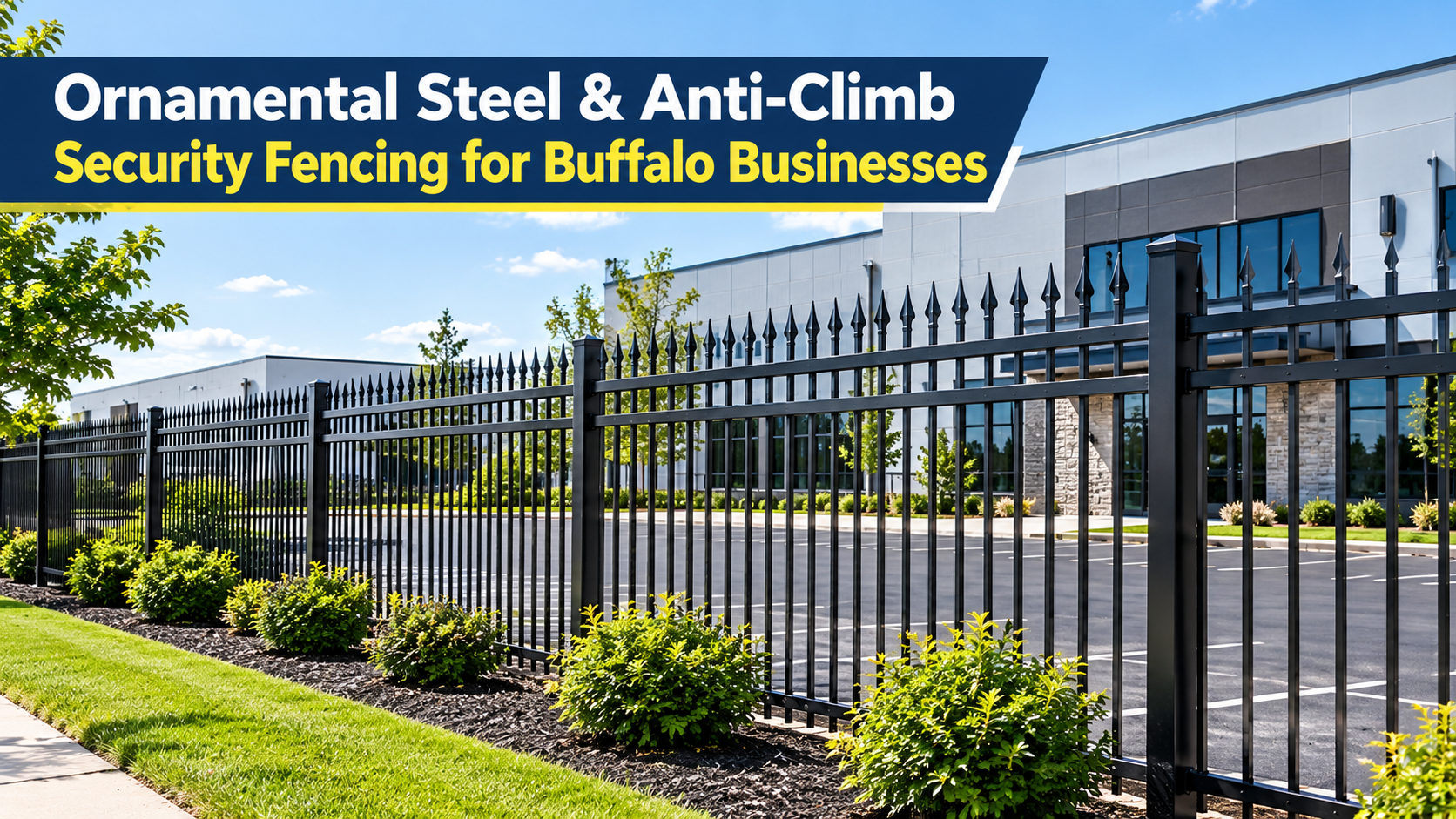
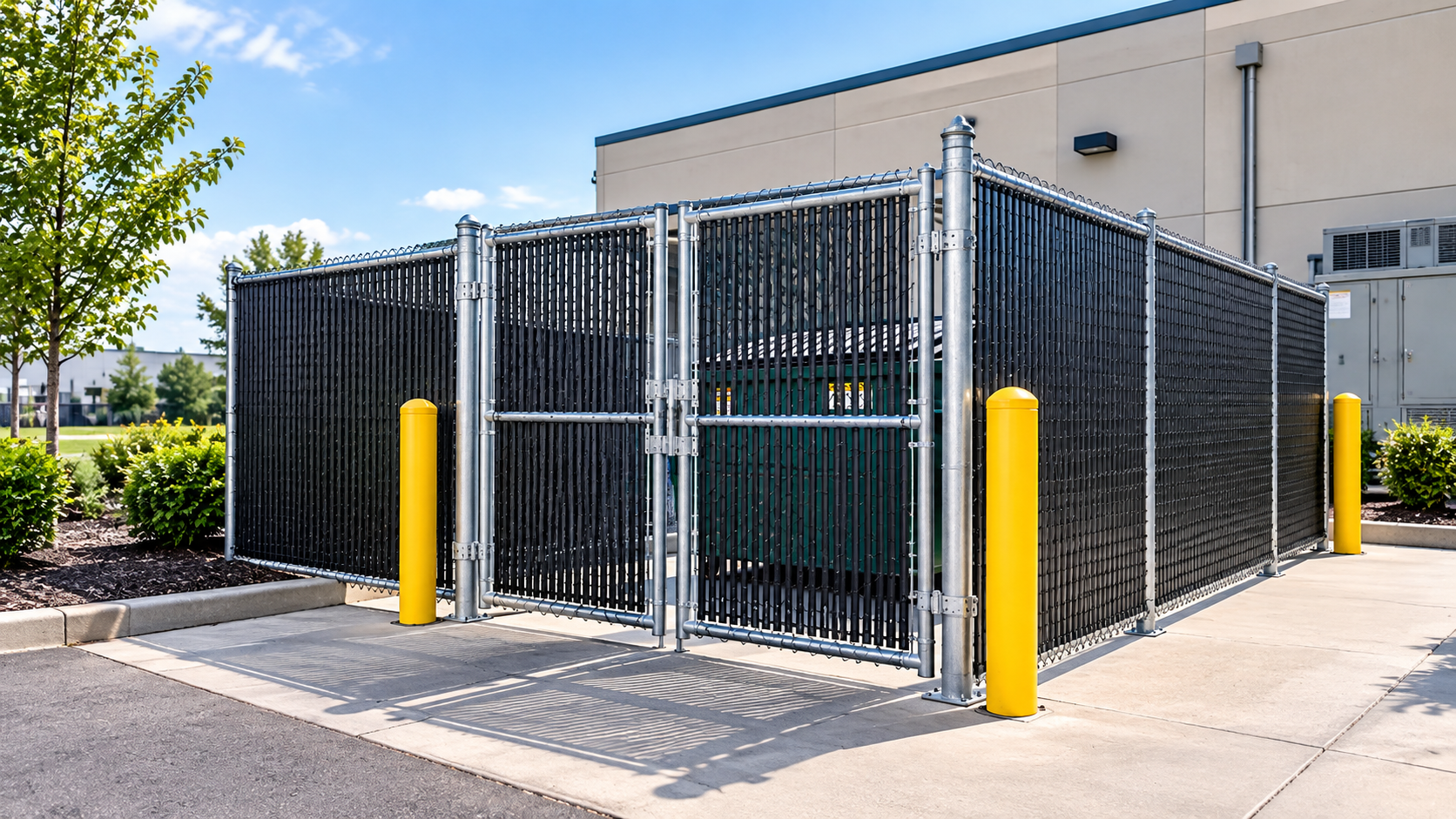
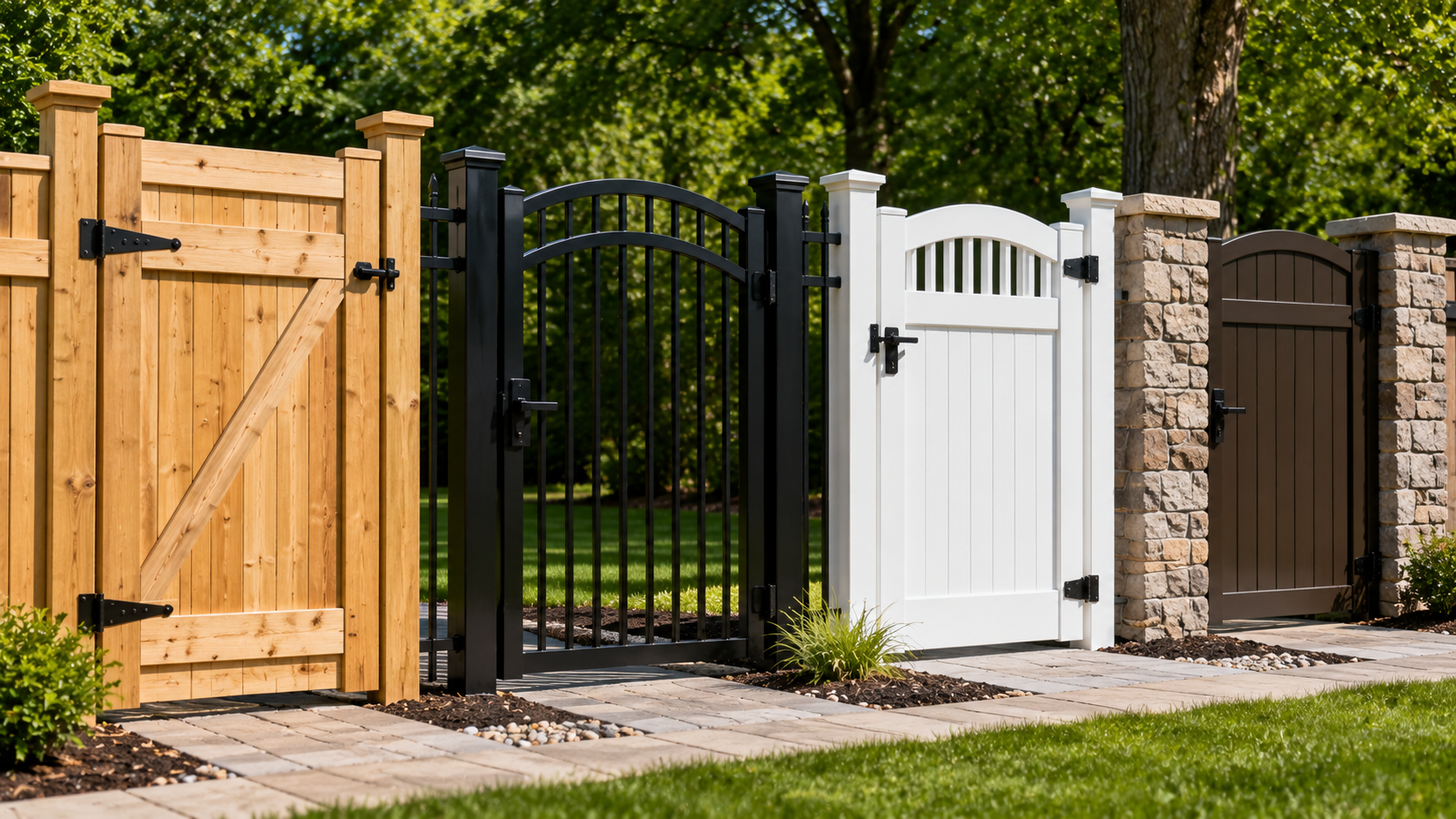
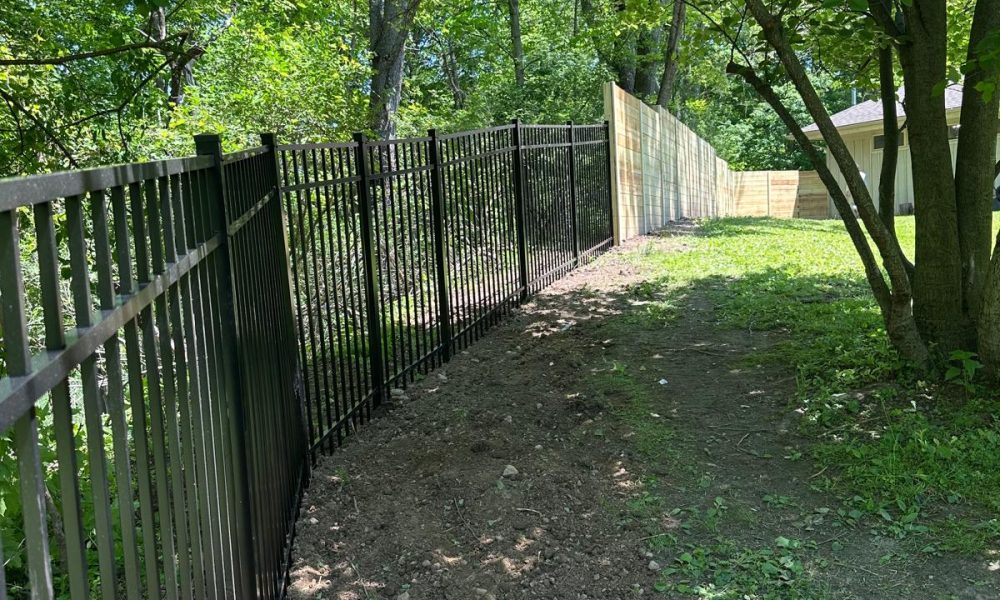
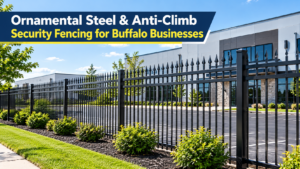
Common heavy-duty options for Buffalo commercial properties include 9-gauge galvanized chain link, ornamental steel and aluminum for institutional sites, welded wire panels for higher-security perimeters, and automated gate systems rated for high-cycle commercial use.
Commercial-Grade Materials That Withstand Daily Wear and Weather
Buffalo earns its reputation every winter. The freeze-thaw cycle that hits Erie County between November and March is harder on fence installations than most contractors in milder climates ever see. Posts set without adequate depth heave. Gate frames were welded incorrectly. Coatings not rated for the conditions fail before the second season.
This isn’t a scare tactic. It’s what we see every spring when property managers start noticing what winter left behind.
For commercial work, material selection has to account for mechanical load and climate exposure at the same time. Hot-dipped galvanized steel for corrosion resistance. Powder-coat over primer, not instead of it. Stainless hardware at hinge points where moisture pools. And concrete footings below the frost line, in Erie County, that typically means 42 to 48 inches for structural posts.
A licensed commercial fence contractor will pull those specs before they dig. An unlicensed crew will guess, and you’ll pay for that guess two winters from now.
Equipment and Machinery Used for Large-Scale Fence Projects
Scale changes everything. A 500-foot commercial perimeter isn’t a bigger version of a residential job; it requires different equipment, different logistics, and more coordination.
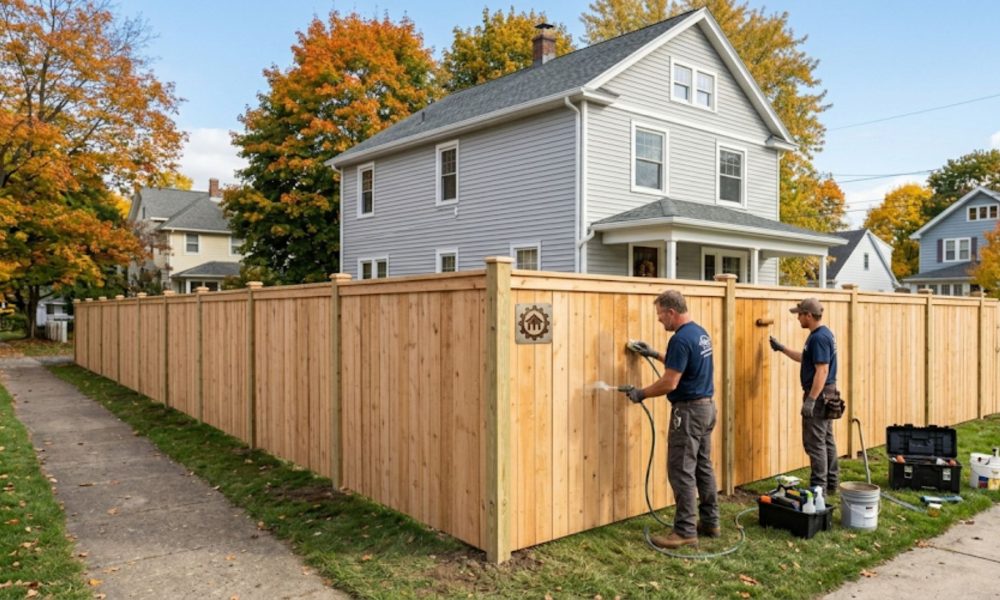
Commercial fence installation at volume typically involves hydraulic post drivers, truck-mounted augers for difficult soil, concrete mixers for high-output footing work, and lift equipment for tall panels. On active commercial sites, that also means phased installation to maintain perimeter security while work is in progress.
When you’re comparing commercial fencing contractors near me, ask directly what equipment they’ll bring and what they own versus rent. It tells you a lot about how the job will actually run.
Safety Standards and Compliance Requirements for Commercial Properties
This is where unlicensed work creates real exposure, not just bad results, but liability.
Commercial fence installations in Buffalo and Erie County are subject to local zoning ordinances, building code requirements, and, in many cases,s use-classification requirements specific to the property type.
Industrial sites, schools, healthcare facilities, and properties adjacent to rights-of-way all carry fencing requirements that go beyond standard residential guidelines. Fail to meet the, em and you’re looking at a stop-work order, or a violation notice that means tearing out finished work.
Beyond code, OSHA considerations on active job sites and ADA requirements around gate access have to be factored in before installation starts. A contractor who doesn’t flag these upfront either doesn’t know or hopes you won’t notice until later.
At All Pro Fence Buffalo, every commercial project goes through a compliance review before we schedule a single dig. That’s not paperwork for the sake of it; it’s how we protect the property owner from problems that surface months after we leave.
Cost Planning and Budgeting for Commercial Fence Installations
Any contractor who leads with a number before walking your property is guessing. That’s not how a job this size should start.
Accurate cost estimation requires a site walk, a real material takeoff, and hardware specs tied to the application. The variables that move your budget most: linear footage, post depth requirements, gate count and automation, material grade, and site access.
A 1,000-foot perimeter on a clean flat site is a fundamentally different number than the same footage with buried utilities, grade changes, or a demo job first.
The best commercial fence installers give you a detailed written proposal with line-item pricing. If a contractor can’t tell you exactly what you’re paying for, don’t pay them.
Budget for the full scope: materials, labor, permits, concrete, hardware, and cleanup. A low bid that skips permits or concrete isn’t a deal; it’s an incomplete quote.
Installation Timelines for Large Properties and Industrial Sites
Realistic timelines matter. A commercial fence project that drags on disrupts deliveries, affects employee access, and can create security gaps that nobody planned for. The operational cost of a slow installation is real; it just doesn’t show up on the contractor’s invoice.
Standard commercial installs in the 500-to-1,500-foot range typically run one to two weeks with a properly staffed crew and the right equipment. Larger perimeters, gate automation, and restricted-access sites add time. In Buffalo, spring scheduling should account for ground conditions after winter, and late-fall work needs to factor in freeze risk for concrete footings.
Ask about phased installation if maintaining security during the project matters. A good crew can segment the work to keep your perimeter closed at the end of every shift.
Long-Term Maintenance Plans for Commercial Fencing
The installation is just the start.
Commercial fencing on high-traffic properties degrades faster than residential, that’s just the nature of the use pattern. Gate hardware cycles thousands of times per year. Vehicles make incidental contact.
Seasonal ground movement stresses posts and rails in ways that aren’t always obvious until a section shifts. Without routine maintenance, small problems compound: a loose post becomes a leaning section, a sticky latch becomes a broken operator.
All Pro Fence offers maintenance agreements for commercial clients because an annual inspection is the most cost-effective way to protect the investment. One visit can catch a $200 repair before it becomes a $2,000 one.
Questions to Ask Before Hiring a Commercial Fence Contractor
Don’t hire the first crew that answers the phone. Ask the right questions and let the answers do the work.
• Licensed and insured for commercial work in New York State? Ask for the certificate. Don’t take their word for it.
• How many commercial projects have you completed in Erie County? References from similar property types?
• Who handles permits, and is that included in the quote?
• What equipment will you bring? Own or rent?
• How do you maintain perimeter security during phased installation?
• What does your warranty cover, and for how long?
If any of those questions get a vague answer, you have your answer. Contractors doing this work right can speak to all of them without hesitation.
Ready to Get This Done Right?
Commercial fencing isn’t a place to gamble on an unproven contractor. The liability exposure, compliance risk, and long-term cost of getting it wrong are too high.
All Pro Fence Buffalo handles commercial installations across Buffalo and Erie County. We’re licensed, insured, and we spec every job from the ground up based on what the property actually needs.
Call us at (716) 452-9399 for a site visit and a straight quote. We’ll tell you exactly what the job requires and what it’ll cost.
FAQ
What commercial fence materials offer the best balance of security and longevity?
For heavy security, heavy-gauge chain link (often with privacy slats) or industrial aluminum/steel ornamental fencing is the industry standard. Steel offers maximum anti-ram protection, while aluminum resists rust in high-moisture environments. Always look for commercial-grade rather than residential-grade thickness.
How long does a typical commercial fence installation take?
A standard 500-foot commercial perimeter installation usually takes 3 to 5 business days, depending on soil conditions and gate complexity. Phased installations on active commercial properties may take longer to ensure business operations and tenant access are never disrupted.
Do we need a professional land survey before the fence installation begins?
Yes. To protect your business from costly boundary disputes and legal liabilities, a certified land survey is highly recommended. A reputable contractor will require official property line markers before digging or driving any fence posts into the ground.
How do commercial fence contractors handle underground utilities like gas, electric, and water lines?
A professional contractor will contact New York 811 (Dig Safely New York) to have all public utility lines marked on your property before any excavation starts. Private underground lines not covered by 811 must be located independently to avoid catastrophic damage.
What are the local height restrictions for commercial fences in Erie County?
While specific zoning codes vary by municipality (like Buffalo versus Amherst), commercial security fences are generally permitted up to 8 feet in height, whereas residential limits usually stop at 6 feet. Your contractor should cross-reference local municipal codes during permitting.
Can you integrate access control systems like keypads, loops, or card readers?
An experienced commercial installer can fully integrate heavy-duty cantilever or overhead track gates with modern access controls. Ensure your contractor coordinates closely with your security or IT team to match electrical requirements and gate operator specifications perfectly.
How do you handle extreme slope or uneven terrain on a commercial property?
Uneven ground is handled by either “stepping” the fence panels (creating a stair-step pattern with gaps underneath) or “raking” the fence to follow the natural contour of the land. For high-security zones, raking is preferred to eliminate any gaps underneath the perimeter.