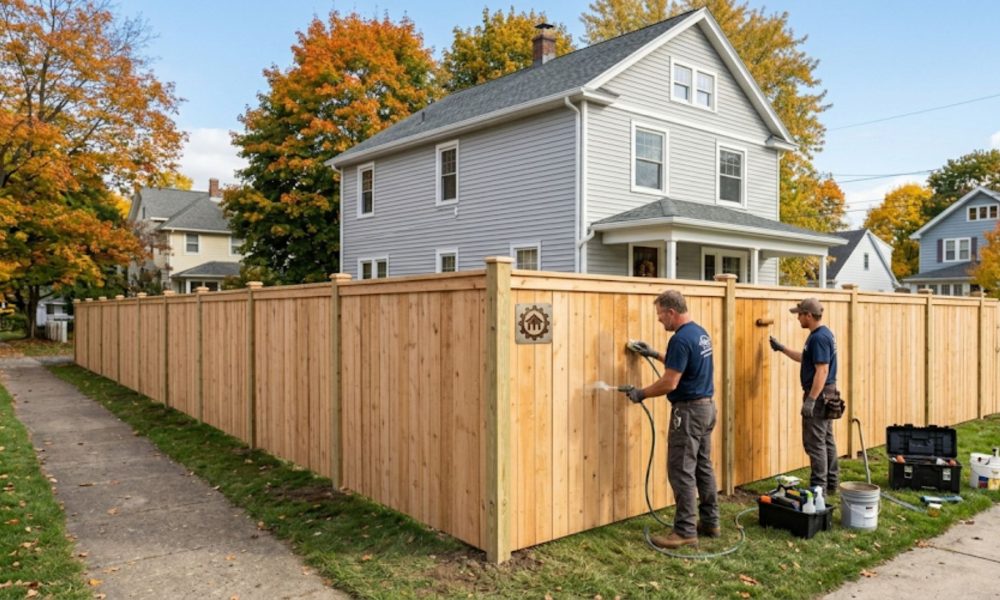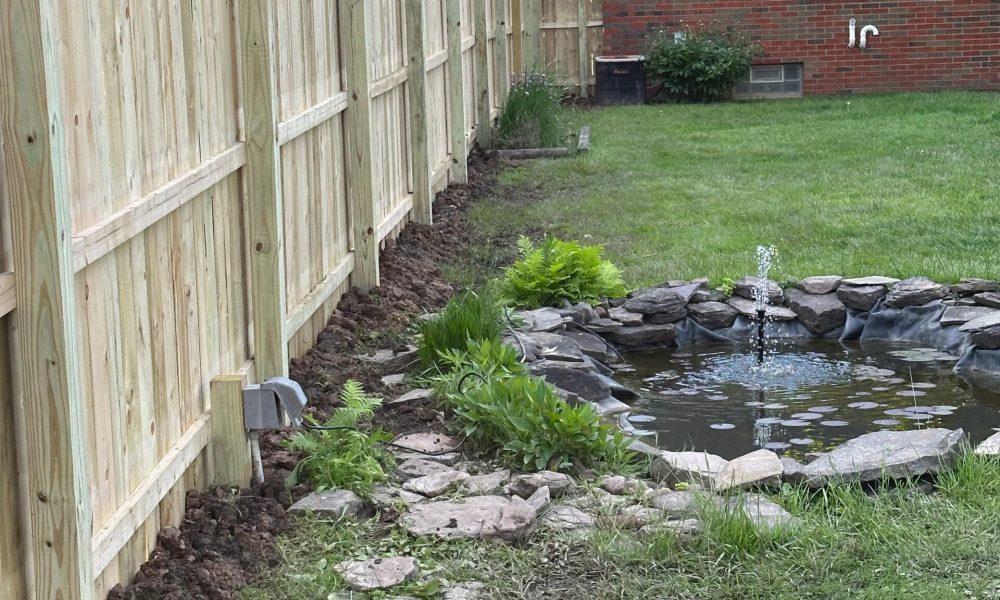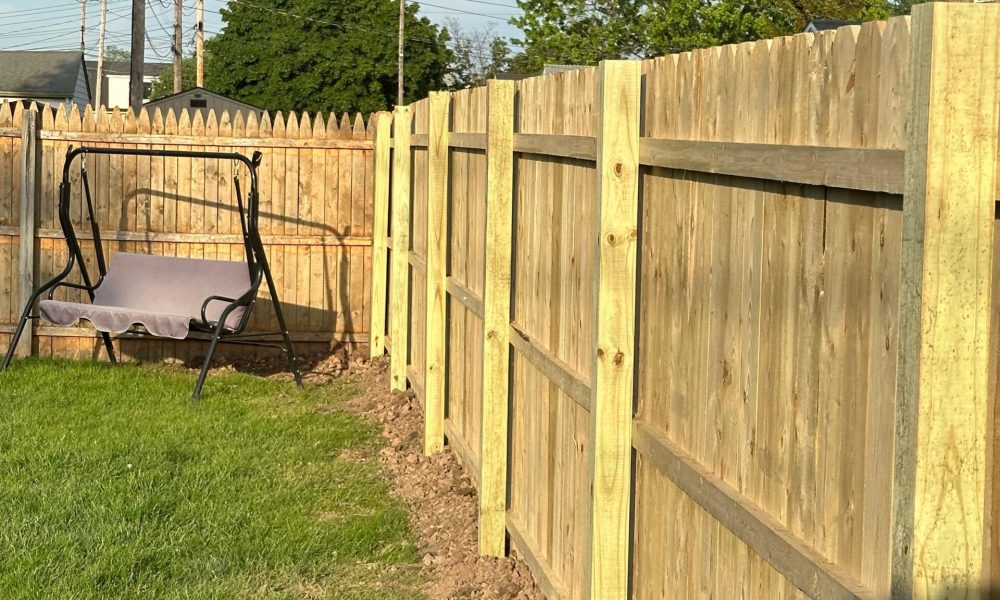
If you’ve noticed your fence looking a little gray or dried out, you’re probably not imagining it.
Wood doesn’t hold up on its own around here.
Between the humidity in July and the freeze-thaw swings every February, a fence in Buffalo works harder than one in most other parts of the country.
That’s usually the moment homeowners start typing “fence staining near me” into their phone, standing in the yard, coffee in hand, wondering if they waited too long.
We get calls like this constantly at All Pro Fence Buffalo. The good news is that most wood fences aren’t in trouble. They just need attention on a schedule that actually fits our climate, not the generic timeline printed on the back of a stain can.
Below is what we’ve learned from years of walking Western New York backyards and looking at fences up close.
Typical Restaining Intervals
For most cedar, pine, or spruce fences in this region, plan on restaining every two to three years. That’s the range we tell people when they ask how often to stain fence sections that get regular sun and rain exposure.
It’s not an exact science. A fence tucked against a house with some tree cover might stretch closer to three years. One that runs along an open, exposed property line facing west often needs attention sooner.
Solid stains and higher-quality semi-transparent products can sometimes push that window out a bit further, but two to three years is still the safest planning assumption for anyone budgeting ahead.
Waiting longer than that usually means paying more later, since bare wood left unprotected starts absorbing moisture and breaking down faster than people expect.
How Buffalo Weather Shortens the Cycle
Western New York isn’t kind to exterior wood. We get lake-effect snow piling against fence lines all winter, followed by a spring thaw that soaks the ground and keeps posts sitting in damp soil longer than homeowners realize. Then summer brings UV exposure strong enough to fade and dry out even a well-applied stain.
That freeze-thaw cycle is the real culprit.
Water gets into tiny cracks in the wood grain, freezes, expands, and slowly widens those cracks over the winter. Repeat that process for a few seasons without a protective coat and you’ll see splitting, warping, and gray, weathered boards well before a fence in a milder climate would show the same wear.
This is a big reason the fence resealing schedule we recommend locally runs shorter than what you’ll read in national guides written for drier states.
Signs Your Fence Needs Restaining
You don’t need to guess. A few visual cues tell you clearly enough:
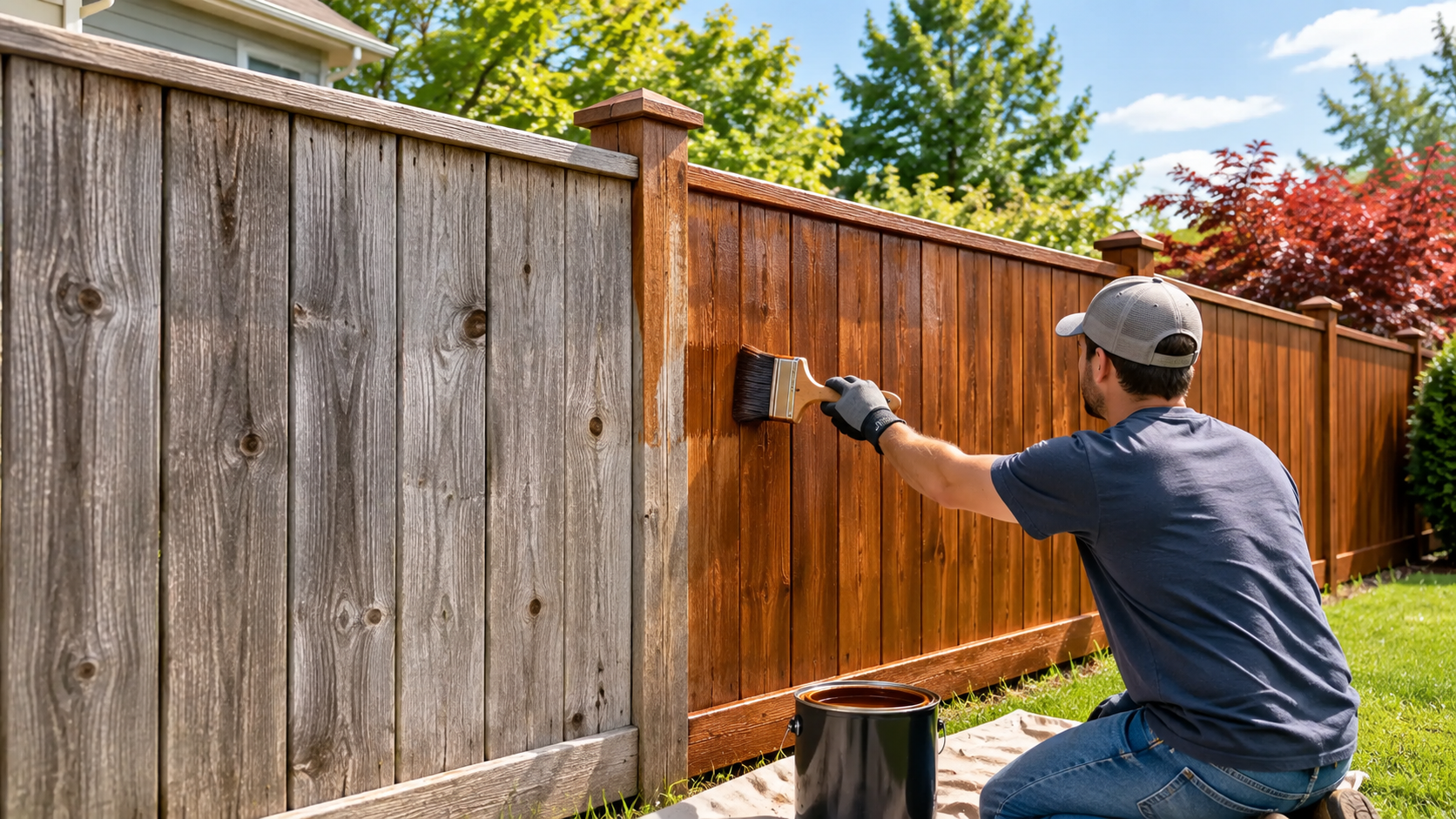
● The wood has turned gray or silver instead of holding its original tone
● Water sits on the surface in beads instead of soaking in
● The grain feels rough or splintery when you run a hand across it
● Small cracks or splits have started appearing along the boards
● Old stain is flaking, peeling, or visibly patchy in spots
Any one of these on its own isn’t an emergency. But two or three showing up together usually means it’s time to plan the work, not wait for next season. This is typically the point where homeowners start searching fence staining near me instead of putting the project off another summer.
The Water-Drop Test Explained
This is the simplest way to check your fence without any tools. Pour a small amount of water on a flat section of a board, somewhere that gets typical sun and rain exposure, and watch what happens over the next minute or two.
If the water beads up and sits on the surface, the existing stain is still doing its job. If it soaks in within a few seconds, darkening the wood, the finish has worn through and it’s time to reapply.
Try this test on a few different boards around the fence, not just one, since sun exposure and wear can vary significantly from one section to the next even on the same fence line.
New Fence: When to First Stain
This one surprises a lot of people. Brand-new wood fencing usually shouldn’t be stained right away. Fresh lumber holds moisture from the milling process, and sealing over that moisture traps it in the wood instead of letting it dry out naturally.
Most pressure-treated lumber needs somewhere between two and six months to dry out before it’s ready for stain, depending on the wood species and the weather during that stretch.
A simple way to check is the same water-drop test described above. If water still beads on unstained wood, it’s telling you the boards haven’t dried enough yet. Staining too early is one of the more common mistakes we see, and it usually means redoing the work sooner than expected.
Sun vs. Shade Exposure Effects
Not every section of your fence ages at the same rate, and this catches people off guard when one side looks fine while another looks rough. South- and west-facing sections take the brunt of direct sun and tend to fade and dry out faster.
North-facing sections, or ones shaded by trees or a house, hold their finish longer but can develop moisture and mildew issues instead, especially if they don’t get much airflow.
Because of this, we’ll sometimes recommend restaining one exposed side of a property a year or so ahead of a shadier section, rather than treating the whole fence as a single unit on the same clock. It’s a small adjustment, but it can extend the overall wood fence upkeep timeline and avoid doing unnecessary work on boards that don’t need it yet.
Transparent vs. Semi-Transparent vs. Solid
The type of stain you choose affects how often you’ll be back out there with a brush or sprayer.
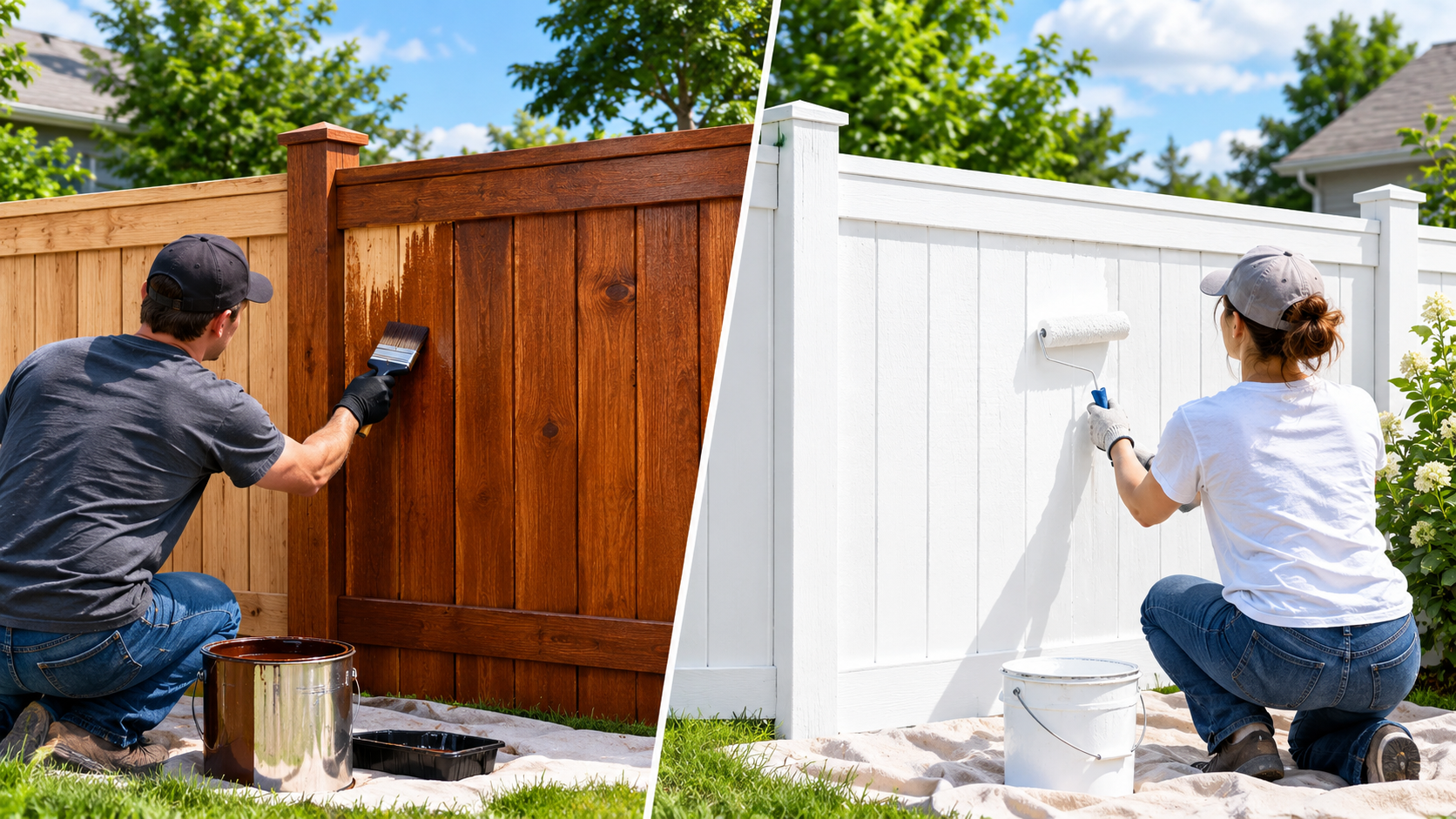
Transparent stains show the most wood grain and natural character, but they offer the least UV protection and typically need reapplication every one to two years.
Semi-transparent stains strike a middle ground. You still see grain and texture, and protection lasts closer to two to three years under normal Western New York conditions.
Solid stains function more like a thin paint. They hide the grain almost entirely but offer the strongest UV and moisture resistance, often stretching to three or even four years between coats.
There’s a real tradeoff here between appearance and maintenance frequency. Homeowners who want that natural wood look accept a shorter cycle. Homeowners focused on lower upkeep often lean toward solid stain, even though it changes the fence’s appearance more.
Prepping Between Coats
Skipping prep work is probably the single biggest reason a new coat of stain fails early. Old, flaking stain has to come off before new product goes on, or the new coat won’t bond properly and will peel within months instead of years.
A typical prep process involves pressure washing at a controlled setting (too high a setting can gouge softer woods like cedar), letting the fence dry fully for at least 24 to 48 hours, and sanding any rough or splintering areas.
Skipping the drying period is a common mistake. Stain applied over wood that still has surface moisture trapped underneath rarely holds up, no matter how good the product is.
Extending Time Between Stains
A few habits noticeably stretch out the interval between applications. Keeping vegetation and grass trimmed back from fence posts reduces moisture retention at ground level, which is often where wood fails first. Fixing minor drainage issues nearby, like a downspout draining straight onto a fence line, prevents concentrated water exposure in one spot.
Choosing a higher-quality stain with UV inhibitors also matters more than people assume. Cheaper products break down faster under strong summer sun, which shortens the practical fence resealing schedule regardless of how well the rest of the maintenance is handled.
Scheduling Around WNY Seasons
Timing the actual staining work matters almost as much as the stain itself. Late spring through early fall, generally May through September, gives the wood enough consistent dry weather to properly absorb and cure the product. Staining too close to the first frost risks trapping moisture before the coat has fully set.
Many homeowners plan this work around late spring cleanup or early fall, before the leaves start dropping and covering the yard. Either window works, as long as you’re watching the forecast for a stretch of dry days rather than squeezing the job in between rain systems.
If you’re weighing options and searching fence staining near me because your fence is showing some of the signs above, All Pro Fence Buffalo has spent plenty of time evaluating fences across the region and can help you figure out where yours falls in the cycle.
Common Mistakes Homeowners Make
A few patterns show up again and again on properties we visit.
Staining over dirty or unwashed wood is probably the most frequent one, since dust and grime block proper absorption.
Applying stain in direct, hot afternoon sun causes it to dry too fast on the surface, which leads to uneven color and poor penetration into the grain.
Using interior-rated products outdoors, skipping the water-drop test before assuming a fence needs work, and ignoring one badly weathered section while treating the whole fence as uniform are also common. Each of these is an easy fix once you know to watch for it.
When to Call a Professional
Some situations are worth a second opinion rather than guesswork.
If you’re seeing significant rot, soft or spongy wood at the base of posts, or widespread structural movement, that’s beyond a simple restaining job and points toward repair or replacement instead.
A quick assessment can clarify whether you’re looking at routine wood fence upkeep or a larger repair, which is often easier to sort out than searching fence staining near me and guessing at the cause yourself.
Planning Ahead
Staying ahead of your fence’s finish is one of the more affordable ways to protect a property investment that’s constantly exposed to Western New York weather.
Checking your fence once a season, running the water-drop test when you’re not sure, and sticking to a two-to-three-year rhythm for most stain types will keep boards from reaching the point of no return.
All Pro Fence Buffalo has worked on enough fence lines across this region to know that consistent, well-timed maintenance beats waiting for visible damage every time. A little attention now saves a lot of replacement cost later.
Frequently Asked Questions
How often should I stain my wood fence in Buffalo?
Most fences here need restaining every two to three years, though sun exposure, stain type, and fence orientation all affect the exact timeline. South- and west-facing sections often need attention sooner than shaded areas of the same fence.
How do I know if my fence needs to be stained?
Look for grayed or faded wood, rough or splintery texture, water soaking in instead of beading, and any flaking or peeling of the old stain. If a couple of these signs show up together, it’s time to plan the work.
When should I stain a brand-new fence?
Wait until the wood has dried out, usually two to six months after installation. Staining too early traps moisture from the milling process inside the boards, which can cause problems down the road.
Does the type of stain affect how often I need to redo it?
Yes. Transparent stains typically last one to two years, semi-transparent stains around two to three years, and solid stains can stretch to three or four years, though each offers a different look and level of grain visibility.
What’s the best time of year to stain a fence in Western New York?
Late spring through early fall works best, generally May through September, since the wood needs a stretch of dry, mild weather to properly absorb and cure the stain before colder temperatures return.
Can I stain over old, peeling stain?
No. Flaking or peeling stain needs to be removed first, usually through pressure washing and light sanding, or the new coat won’t bond properly and will fail again within a short time.
Is staining a DIY-friendly project?
It can be, if you’re comfortable with proper prep, timing, and application technique. Larger fences, hard-to-reach sections, or fences already showing wear often benefit from a professional assessment before committing to the work.