A gate that won’t close is more than an annoyance.
It’s an open invitation for the dog to wander off, for a toddler to slip out to the driveway, for a stranger to walk right into the yard.
We’ve been out on hundreds of calls across Western New York where the fence itself is fine, but the gate is the one part dragging the whole thing down. Homeowners search “fence repair near me” expecting a full rebuild, and half the time the fix is a lot smaller than they think.
This guide walks through the most common gate problems we see, why they happen, and what it actually takes to fix them. No guesswork. Just what years of hands-on repair work has taught us about Buffalo winters, clay soil, and hardware that wasn’t built for either.
Why Gates Sag Over Time
Gravity wins eventually. Every gate hangs off two or three hinge points, and those points absorb the full weight of the panel every single time it swings open. Over years, wood posts loosen in their footings, screws back out of their pilot holes, and the whole frame starts to twist under its own weight.
It’s rarely one dramatic failure. It’s a slow drift, a quarter inch here, a quarter inch there, until one day the bottom corner is dragging a rut in the grass. Vinyl gates sag differently than wood, usually at the hinge screws rather than the frame itself, but the end result looks the same from the driveway.
Realigning a Dragging Gate
Before anyone reaches for new hardware, we check alignment first. A lot of “sagging gate fix” calls turn out to be a post that’s shifted, not a gate that’s broken.
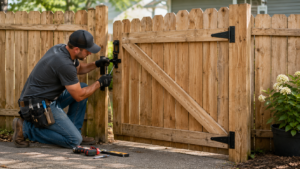
Start by checking the hinges for play. Tighten every screw. If the screws spin freely without biting, the holes are stripped, and that’s a different repair.
Next, check the latch side, because a gate that’s sagged even slightly will no longer meet the latch post square. Sometimes shimming the top hinge forward a fraction of an inch pulls the whole panel back into square. It’s a small adjustment. It makes a big difference.
Anti-Sag Kits and Turnbuckles
For wood gates especially, a diagonal turnbuckle kit is one of the best fixes we install. It runs corner to corner across the back of the gate frame, and tightening it pulls the panel back into a true rectangle.
We size the kit to the gate, not the other way around. A 4-foot pedestrian gate needs a lighter cable than a 12-foot double drive gate carrying its own weight plus wind load off Lake Erie in the winter.
Get that wrong, and the kit either does nothing or overcorrects and racks the frame the other direction.
Fixing Frozen or Seized Hinges
Buffalo winters are hard on outdoor hardware. Water gets into the hinge barrel, freezes, expands, and the pin seizes solid. Come spring, the gate won’t budge, or it groans like it’s asking for mercy.
Penetrating oil helps loosen light corrosion. For hinges that are truly seized, we remove the pin, wire-brush the rust off, and lubricate with a silicone-based product that won’t wash out in the rain. Galvanized or stainless hardware resists this from the start, and it’s worth the upgrade if you’re replacing hinges anyway.
Replacing Worn Latches and Hardware
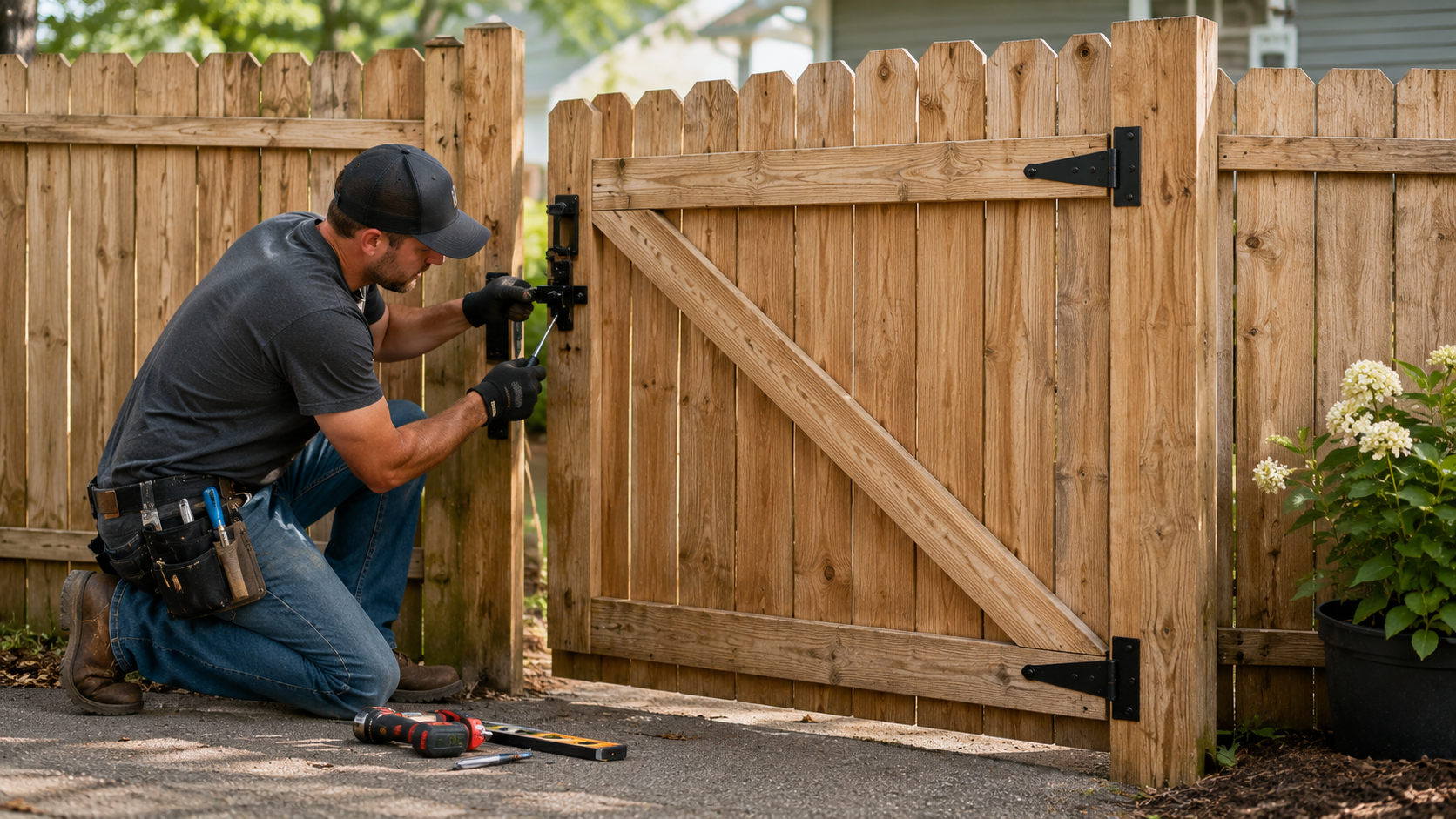
When your gate won’t close, a latch that fails to catch is usually a primary symptom rather than the root cause. But sometimes the latch really is just worn out, especially the spring-loaded gravity latches that see heavy daily use. The internal spring weakens, the catch doesn’t seat, and the gate pops back open in the wind.
Swapping a latch takes fifteen minutes with the right screws on hand. The trick is matching the throw distance to the gap between gate and post, because a latch built for a half-inch gap won’t reach across an inch and a half.
Repairing Rotted or Heaved Gate Posts
This is the repair that actually matters most, because everything above hangs off the post. Wood posts rot at the ground line first, right where soil meets air and moisture sits longest. Push on the post. If it flexes, the footing has failed underneath.
Concrete footings crack and heave in our freeze-thaw cycles too, tilting the post a degree or two each winter until the gate no longer swings true. Fixing this right means digging out the old footing, resetting the post plumb, and pouring new concrete below the frost line. Shortcuts here just mean doing it again in two years.
Adjusting for Frost Heave Each Spring
Even a well-set post moves a little every year in our clay-heavy soil. It’s normal. What matters is catching it early, before the gate is dragging or the latch is fighting.
We tell homeowners to walk the gate every spring after the last freeze. Swing it open and closed slowly. Listen for scraping, watch for a gap that’s changed shape since fall. A five-minute check now saves a bigger repair later, and it’s the single easiest maintenance habit for anyone who wants their fence to hold up.
Automatic Gate Troubleshooting
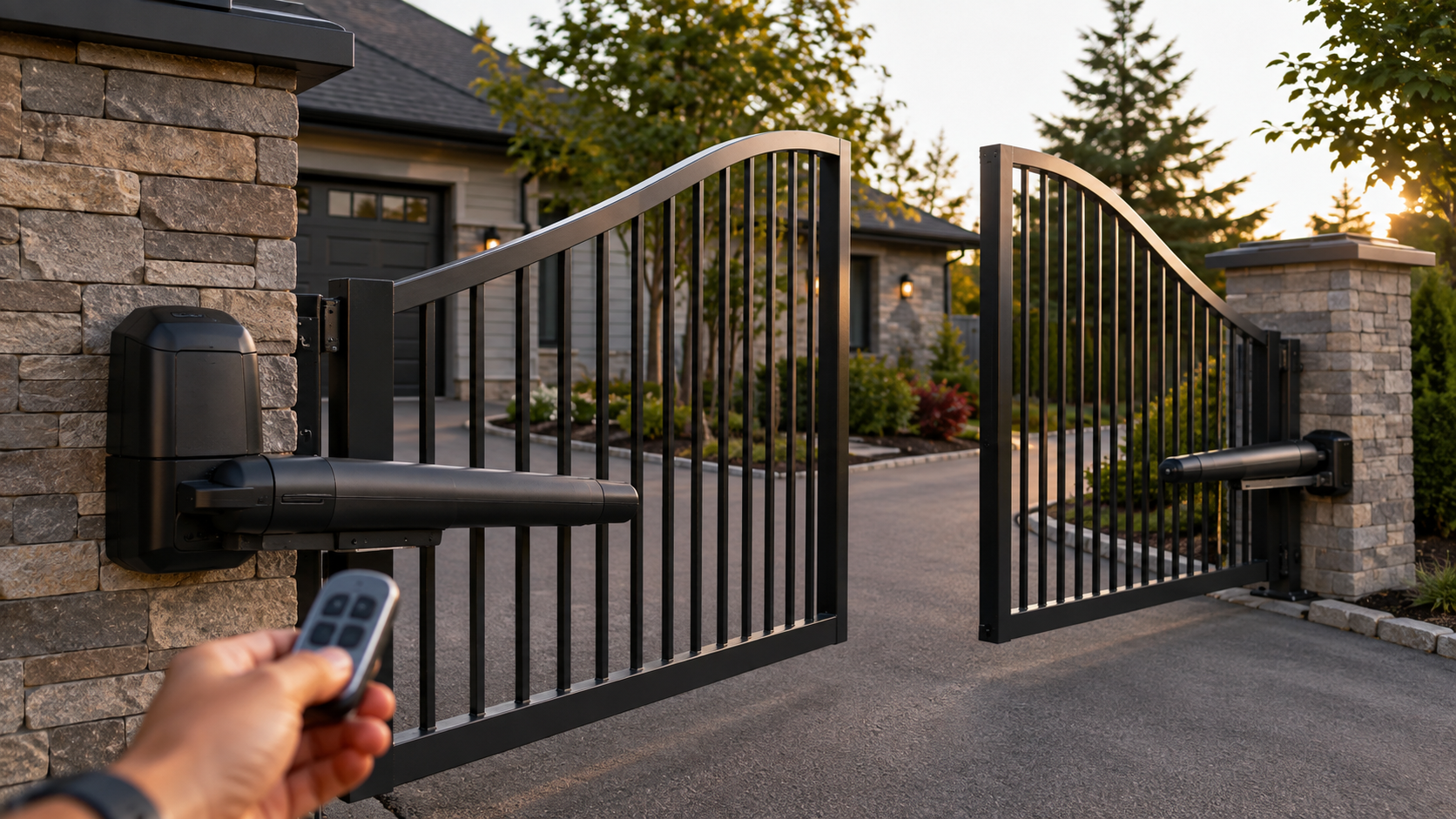
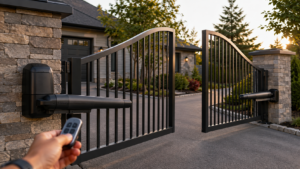
Powered gates add motors, sensors, and control boards to everything above, which means more that can go wrong. Most calls we get aren’t motor failures at all. They’re a misaligned safety sensor, a low battery in a solar unit, or a gate that’s binding mechanically and just fighting the motor harder than it should.
Always rule out the mechanical stuff first.
A motor straining against a dragging gate will burn itself out chasing a problem that a hinge adjustment would have solved. If the gate swings freely by hand but the opener still struggles, then it’s time to look at the electronics.
When to Replace vs Repair
Not every gate is worth saving. If the frame is rotted through in multiple spots, if the wood is splitting at every joint, or if you’re on your third round of hinge repairs in five years, replacement usually costs less over time than another patch job.
A good rule of thumb: repair anything that’s an isolated failure- hinges, latches, a single post. Replace when the damage is structural and spread across the whole gate. We’ll always tell a homeowner straight if their money is better spent on a new gate instead of chasing the old one.
Repair Cost Expectations
Most hinge and latch repairs run on the lower end, since they’re mostly labor and a small parts cost. Post resets cost more, since they involve concrete, curing time, and getting the post plumb before anything else can be fixed. Anti-sag kits and hardware upgrades land somewhere in between.
Every yard is different, and pricing depends on gate size, material, and how much digging is involved. When local homeowners start searching for reliable gate repair near me, the only honest way to get an accurate number is a quick walk-through; guessing over the phone does nobody any favors.
Getting your gate right isn’t complicated once you know what’s actually wrong with it. If yours has been dragging, sticking, or fighting you every time you walk through it, it’s worth a real look before winter makes it worse.
All Pro Fence Buffalo has spent years untangling these exact problems across Western New York yards, and we’re happy to take a look at yours.
Frequently Asked Questions
Why does my gate sag more in one season than another?
Wood expands with moisture and contracts as it dries out, and freeze-thaw cycles shift the soil around your posts. Spring and late fall tend to show the worst sagging, since ground movement is most active during those temperature swings, right when hinges and footings feel the strain.
Can I fix a sagging gate myself?
Minor sagging, loose hinges, or a misaligned latch are reasonable DIY fixes with basic tools. Post rot, footing failure, or a frame that’s racked out of square usually needs an experienced hand, since getting the post plumb again takes the right equipment and know-how.
How do I know if my gate needs a new post or just realignment?
Push on the post near ground level. If it flexes, wobbles, or the ground around it looks disturbed, the footing has likely failed and needs resetting. If the post stands firm but the gate still hangs crooked, it’s probably a hinge or hardware fix.
Why does my gate stick only in winter?
Cold weather stiffens hinge lubricant, and any trapped moisture in the hinge barrel freezes solid. Wood gates also swell slightly with winter humidity, tightening clearances that were fine in summer. A silicone lubricant and a quarter-inch trim on tight spots usually solves it.
Is a gate opener worth repairing or should I replace the whole unit?
It depends on the failure. Sensor and alignment issues are usually a quick, affordable fix. A burned-out motor on an opener over ten years old often costs more to repair than to replace, especially once you factor in labor for diagnosing an older unit.
How often should gate hardware be replaced?
Standard hinges and latches typically hold up five to ten years depending on gate weight and use. Coastal or heavy-snow areas see faster wear. If you’re tightening the same screws every season, it’s a sign the hardware itself has reached the end of its life.
What’s the average timeline for a gate repair appointment?
Simple hardware fixes, hinges, latches, and alignment, are often done same-day within an hour or two. Post resets take longer because concrete needs time to cure, usually meaning a follow-up visit 24 to 48 hours later to finish hanging the gate.