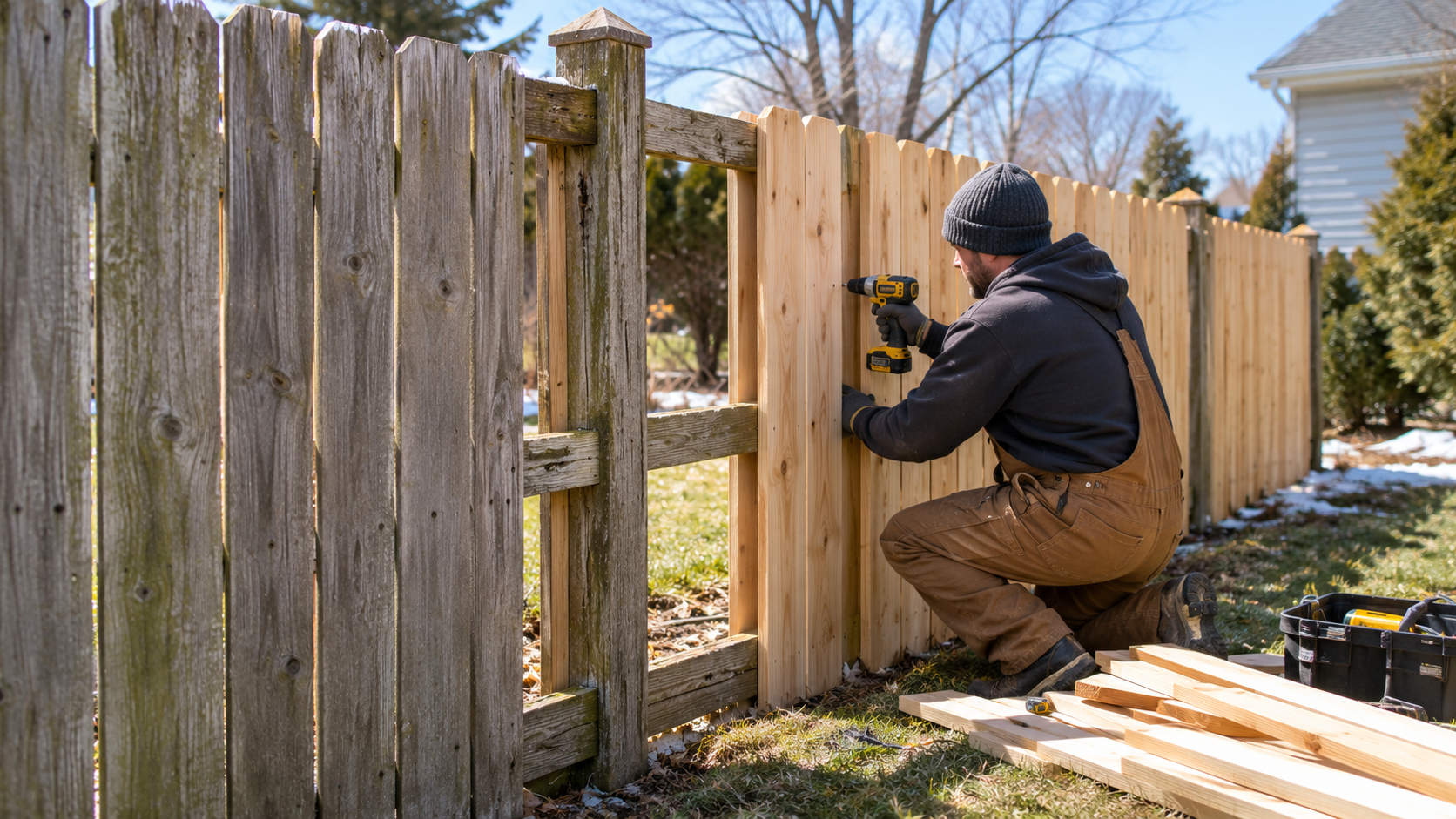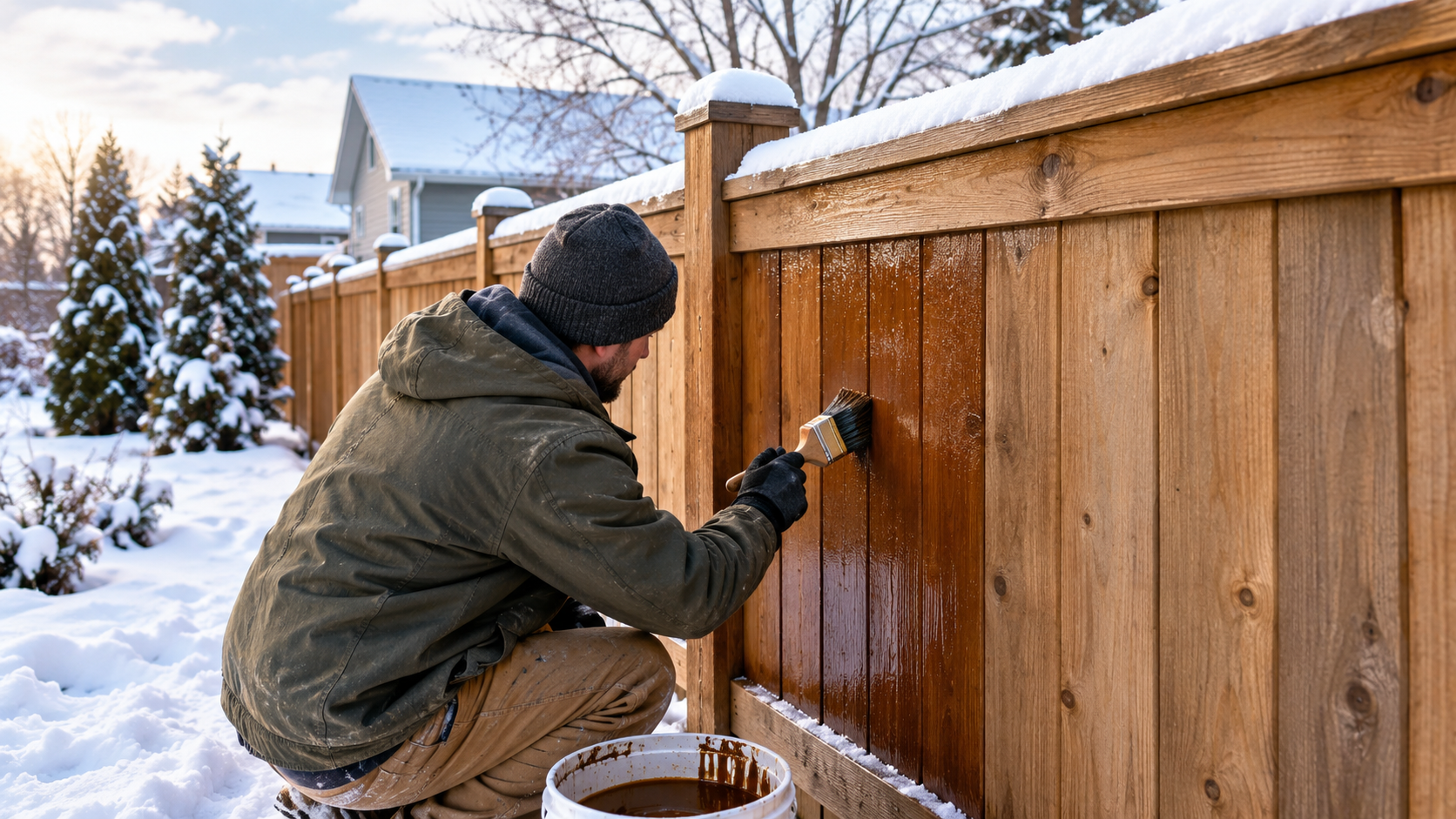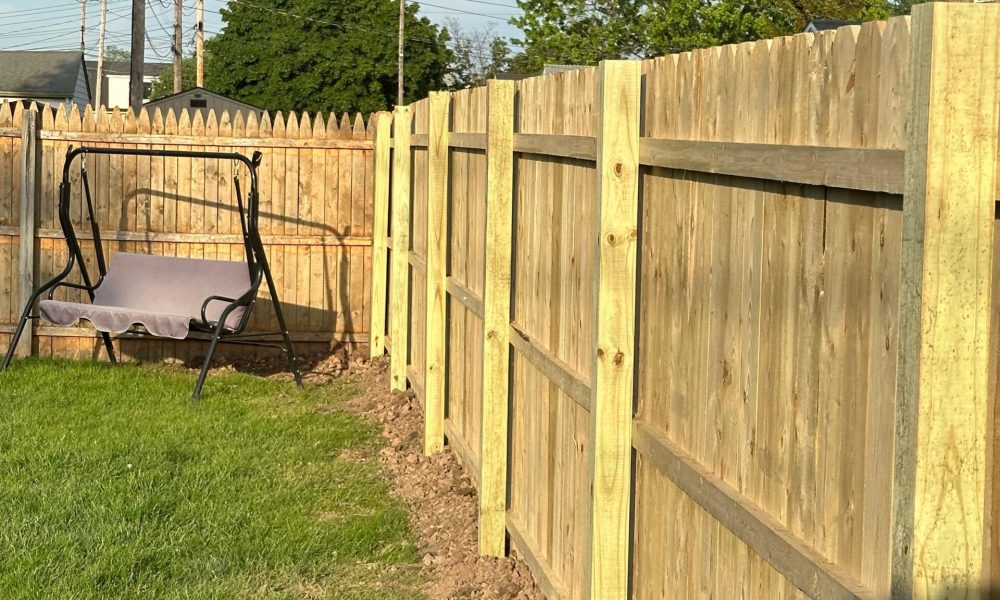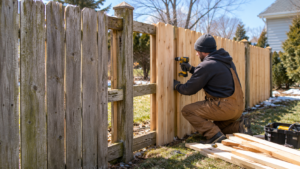
A homeowner called us last spring after finding long strips of paint curling off the top rail of their fence, right where the snow had piled up all winter. The wood underneath looked gray and thirsty. That kind of damage doesn’t happen overnight. It builds up over a few Buffalo winters, and by the time it’s visible, the fence has usually been asking for attention for a while.
Stain and paint both protect wood, but they don’t do it the same way, and they don’t hold up the same way once lake-effect snow, ice, and freeze-thaw cycles get involved.
If you’re trying to decide between the two, or you’ve searched fence staining near me because your current finish is already failing, it helps to understand what each one actually does to the wood before you commit to a plan.
How Stain And Paint Differ?
Paint sits on top of the wood. It forms a film, almost like a plastic layer, that covers the grain completely and creates a solid barrier between the wood and the weather. That film is what gives painted fences their clean, uniform look.
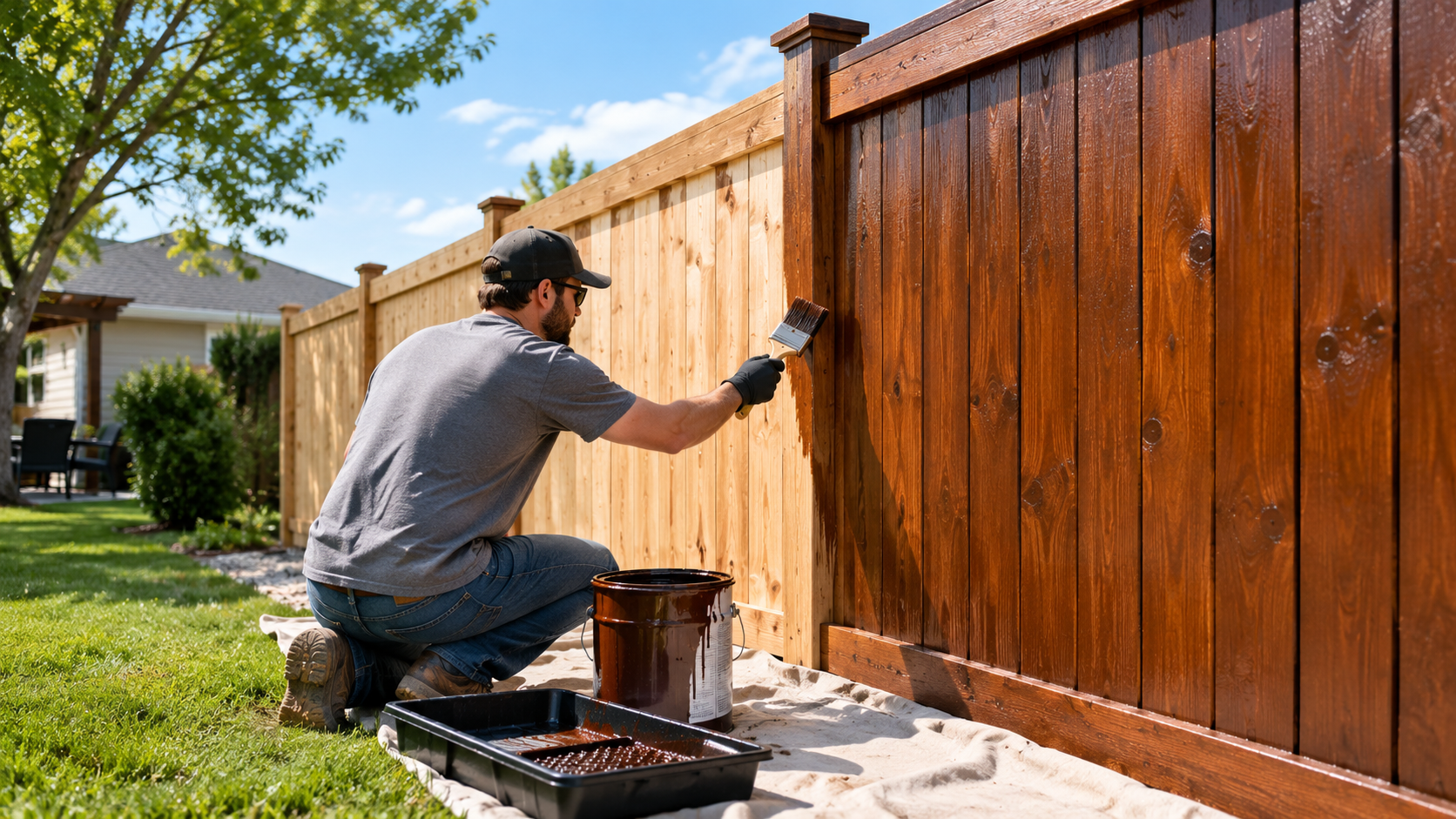
Stain works differently. It soaks into the wood fibers instead of coating over them. Depending on the type, stain can be nearly transparent, semi-transparent, or solid, but even solid stain penetrates the surface rather than forming a hard shell on top of it.
That’s the core of the fence stain vs paint question, and it’s also why the two finishes age so differently once they’re outside for a few years.
Neither one is automatically better.
They’re built to do different things, and the right choice depends on the wood, the look you want, and how much maintenance you’re willing to keep up with.
Durability Against Snow, Ice, and UV
Western New York doesn’t give a fence an easy year.
Lake-effect snow piles up against fence lines and stays wet against the wood for weeks at a time. Ice forms and melts repeatedly through the winter, and that freeze-thaw cycle is hard on any exterior finish, because the wood itself expands and contracts as temperatures swing.
Spring brings heavy rain on top of snowmelt, so the wood can stay damp longer than homeowners expect. Then summer flips the script entirely, with strong UV exposure that dries the wood out and breaks down finishes from the top down. A fence in Buffalo isn’t dealing with one kind of stress.
It’s cycling through moisture saturation, freezing, thawing, and sun damage within a single year, and that combination is tougher on a finish than steady weather in a milder climate would be.
This is really the heart of the fence staining near me search for a lot of homeowners. They’re not just picking a color. They’re trying to figure out what will actually survive a Buffalo winter without peeling or cracking by spring.
Breathability And Moisture Control
Breathability is where the difference between stain and paint really shows up. Stain allows the wood to release trapped moisture through the surface. Wood is porous, and it naturally absorbs and releases moisture as humidity and temperature change. Stain doesn’t block that process. It works with it.
Paint, because it forms a film, seals the surface more completely. That can be a good thing when it’s intact, but once paint starts to crack, or a small gap opens up, water gets underneath it and has nowhere to go. The wood swells, the paint loses its grip, and you end up with peeling that spreads faster than the original damage.
We’ve pulled paint off fences in the spring and found soft, moisture-damaged wood underneath that looked fine from the outside all winter.
Stain doesn’t eliminate moisture problems, but it tends to fail more gracefully. Instead of peeling in sheets, it fades and wears down gradually, which usually gives you more warning before the wood itself is at risk.
Appearance And Wood-Grain Visibility
This one comes down to preference more than performance. Paint gives you a completely uniform, solid color with no visible wood grain. If you want your fence to look like a clean, painted surface rather than a wood structure, that’s paint’s strength.
Stain lets the wood show through, and how much depends on the type:
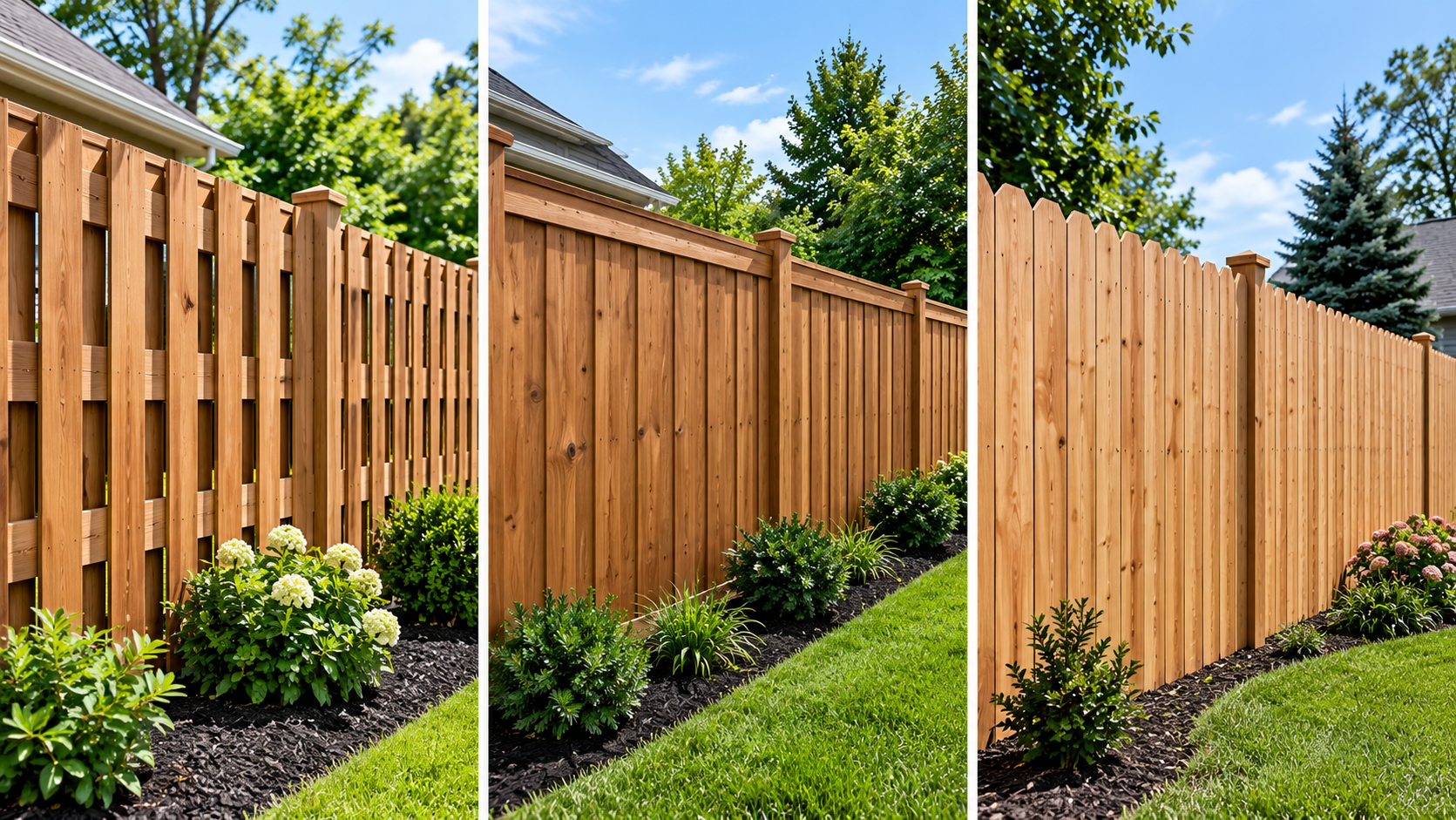
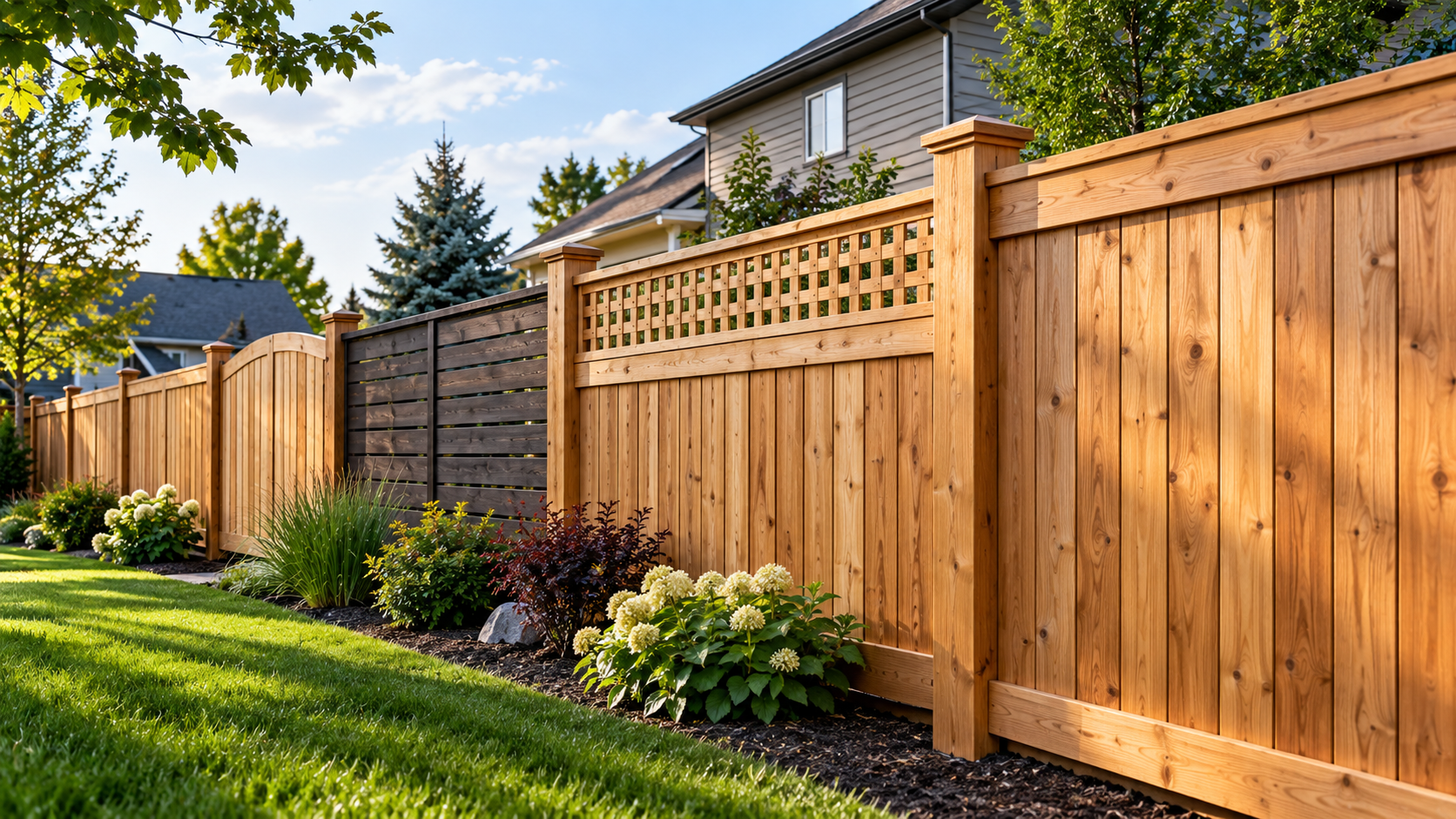
– Transparent and semi-transparent stains let the natural grain and texture stay visible, with just a tint of color added.
– Solid stains cover more of the grain but still let some wood texture show through, unlike paint’s flat finish.
A lot of Buffalo homeowners lean toward stain because they built or bought a wood fence specifically for the natural look, and painting over that grain feels like covering up the reason they chose wood in the first place.
Others prefer paint because it matches trim or siding color, or because they want a more finished, formal appearance. Neither preference is wrong. It’s really about what you want the fence to communicate.
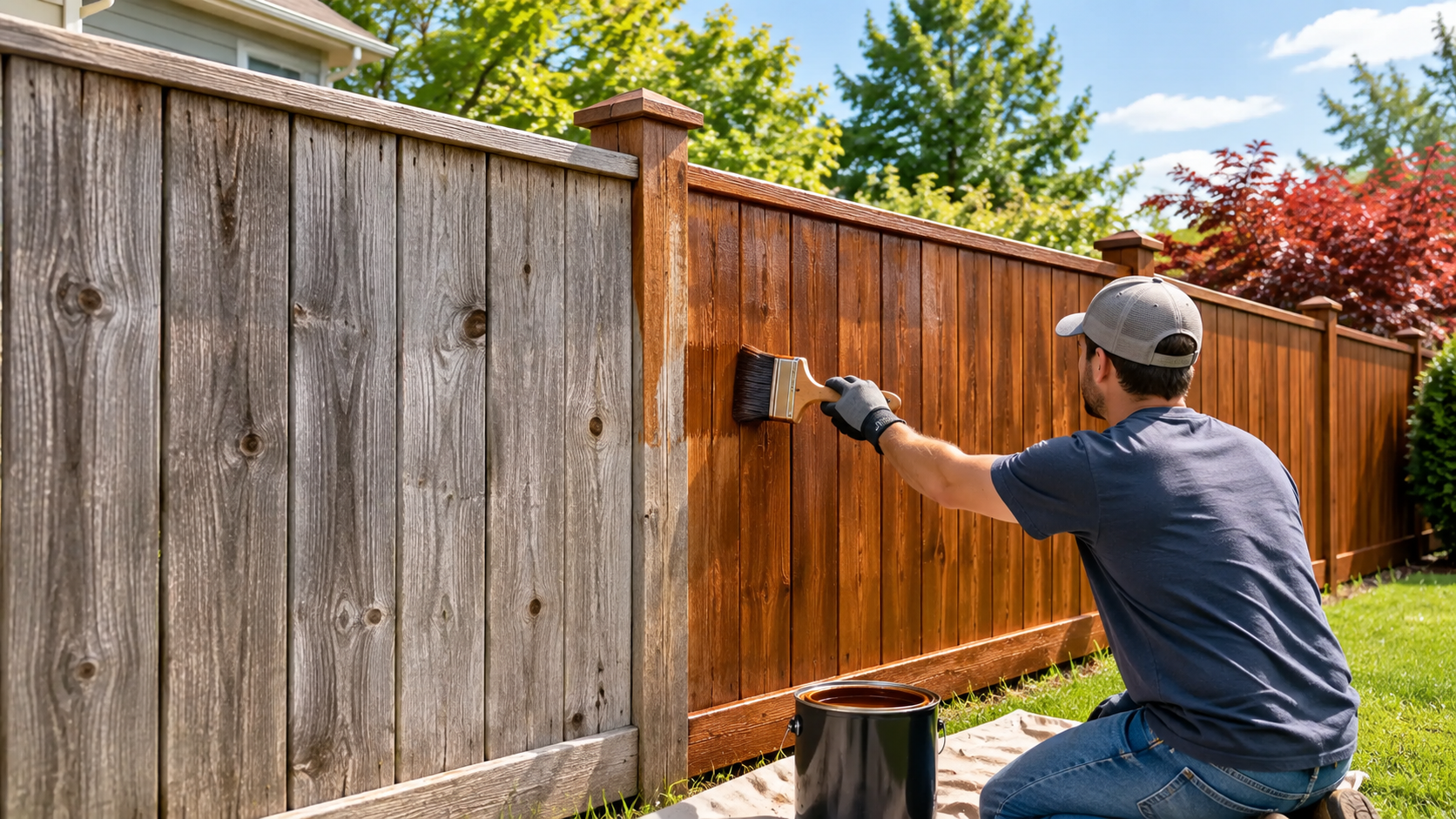
As finishes age, this gap widens. A stained fence tends to fade evenly and can be recoated without a full strip-down in most cases. A painted fence that starts peeling looks patchy and neglected fast, even if the fence itself is structurally fine.
Reapplication Frequency Compared: Which Lasts Longer in Western New York?
There’s no single lifespan that applies to every fence, because wood condition, sun exposure, product quality, and application all play a role. That said, there are reasonable ranges based on what we typically see in the field.
Stain generally needs to be reapplied every 2 to 4 years in this climate, depending on the product and how much direct sun and snow contact the fence gets. Paint can look good for longer when it’s applied correctly, sometimes 4 to 6 years, but when it fails, it tends to fail more dramatically, with peeling and cracking that requires scraping before anything new goes on.
Fence sections facing full afternoon sun age differently than shaded sections. We see this constantly. The south and west-facing boards on a fence often need attention years before the shaded north side does, because UV exposure breaks down finishes faster than moisture alone does.
So even on the same fence, you might be touching up one side well before the other.
Staining vs Painting: Prep Work Required For Each
Preparation matters more than most homeowners expect, and it’s honestly where a lot of finish failures start. A poorly prepared fence can fail regardless of how much the stain or paint costs, because neither product bonds well to a dirty, damp, or unstable surface.
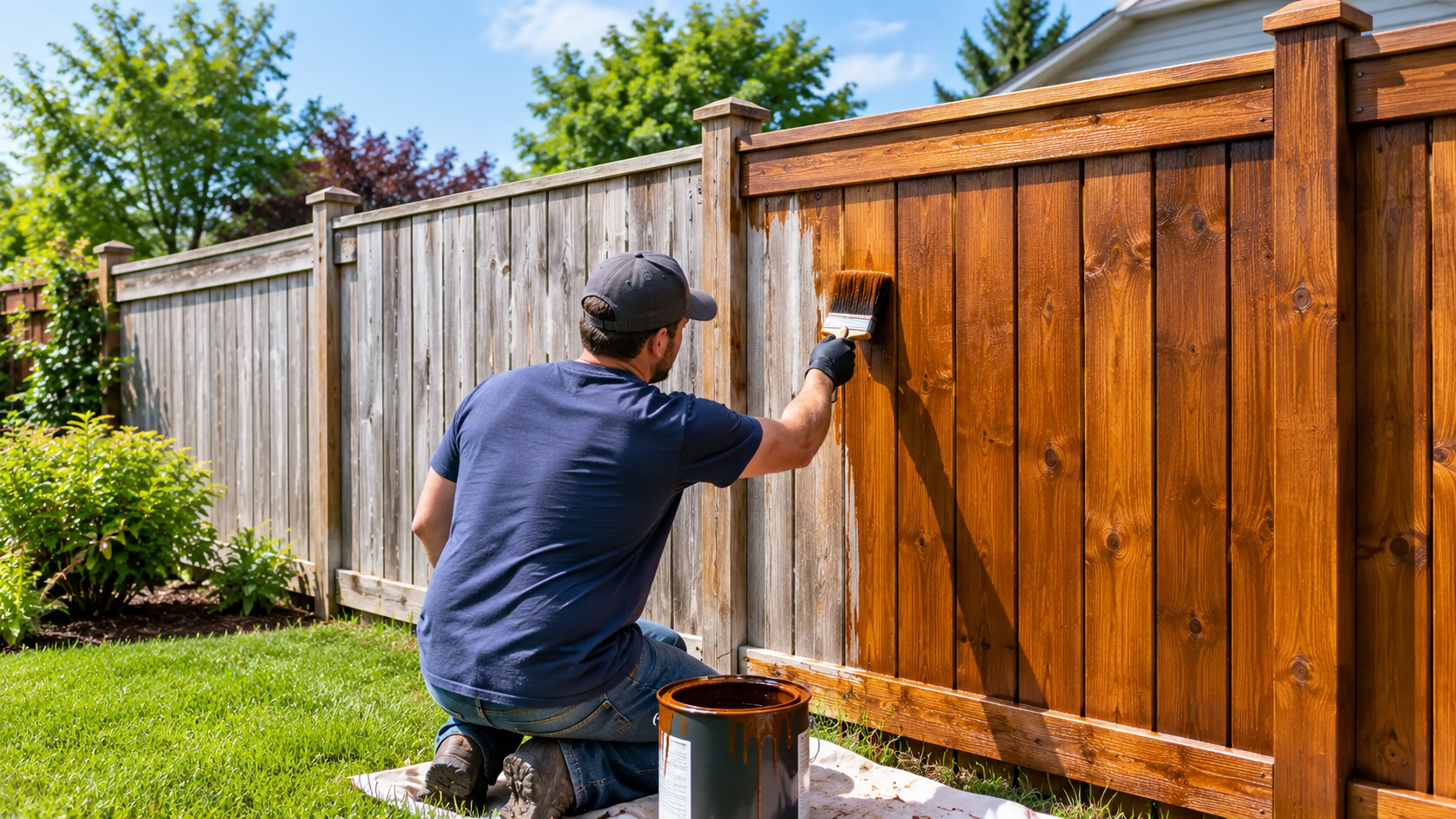
For staining, the wood needs to be clean and reasonably dry, usually with a day or two of good weather before application so moisture isn’t trapped underneath. Older or grayed wood may need light sanding or a wood brightener to help the stain absorb evenly.
Painting typically requires more prep work overall.
That includes scraping off any failing paint, sanding rough or peeling edges smooth, and often applying a primer before the topcoat goes on. Skipping primer or painting over a chalky, weathered surface is one of the fastest ways to end up with peeling again within a year or two.
Applying finish to damp wood is a mistake either way, but it’s especially damaging with paint, since trapped moisture behind a film has nowhere to escape. Older fences, and fences that have been repainted multiple times, usually need the most prep before a new coat will hold properly.
Cost Comparison Over 10 Years
Long-term cost depends on more than the price of the product itself. Labor, the amount of prep work needed, the number of coats, and how often you’re reapplying all factor in.
| Factor | Staining | Painting |
| Typical reapplication interval | 2- 4 years | 4- 6 years |
| Prep required each time | Cleaning, light sanding | Scraping, sanding, priming |
| Failure pattern | Gradual fading | Peeling, often needing full strip |
| Labor per application | Generally lower | Generally higher |
Staining tends to mean more frequent, smaller maintenance projects. Painting tends to mean less frequent but more labor-intensive ones, especially once scraping and priming enter the picture.
Over a 10-year span, the two can land in a similar overall range, but that depends heavily on fence size, wood condition, product quality, and who’s doing the work. We’d rather walk a homeowner through their specific fence than quote a number that doesn’t account for what’s actually going on with the wood.
What Type of Fence Finish Works Best in Buffalo?
When it comes to wood fence staining Buffalo property owners can rely on, a semi-transparent or solid-color penetrating stain designed for exterior use holds up best against our extreme freeze-thaw cycles and UV exposure. Products with built-in UV blockers and water repellents tend to perform better on sun-exposed sections.
New pressure-treated wood is a special case.
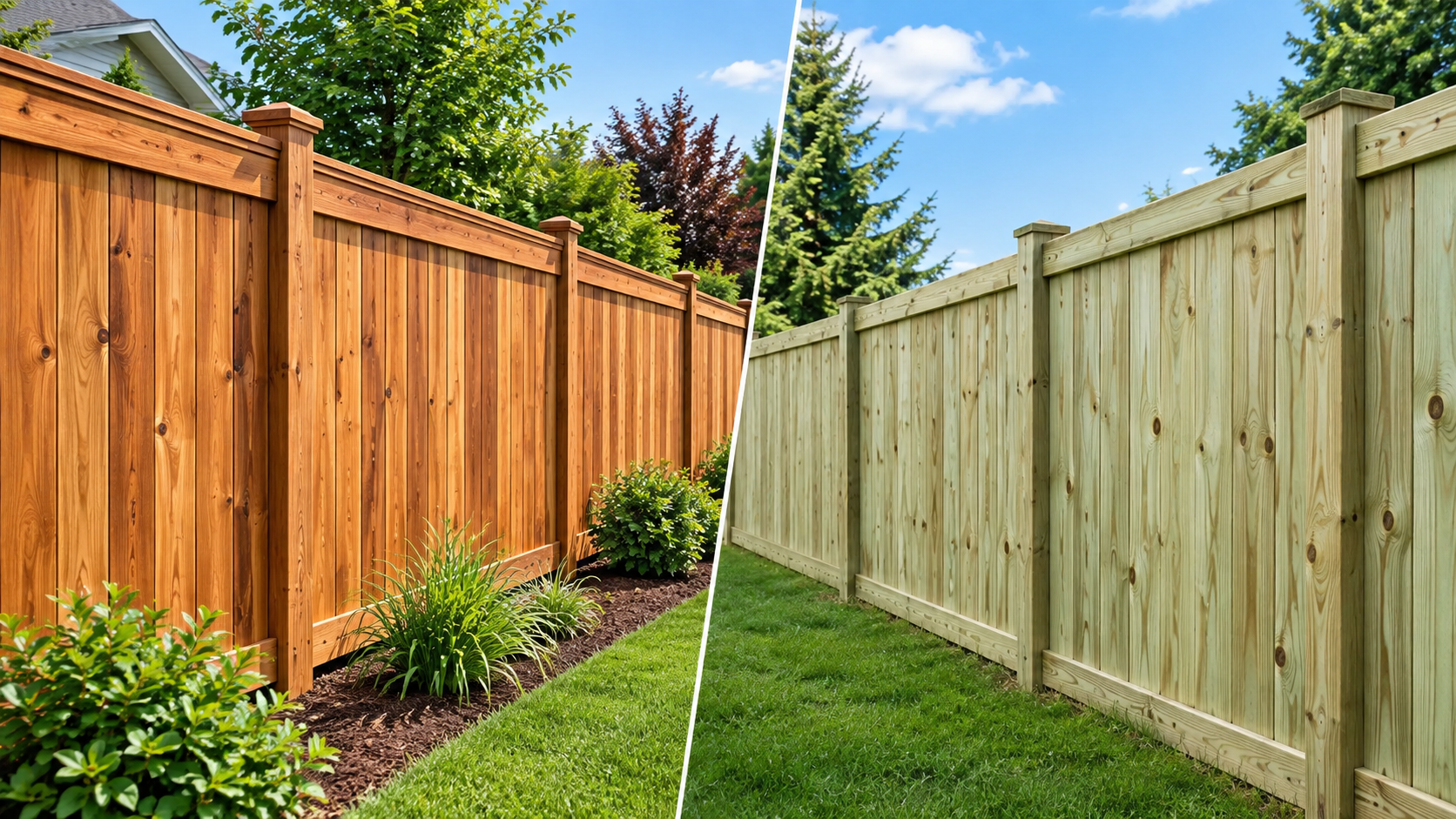
It needs time to dry out before it will accept stain properly, usually a few months to a season, depending on the moisture content when it was installed. Staining it too early can lead to poor absorption and an uneven finish, since the wood is still releasing the moisture from the treatment process.
Older fences with rot, splitting, or structural damage are a different situation entirely. No finish, stain, or paint fixes wood that’s already compromised. If boards are soft or crumbling, that’s a repair conversation before it’s a finish conversation.
This is where a lot of homeowners searching for fence staining near me are actually looking for someone to assess the fence first, not just apply a coat of something and hope it holds.
Previously painted fences can sometimes be switched to stain, but it usually requires stripping the old paint down to bare wood first, since stain can’t absorb through a painted surface. That’s a labor-intensive job, and it’s worth weighing against simply repainting if the existing paint is in reasonable shape.
Common Fence Staining and Painting Mistakes
A few mistakes come up again and again, regardless of which finish someone chooses:
– Applying finish to wood that isn’t fully dry, which traps moisture underneath
– Skipping cleaning before recoating, so dirt and mildew get sealed in
– Using interior-grade or low-quality exterior products that aren’t rated for freeze-thaw climates
– Painting over peeling paint instead of scraping it back to a stable surface
– Staining pressure-treated wood before it’s had time to dry out
– Ignoring horizontal surfaces like the top rail and post caps, which absorb far more moisture than vertical boards and often fail first
– Assuming one coat will perform like two, especially on older or more porous wood
Horizontal surfaces and end grains deserve extra attention either way. They soak up water differently than the flat vertical faces of the boards, and they’re usually the first place we see finish failure on a fence, staining, or painting.
Which Should You Choose: Stain or Paint?
If you want the natural wood grain visible, lower prep work on future recoats, and a finish that tends to fade rather than peel, staining is usually the better fit for Buffalo’s climate. It’s also generally the more forgiving option if you’re not able to stay perfectly on schedule with maintenance.
If you want a uniform, solid color that matches trim or siding, and you’re prepared for more involved prep work when it’s time to redo it, paint can still be a reasonable choice, especially on fences that were already painted and are in decent shape.
At All Pro Fence Buffalo, we’ve refinished fences both ways for years, and the honest answer is that the condition of the wood usually matters more than which finish you pick. A well-prepared stain job and a well-prepared paint job will both outperform a rushed version of either one.
Fences that see heavy snow contact, full sun exposure, or sit low to grade tend to do better with stain, simply because it handles moisture movement more forgivingly. Fences that are mostly shaded, well-drained, and already painted often do fine staying painted, as long as the prep work is done right each time.
Frequently Asked Questions
Is staining a fence better than painting it?
Neither is universally better. Stain tends to handle moisture and freeze-thaw cycles more forgivingly and shows less dramatic failure over time, while paint offers a more uniform, solid color. The better option depends on your fence’s condition and your maintenance preferences.
How long does fence stain last in Buffalo?
Most stains last around 2 to 4 years in Western New York before needing reapplication, depending on sun exposure, product quality, and how well the wood was prepared. South and west-facing sections often need attention sooner than shaded areas.
Can you stain a previously painted fence?
Only after the old paint is fully stripped down to bare wood, since stain can’t absorb through a painted surface. This is labor-intensive, so it’s worth weighing against simply repainting if the existing coat is still in reasonable condition.
Should you stain a new wood fence?
Not immediately if it’s pressure-treated. New pressure-treated wood needs time, often a few months to a season, to release excess moisture before it will accept stain evenly. Untreated wood can typically be stained sooner, once it’s clean and dry.
Does fence stain protect against snow and rain?
Yes, quality exterior stain repels moisture and helps prevent water absorption, though it’s not a permanent seal. Reapplication is still needed every few years, especially on sections that face heavy snow contact or full sun exposure through the season.
How often should a wood fence be stained?
Generally every 2 to 4 years in this climate, though it varies by product, sun exposure, and fence condition. Homeowners searching for fence staining near me are often past that window already, with visible fading or graying signaling it’s time.
What is the best fence finish for Buffalo weather?
A semi-transparent or solid penetrating stain with UV blockers and water repellents tends to perform well against our freeze-thaw cycles and sun exposure. The right choice still depends on the wood’s condition, your appearance preferences, and maintenance expectations.