A site without a fence is an open invitation. Anyone who has run a job in Western New York knows how fast a tool trailer, a stack of lumber, or a fresh excavation draws attention. Neighbors walk through, kids cut across the lot, and a thief only needs a few quiet minutes after dark. A temporary construction fence fixes most of that in a day or two.
This guide walks through how it works, what it costs, and how to pick the right setup for your property. We wrote it the way we would explain it standing at your curb, with a clipboard and a cup of coffee.
Whether you are a homeowner building an addition, a landlord renovating a few units, or a manager overseeing a larger build, the same basics apply. If you have ever searched for commercial fence contractors and felt buried in jargon, this is meant to cut through it.
Why Sites Need Temporary Fencing
Fencing a job site protects people first. Open trenches, stacked material, and running equipment are real hazards, and a fence keeps the public from wandering into them. It also protects you. If someone gets hurt on an unsecured property, the owner often faces questions, and a visible barrier is the first thing anyone looks for.
Security is the second reason. Copper, power tools, and building materials are common targets on open sites, and a locked perimeter makes theft harder and slower. It does not make it impossible, but a fence plus good lighting and a locked gate discourages most casual attempts.
The third reason is control. A fence marks where your work begins and ends, which helps with neighbor relations, deliveries, and crew flow. In Buffalo, where lots can be tight and houses sit close together, a clear line on the ground saves a lot of friction. Temporary construction fence is built for exactly this: quick to put up, easy to move, and gone when the job is done.
Panel vs. Chain Link Temporary Options
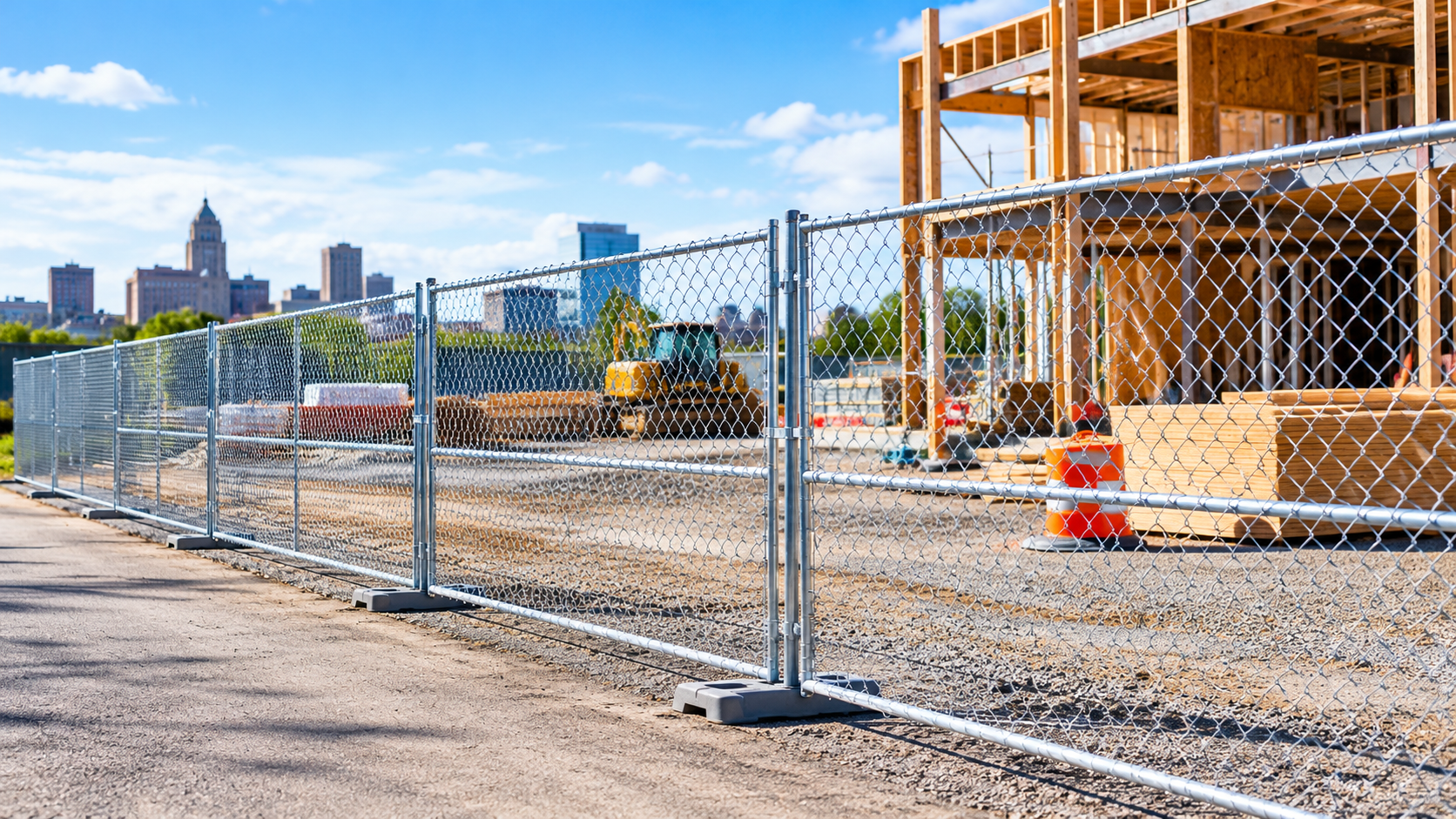
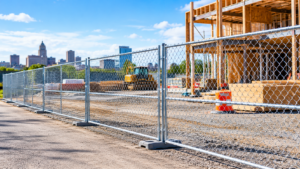
Most temporary fencing you see around town falls into two types. The first is the freestanding panel, usually a chain link or welded mesh frame about six feet tall and ten to twelve feet wide. Panels sit in heavy stands or weighted bases and clamp together at the joints. There is no digging, which is why they go up fast and come down clean.
The second type is posted chain link, where posts go into the ground or into surface mounts and fabric is stretched between them. It takes longer to set, but it is sturdier and better for long jobs, steep ground, or places where people may lean on the line.
Here is how we usually think about it. Panels suit short projects, paved surfaces, and sites that change shape often. Posted chain link suits longer builds and higher-risk perimeters. Some projects use both: posted fence along a busy street and panels around a moving work zone. When you talk with commercial fence contractors, describe your ground, your timeline, and how much foot traffic is nearby, and the right choice usually becomes obvious.
Rental vs. Purchase Decisions
This is where people sometimes overspend. Fence rental in Buffalo makes sense when the job has a clear end date, because you pay for the time you need and nothing more. The provider delivers, sets, and removes it, so you do not have to store or sell anything afterward.
Buying can make sense in a few cases. If you run several projects each year, or a build is likely to stretch past a year, owning panels may cost less over time. You will then need a place to keep them, a way to haul them, and someone who knows how to set them safely.
A simple rule of thumb: if you will use the same fence for many months across more than one site, run the numbers on buying. If it is a single project, rent. Homeowners doing a remodel or a pool install almost always come out ahead renting. Ask for both quotes if you are unsure, and any honest provider will show you the math.
Meeting OSHA and Site-Safety Rules
Let us be careful here, because this topic gets oversimplified. OSHA does not publish one rule that says every construction site must have a six-foot fence. What it does require, under its construction standards, is that workers are protected from hazards on the site, including things like open excavations and falling objects. A fence is one common way to keep people away from those hazards.
What that means in practice is that the fence should fit the risk. A deep excavation next to a sidewalk calls for a solid, well-secured barrier. A small yard project may need less. Beyond OSHA, the City of Buffalo and your town may have their own rules on permits, sidewalk closures, and how far a fence can sit from the street.
Before you order, check with your local building department and your insurance carrier. Tell your fence provider what the project is and who is nearby. A good contractor will point out issues you may not have thought about, but the final responsibility for compliance stays with the site owner or general contractor, so confirm requirements rather than assuming.
Wind Screens and Privacy Mesh
A bare chain link fence lets everyone see in. Sometimes that is fine. Other times you want privacy, less dust drifting onto the neighbor’s yard, or simply a tidier look. That is where windscreen and privacy mesh come in.
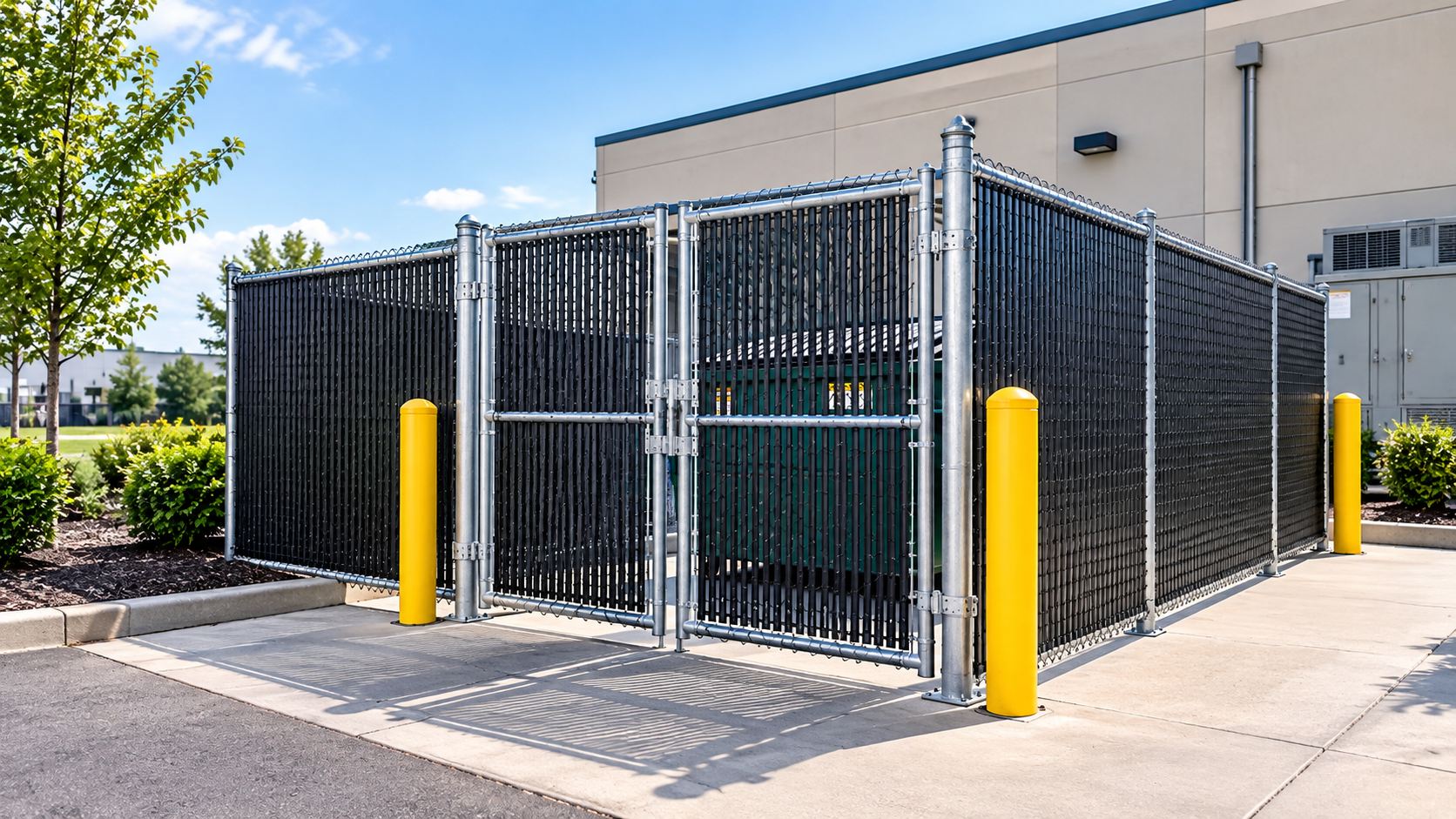
These are fabric covers that tie onto the fence. They block sightlines, soften the look of the work area, and can hold back some dust and debris. Many owners also use them to display a project sign or permit information.
Here is the catch, and it matters in Buffalo. A screen turns a see-through fence into something closer to a sail. Wind that used to pass through now pushes against the whole surface, and lake wind can be strong and gusty.
We tell customers to treat screens as a deliberate choice, not an afterthought. If you add one, the fence needs better anchoring, and in very windy periods the screen may need to come down or be partly opened. Mesh with more open weave handles wind better than a nearly solid cover.
Securing Panels Against Wind
Wind is the number one reason temporary fencing fails. Panels are light compared to their surface area, and they only stay put if they are tied together and weighted properly. Western New York gets steady wind off Lake Erie, plus the occasional big storm, so this deserves real attention.
The basics are simple. Use the proper stands for the panel type, and make sure every panel is clamped to its neighbor so the line acts as one unit. Add sandbags or other weights on the stands, especially at corners and ends. On long runs, bracing or support at intervals helps. On soft or sloped ground, a posted fence or ground anchors may be the safer pick.
Check the fence after storms and after the first strong wind. Clamps loosen, stands shift, and snow or ice can add load. A quick walk-through takes a few minutes and can prevent a panel from landing on a car or a neighbor’s property. If you have a screen on the fence, check it even more closely.
Access Gates for Equipment
A fence that blocks your own trucks is no help. Plan the gate before you plan anything else. Think about the widest thing that will pass through: a dump truck, a concrete mixer, a skid steer, a delivery trailer. Then add some room for turning.
Temporary fence systems often include swing gates and sliding gates, and many sites use a double-leaf gate wide enough for trucks plus a smaller walk gate for crews. Place gates where vehicles can pull off the street, not where they will block traffic or a sidewalk. Make sure the gate can be locked, and decide who holds the keys or codes.
A few practical notes. Gates take more punishment than the rest of the fence because they swing, get bumped, and get left open. Keep the ground under them level and clear. If deliveries come at odd hours, think about a lockbox arrangement. The best commercial fence contractors will walk the site with you and mark the gate spot before a single panel is set.
Installation and Takedown Logistics
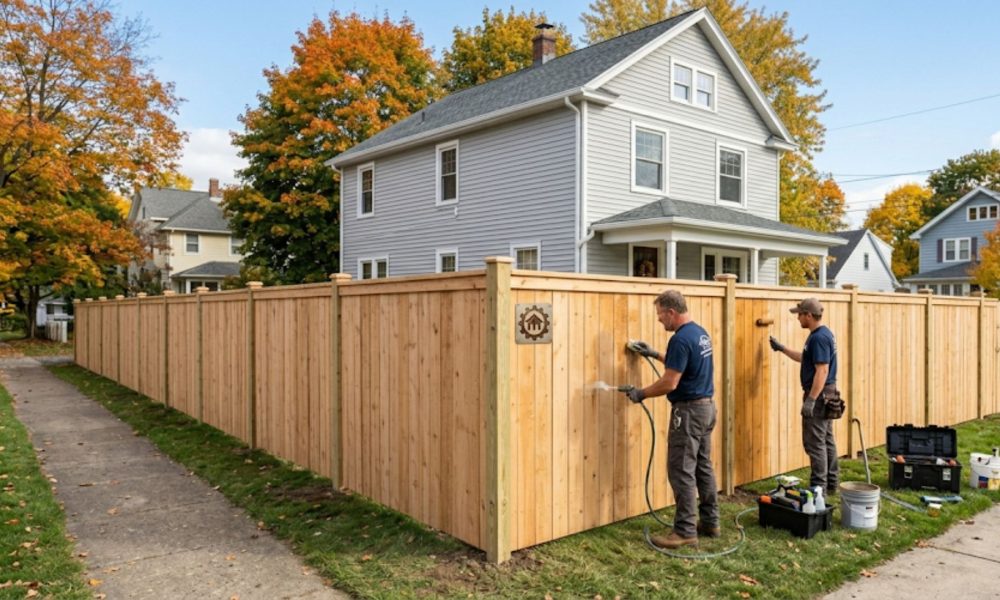
Good installs start with a walk of the site. We look at the ground, the property lines, buried utilities you should know about, overhead lines, and where trucks will actually move. Then we agree on the layout with you. Changing a line on paper costs nothing; changing it after the fence is up costs time.
On the day, crews unload, set stands, stand panels, clamp them together, hang gates, and add weights or bracing. For a typical small or medium site, this often takes part of a day, though larger sites take longer. Weather, frozen ground, and snow can slow things down, and January in Buffalo is a different job than July.
Takedown is the same process in reverse. Plan it for after the last heavy equipment leaves but before final landscaping, so crews are not working around the fence. If your schedule changes, call early. Most providers can shift a pickup date if they know in advance, and it avoids paying for days you did not need.
Duration and Pricing Models
We will not quote numbers here, because pricing depends on the site, the season, and the length of the run. What we can do is explain how it usually works so you know what to ask.
Most fence rental in Buffalo is priced by the linear foot or by the panel, and often by the month. You will usually see a one-time charge for delivery, installation, and removal, plus a recurring rental charge for the time the fence stays up. Gates, windscreens, extra weights, and bracing are commonly priced separately.
A few things move the price: total length, ground conditions, how hard the site is to reach, and how long you keep the fence. Short rentals tend to cost more per month than long ones because the setup work is the same either way. When comparing quotes, make sure each one covers the same items.
A low number that leaves out gates or takedown is not really lower. Ask what happens if the job runs long and whether there is a minimum term.
Choosing a Local Provider
This choice matters more than most people expect. A fence is simple, but a poor install is not. Look for a company that works in the Buffalo area every week and understands local conditions, including lake wind, winter freeze, and the city’s permit process.
Here is a short checklist in plain terms. Ask about insurance and request proof. Ask who does the install: their own crew or subcontractors. Look at reviews on the company’s Google Business Profile and read the negative ones as well as the positive ones. Check that the business address and phone number match across its website and listings. Ask for references from jobs similar to yours.
At All Pro Fence Buffalo, we encourage customers to ask these questions of every provider, us included. A contractor who welcomes tough questions is usually one worth hiring. If a company dodges them, that tells you what you need to know. When you are comparing commercial fence contractors, pick the one that explains things clearly and gives you a written quote you can read without a decoder.
A Few Last Thoughts
Temporary fencing is easy to overlook, and it is one of the cheaper ways to reduce risk on a project. Pick the right type for your ground and timeline, plan your gates early, anchor it for wind, and confirm local rules before you start. That covers most of what goes wrong on job sites. If you are in the Buffalo area and want a second pair of eyes on your plan, All Pro Fence Buffalo is happy to talk it through with you, with no pressure to commit to anything.
Frequently Asked Questions
What is a temporary construction fence?
It is a removable barrier set around a work area. Most are chain-link or mesh panels in weighted stands, so they go up without digging. It keeps the public out, protects materials and equipment, and comes down when the project is finished.
How long does installation usually take?
Small and medium sites often take a few hours to a day. Larger perimeters, frozen ground, snow, or tricky access can add time. A site walk before installation gives the most accurate estimate for your property.
Do I need a permit for construction site fencing in Buffalo?
It depends on the project, the location, and whether the fence affects a sidewalk or street. Check with the City of Buffalo or your town’s building department before ordering. Your fence provider can describe the setup, but the permit responsibility stays with you.
Is renting better than buying a temporary fence?
For a single project with a clear end date, renting usually costs less and avoids storage. Buying can work if you run many projects or need fence for a very long time. Compare both quotes before deciding.
Can temporary fence panels blow over in strong wind?
Yes, if they are not secured. Panels should be clamped together, weighted at the stands, and braced on long runs. Windscreens increase the risk, since they catch more wind. Check the fence after storms and tighten anything that has shifted.
Does OSHA require a fence around every construction site?
No single OSHA rule requires a fence on every site. OSHA does require protection from hazards like open excavations and falling objects, and a fence is a common way to meet that. Local codes and insurers may add their own requirements.
How do I choose between commercial fence contractors?
Compare insurance, who does the install, local experience, and written quotes covering the same items. Read reviews on their Google Business Profile, including the critical ones. Ask for references on similar jobs, and favor the company that explains clearly.