Most calls we get start the same way. Someone grabbed the rail on the way down the steps, and it moved. That’s a bad feeling, and it usually means the rail was never built to current code or it has simply worn out after years of lake-effect snow and road salt. Plenty of porches in North Buffalo and Kenmore went up long before today’s rules existed.
This guide breaks down the railing codes that Buffalo, NY, homeowners need to know, explaining the requirements in simple, easy-to-understand terms. Drawing on the experience of the team at All Pro Fence Buffalo, we’ll cover the key safety standards and installation considerations for residential railings. For a broader look at deck, stair, and porch railing options, check out our pillar guide, Railing Installation in Buffalo, NY: Deck, Stair & Porch Guide.
When Railings Are Required by Code
New York follows the Residential Code of New York State, which is built on the International Residential Code. The City of Buffalo and the surrounding towns enforce it. The rule most people need is simple. A guard, which is the code word for a railing that stops falls, is required on a porch, deck, or landing when the walking surface sits more than 30 inches above the ground.
That drop is measured at the lowest point within 36 inches of the edge. Stairs have their own rule: a flight with four or more risers needs a handrail on at least one side. A low stoop under 30 inches may not need a porch railing at all by code.
Many owners add a front step railing anyway, because a wet or icy step is hard to manage without something to hold. Local amendments exist, so a quick call to your building department is always worth it.
Required Heights and Baluster Spacing
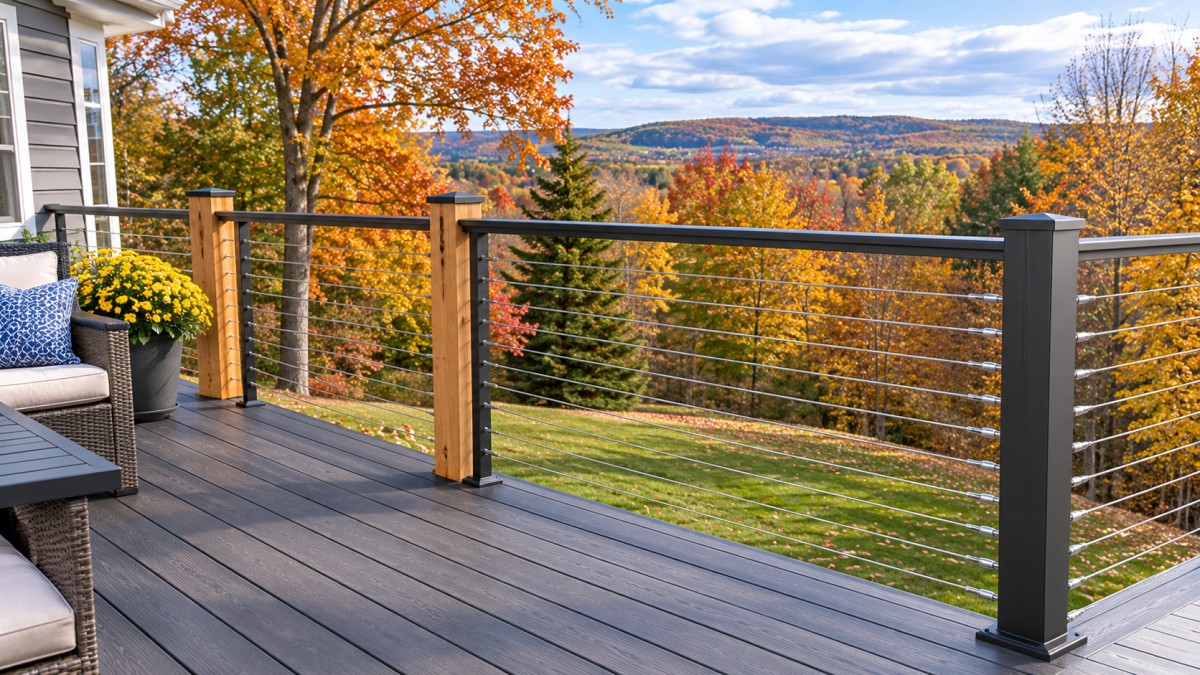
Guards on a residential porch need to be at least 36 inches tall, measured from the walking surface to the top of the rail. Gaps matter just as much as height. The balusters, which are the vertical pickets, must be close enough that a 4-inch sphere cannot pass between them..
Code is written around small children, and a 4-inch ball is roughly the size of a young child’s head. Stairs add a few details. The triangle formed by the riser, the tread, and the bottom rail can’t let a 6-inch sphere through, and some stair guards have slightly different spacing allowances, so we measure those carefully.
The guard also has to hold up under load. Code calls for it to resist a 200-pound force pushed outward at the top, which is why a wobbly post is a code problem and not just an annoyance. When we price railings for Buffalo, NY, owners ask about post strength; it’s the first thing we check.
Graspable Handrail Rules
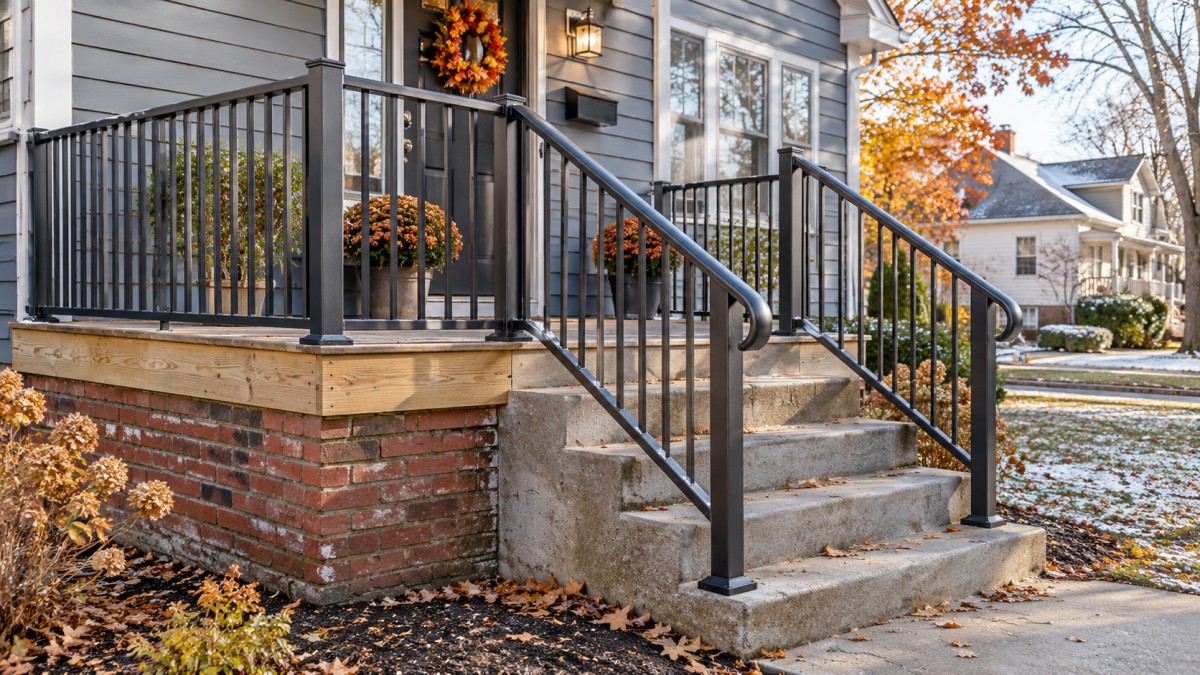
People mix up guards and handrails all the time. They do different jobs. A guard keeps you from falling off the side, and a handrail is something you grab while walking up or down. A handrail has to be graspable, meaning your hand can wrap around it.
Code sets the top of the handrail between 34 and 38 inches above the front edge of the stair treads.
A round rail should measure between 1¼ and 2 inches across. Other shapes can work if the perimeter falls between 4 and 6¼ inches and the profile has a good finger grip. Leave at least 1½ inches of space between the rail and the wall so a hand fits behind it.
The rail should run the full length of the flight, and the ends should return to a wall or post so a sleeve or purse strap can’t catch.
A flat 2×6 cap on top of a guard looks like a rail, but it usually doesn’t count as a graspable handrail. That mistake turns up on older Buffalo porches all the time.
Materials for Porches and Steps
Your choices come down to wood, aluminum, steel, vinyl, and composite. Each one behaves differently in our climate.
Wood is easy to work with and fits older homes, but it needs paint or stain, and it rots where water sits.
Metal handles weather better. Vinyl needs little upkeep.
The right pick depends on how the porch is built, how much shade or sun it gets, and how much maintenance you’re willing to do.
A covered porch in Elmwood Village is not the same job as an open set of concrete steps in Cheektowaga that takes snow and salt all winter. We usually talk through those conditions first, because the material should fit the spot and not the other way around.
Attaching to Concrete vs. Wood
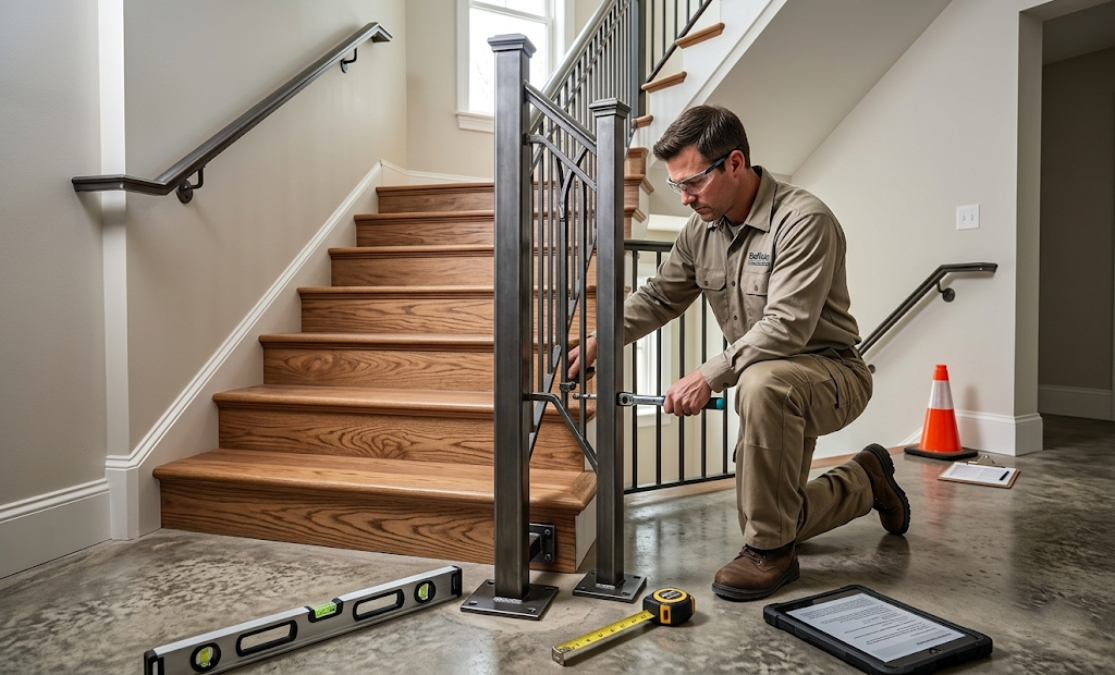
How a rail is fastened matters as much as the rail. On concrete steps or a slab, we use mechanical anchors or epoxy-set threaded rod, depending on the condition of the concrete. Old Buffalo concrete is often cracked from freeze and thaw, so edge distance is a real concern.
Drill too close to the edge and the corner can pop off. We clean the drilled hole, set the anchor to the proper depth and use a base plate that spreads the load. Some jobs call for core-drilled holes grouted with non-shrink grout, which works well when the concrete is sound. On wood framing, posts should be through-bolted to solid framing, not screwed into trim or soft boards.
We check for rot before attaching anything, because a good rail bolted to bad wood fails the 200-pound test the first time someone leans hard. If the structure underneath is weak, it gets repaired first.
Wrought Iron, Aluminum and Vinyl Options
Most “wrought iron” sold today is actually mild steel, and it looks great on older homes. It is strong and can be shaped to match a classic porch. The tradeoff is rust. Without a good coating and some touch-up paint over the years, steel will corrode, and salt speeds that up.
Aluminum doesn’t rust, weighs less and usually comes powder-coated, so it holds up well on front step railing jobs where salt spray is constant. It gives up a little of the heft of steel, though. Vinyl never needs paint and cleans with a hose.
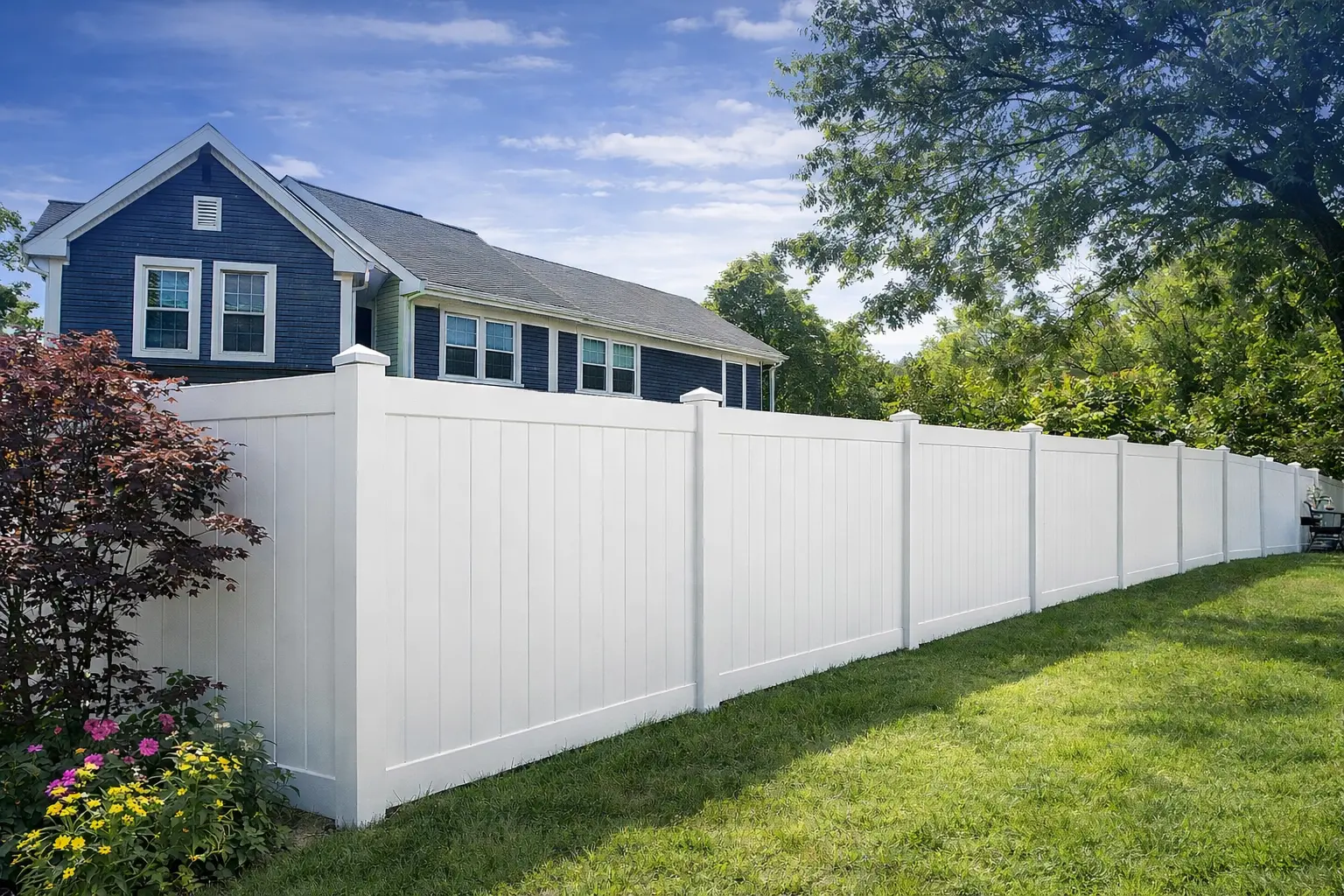
In deep cold it can become more brittle, so a hard hit from a shovel or a snowblower can crack it. Good vinyl systems use reinforced posts and rails for strength. We tell homeowners honestly that no material is maintenance free in Western New York. Some just ask less of you.
Accessibility and Safety Add-Ons
The ADA doesn’t apply to a single-family home, but the ideas behind it help anyone with a bad knee, a cane or a stroller. A handrail on both sides of the steps is the first upgrade we suggest. Extending the handrail a bit past the top and bottom step gives people something to hold before they commit their weight.
Lighting is just as important in a city where the sun sets early in winter. Contrasting paint or tape on the edge of each step makes the nosing easier to see, and slip-resistant treads help when frost shows up overnight.
If someone in the house uses a wheelchair or walker, a ramp may be better than stairs, and ramps have their own slope and rail rules. We plan these add-ons around how the household actually uses the porch.
Permit and Inspection Basics
Permit rules depend on the work. Building a new porch or a new porch railing on a raised structure usually needs one. Replacing an existing rail with the same type in the same spot may not, but that is a question for the building department. In the City of Buffalo, that means the Division of Permit & Inspection Services. Suburbs like Amherst, Hamburg and Cheektowaga each run their own building offices with their own forms.
We recommend calling before you start, not after. An inspector typically checks the guard height, baluster spacing, handrail shape and how the posts are anchored. Keep photos of the work before the surfaces are covered. If your house is in a historic district, there may be rules about appearance as well. A short call costs nothing and can save you from tearing out a finished rail.
Winter Durability Considerations
Buffalo winters are hard on anything outside. We get roughly 90 to 100 inches of snow in an average year, plus repeated freezing and thawing, plus the salt people spread on steps. Water seeps into small gaps, freezes and widens them. Shovels and snowblowers also hit rails, so a coating that chips easily won’t last. For steel, we look for hot-dip galvanizing or a solid powder coat.
For any metal, stainless or coated fasteners keep rust streaks from running down the posts. Posts should have a sealed base so water can’t pool around them. Wood rails need regular sealing, and they swell and shrink with the seasons. It also helps to clear snow away from the base of the posts and rinse salt off the metal in spring. Treated this way, railings can last for years.
Installation Cost
Price depends on length, material, how the rail is attached and what shape the porch is in. Wood and vinyl are usually on the lower end, aluminum sits in the middle, and custom steel work costs the most.
Many porch and step jobs fall somewhere between about $50 and $250 per linear foot installed, though that is only a loose guide. Stairs cost more than flat runs because of the angle cuts. Anchoring into old concrete or repairing rotted framing adds time. Permit fees are separate, and removing an old rail may add a line to the quote.
When you compare quotes, make sure each one lists the material, the post attachment method and who handles the permit. A written estimate from All Pro Fence Buffalo spells those details out so you can compare bids fairly.
Frequently Asked Questions
Does a front step railing need to meet code?
If the stairs have four or more risers, code calls for a handrail on at least one side. Fewer steps may not require one. Even then, a front step railing is smart in Buffalo, because ice makes even two steps risky.
How tall does a porch railing have to be?
A residential guard needs to be at least 36 inches tall, measured from the porch floor. Handrails on stairs sit lower, between 34 and 38 inches above the step edge. A good porch railing often has both.
What is the baluster spacing rule?
Balusters must be spaced so a 4-inch sphere can’t pass through. Stair guards have a few special cases, including a 6-inch limit for the triangle at the bottom rail. Your inspector can confirm the exact allowance for your stairs.
When is a porch railing required?
A guard is required when the walking surface is more than 30 inches above the ground within 36 inches of the edge. Lower porches are usually exempt, but local building departments can add their own rules.
Do I need a permit for railings in Buffalo?
Often yes for new work, and sometimes no for replacing in kind. Rules differ between the City of Buffalo and nearby towns, so call your local building office first. Confirming the railing code Buffalo NY applies to your project takes a few minutes.
What material lasts longest in Buffalo winters?
Powder-coated aluminum and well-coated steel tend to handle salt and freeze-thaw best. Vinyl lasts with little upkeep but can crack in deep cold. Wood works if you seal it regularly. Many railings Buffalo NY owners choose aluminum for steps.
Can a railing be attached to old concrete steps?
Yes, if the concrete is sound. We use anchors set away from the edges, or grouted posts in drilled holes. Crumbling or badly cracked steps should be repaired or replaced first, since the rail is only as strong as what holds it.
Final Thoughts
A railing should feel solid every time you reach for it. If yours doesn’t, or if you’re building a new porch, get the code basics right and pick materials that suit Buffalo weather. Questions on your own steps are welcome at All Pro Fence Buffalo, and we’ll tell you plainly what the job needs.