Cable looks simple. It isn’t. Folks around Buffalo ask us whether the sleek rail they saw on a neighbor’s deck would hold up through a lake-effect winter, and the honest answer is that it can, as long as the details are right. If you’ve typed railing services near me into your phone lately, you’ve probably found plenty of photos and very few straight answers.
We wrote this at All Pro Fence Buffalo to explain how cable railing works, what it costs next to other options, and where it goes wrong in Western New York. It pairs with our Railing Installation in Buffalo, NY: Deck, Stair & Porch Guide, which is worth a look if you’re still comparing materials.
How Cable Railing Systems Work
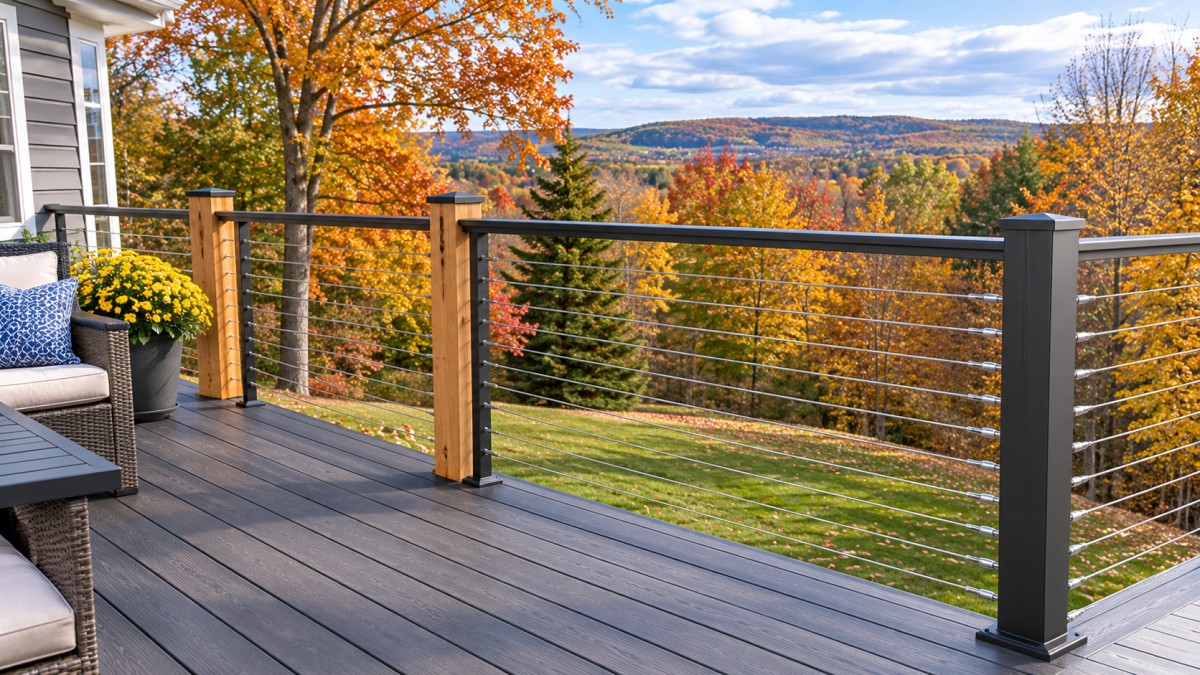
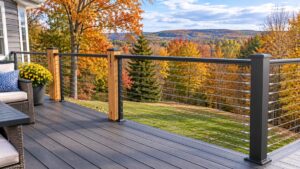
A cable railing is a row of posts with thin stainless steel cables stretched horizontally between them, where balusters would normally go. At one end of each run, the cable is locked into a fixed fitting. At the other end, a tensioner lets you pull it tight with a wrench.
Between the end posts, intermediate posts hold the cables at the right spacing. A top rail sits over the whole thing, and that rail matters, because it is what carries the push load the code requires. Most home systems use cable around an eighth to three-sixteenths of an inch thick.
The system stays rigid because of tension. That puts a lot of force on the end posts, which is why this is not a railing you can wing.
Modern Look and Unobstructed Views
The main reason people choose cable is the view. From a few feet back, the cables nearly disappear, so you see the yard, the ravine, or the field behind the house instead of a wall of pickets. That matters on lots in places like Orchard Park, East Aurora, and Hamburg, where the land rolls and the back deck is the best seat on the property.
It also fits the clean lines that many people want from modern deck railing Buffalo homeowners ask about, especially with black or gray composite decking. There are trade-offs. On a bright day, the cables catch glare, and in winter they collect frost and ice. Most people still decide it’s worth it for the openness.
Stainless Steel and Corrosion in Winter
Stainless steel resists rust, but it is not rustproof, and Buffalo winters test it. Road salt rides in on boots and gets tracked across the deck, and the freeze-thaw cycle keeps moisture working into every fitting. Two grades are common: 304 and 316. Grade 316 contains molybdenum, which helps it stand up to salt, so it is the better pick for a stainless cable rail in our climate.
You may still see light brownish “tea staining” on the surface over time. That is cosmetic, and a wipe-down usually clears it. Match the screws and fasteners to the stainless too, since mixing in other metals can cause discoloration. When ice builds up on the cables, let it melt. Hitting it with a shovel can damage the fittings.
Wood vs Metal Cable-Rail Posts
Posts are where most cable rail problems start. Each cable pulls hard on the end posts, and with a dozen or more cables per run, the combined force is serious. Metal posts, like aluminum, stainless, or powder-coated steel, don’t shrink, twist, or check as they dry, so they hold tension steadily.
Wood posts look warm and can work, but they need to be sturdy, and the end posts need solid bracing. A post that moves even a little loosens every cable on that run. Whatever the material, posts should be anchored to the deck framing with proper blocking, not just screwed to the surface boards. Some builders use metal for the end posts and wood for the ones in between.
Code Requirements for Cable Spacing
New York State follows a residential code built on the International Residential Code, though local rules and code editions can differ. In general, a guard is required when the walking surface sits more than 30 inches above the ground, and it has to be at least 36 inches tall on a deck. Openings in the guard cannot let a sphere 4 and 3/8 inches wide pass through.
Cables flex when pushed, so manufacturers commonly recommend spacing them around 3 inches apart, and some inspectors look at this closely. The top rail has to handle a 200-pound load. Stairs have their own rules, including handrail height between 34 and 38 inches. Call your building department before you start, since most deck work needs a permit.
Tensioning and Maintenance
New cable stretches a little as it settles, and it moves with temperature, so tension changes through the year. Check it after the first few weeks, then at least once each spring and fall. Press on a cable halfway between posts. It should barely give. If it feels loose, tighten it evenly, working from the middle of the run outward.
Cranking too hard is its own mistake, because over-tightening can bow the posts and make the problem worse. For cleaning, mild soap and water do the job.
Rinse off the salt in spring, and skip steel wool and bleach. Look over the fittings when you’re out there, since a loose one is easier to fix before it becomes a gap.
DIY vs Professional Installation
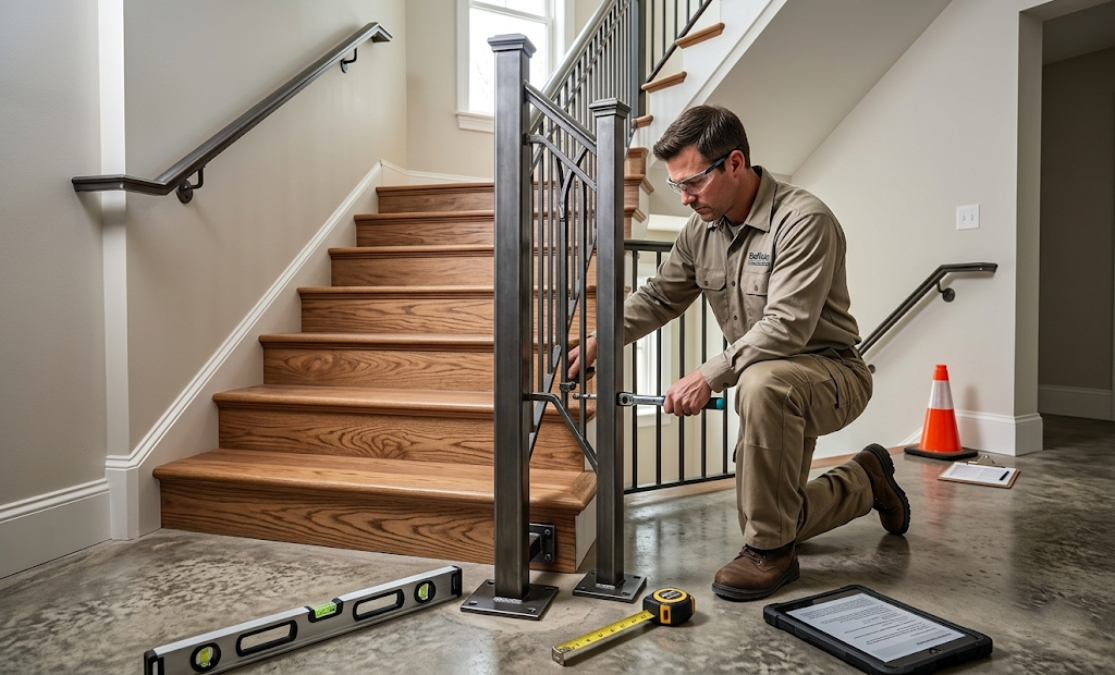
Handy homeowners do install cable rail, and kits make it easier than it used to be. You need a good drill, the right bits, a cable cutter, a level, and patience. Straight, level runs on a low deck are the friendliest place to start. Stairs are harder, since every hole has to be drilled at the correct angle, and tall decks raise the stakes if something fails.
If the posts need structural work first, that is usually the point to bring someone in. If you’d rather hand it off, ask any installer, including All Pro Fence Buffalo, how they brace end posts and how they set cable spacing. When you search railing services near me, the answers to those two questions tell you more than the photos on a website.
Cost vs Traditional Railings
Cable rail generally costs more than pressure-treated wood and many basic aluminum or vinyl systems.
The price comes from the stainless hardware and the labor, since a single run can mean drilling hundreds of precise holes. It often costs less than glass panels, which makes it a middle path for people who want an open look. Length matters, and so do the number of stairs, the post material, and the cable grade.
Corners and angles add labor. Ask for an itemized quote so you can see what you’re paying for, and compare it against the cost of the maintenance each material needs. When you ask railing services near me for estimates, make sure each one covers the same scope, or the numbers won’t line up.
Best Applications and Layouts
Cable fits best on elevated decks with a view worth keeping, and on porches where you want light to come through. Straight runs with posts spaced close together, roughly four feet apart or less, keep the cables from sagging or flexing.
Corners need posts, since cables can’t turn without hardware. Stairs work fine when the installer handles the angles carefully. Think about your household too.
Horizontal cables can be climbed, and many places allow them, but if you have young children, ask about tighter spacing or a different layout. Pool barriers follow separate rules, so don’t assume a standard deck rail will pass. Short spans and sturdy posts matter more than the cable itself.
Longevity and Warranties
A well-built stainless system can last for decades when the posts stay solid and the cables are kept tight. The frame usually ages faster than the cable does. Warranties vary a lot, so read the fine print.
Look at what is covered, whether that means cables, fittings, posts, or the finish, and whether salt exposure or harsh climates are excluded. Manufacturer coverage on the parts is separate from an installer’s coverage on the work, and both are worth having in writing.
Keep your receipts and take a few photos of the finished job. If you’re sorting through railing services near me results this season, that same list is what we’d tell a neighbor to use before calling All Pro Fence Buffalo or anyone else.
Frequently Asked Questions
Is cable railing safe for kids?
It can be, with attention to spacing. Code limits openings to a 4 and 3/8 inch sphere, and many installers keep cables about 3 inches apart for extra margin. Horizontal cables can be climbed, so households with small children should think that through first.
Does stainless cable rust in Buffalo winters?
Good stainless holds up well, but road salt can still cause surface staining. Grade 316 resists salt better than 304. Rinse the cables each spring, wipe off any brown film, and keep other metals from touching the fittings.
How far apart should the cables be?
Code requires that a 4 and 3/8 inch sphere cannot pass through. Because cables flex, most manufacturers recommend about 3 inches between them. Posts should also be spaced closely, roughly four feet or less, so the cables stay firm.
How often should I retighten cable railing?
Check tension a few weeks after installation, then in spring and fall. Press a cable halfway between posts. If it moves noticeably, tighten evenly from the middle outward. Cables settle a little at first and shift with temperature changes.
Can I use wood posts with cable railing?
Yes, but they must be sturdy and braced, especially at the ends, where tension is highest. Wood can shrink or twist and loosen the cables. Many installers use metal for the end posts and wood for the intermediate ones.
How much does cable railing cost compared to wood or aluminum?
It usually costs more than pressure-treated wood and many basic aluminum or vinyl rails because of the stainless hardware and labor. It often costs less than glass. Length, stairs, post material, and corners all affect the final price.
How do I find railing services near me that I can trust?
Ask for proof of insurance, written estimates, and local references you can visit. Ask how they brace posts, set cable spacing, and handle permits. A contractor who answers plainly and in detail is usually one who has done the work.